

What if the most expensive part of your shipment isn't the ocean freight or the manufacturing cost, but the days it spends sitting in a Centralized Examination Station? It's a stressful moment for any importer when that "Held for Exam" notification appears. You've likely felt the anxiety over unexpected CES fees, which can climb above $2,500 for intensive physical inspections, or the fear that document discrepancies might lead to costly penalties. We know that uncertainty regarding your timeline can disrupt your entire supply chain, which is why preparing for a CBP cargo examination before your goods even leave the port is so critical.
The good news is that while you can't always avoid an inspection, you can control how ready you are for one. This guide will show you exactly how to navigate U.S. Customs inspections with a clear, step-by-step preparation guide designed to minimize delays and unexpected costs. We'll walk through a checklist of must-have documents, explain the different types of exams you might face, and share proven strategies to protect your business from unnecessary financial impact. By replacing uncertainty with a solid plan, you can ensure your goods move through the port with the professional assurance your business deserves.
Key Takeaways
- Understand that CBP exams are compliance tools used to verify safety and manifest accuracy, often triggered by automated targeting systems.
- Learn why document precision is your best defense when preparing for a CBP cargo examination, helping you avoid the delays caused by vague product descriptions.
- Discover the hierarchy of inspections, from quick X-ray scans to intensive physical exams, and why the importer is always responsible for the associated fees.
- Identify hidden charges like Centralized Examination Station (CES) labor and storage fees so you can accurately budget for potential logistical hurdles.
- See how a seasoned customs broker acts as your advocate, resolving HS Code disputes and communicating directly with port officials to keep your shipment moving.
Understanding the "Why" and "How" of CBP Cargo Examinations
Why was my shipment picked? It's the first question every importer asks when they see a hold on their cargo. A cargo examination is essentially a compliance check where U.S. Customs and Border Protection (CBP) verifies that what you've declared on paper matches the physical goods inside the container. These inspections ensure manifest accuracy, protect intellectual property, and maintain national security. While it feels like a disruption, it's a standard part of the global trade process that every business encounters eventually.
CBP doesn't pick shipments out of a hat. They rely on the Automated Targeting System (ATS), a sophisticated algorithm that analyzes data from every entry filed. The ATS looks for high-risk patterns, such as unusual shipping routes or inconsistent weights. However, even the most compliant importers can find themselves flagged. Some exams are purely random, used as a baseline to measure overall industry compliance. This is why preparing for a CBP cargo examination should be a proactive part of your logistics strategy, not just a reaction to a notification. Having a "safe pair of hands" in the form of an experienced broker ensures that when a flag is raised, you have a professional advocate ready to manage the communication and movement of your goods.
Common Triggers for a Customs Inspection
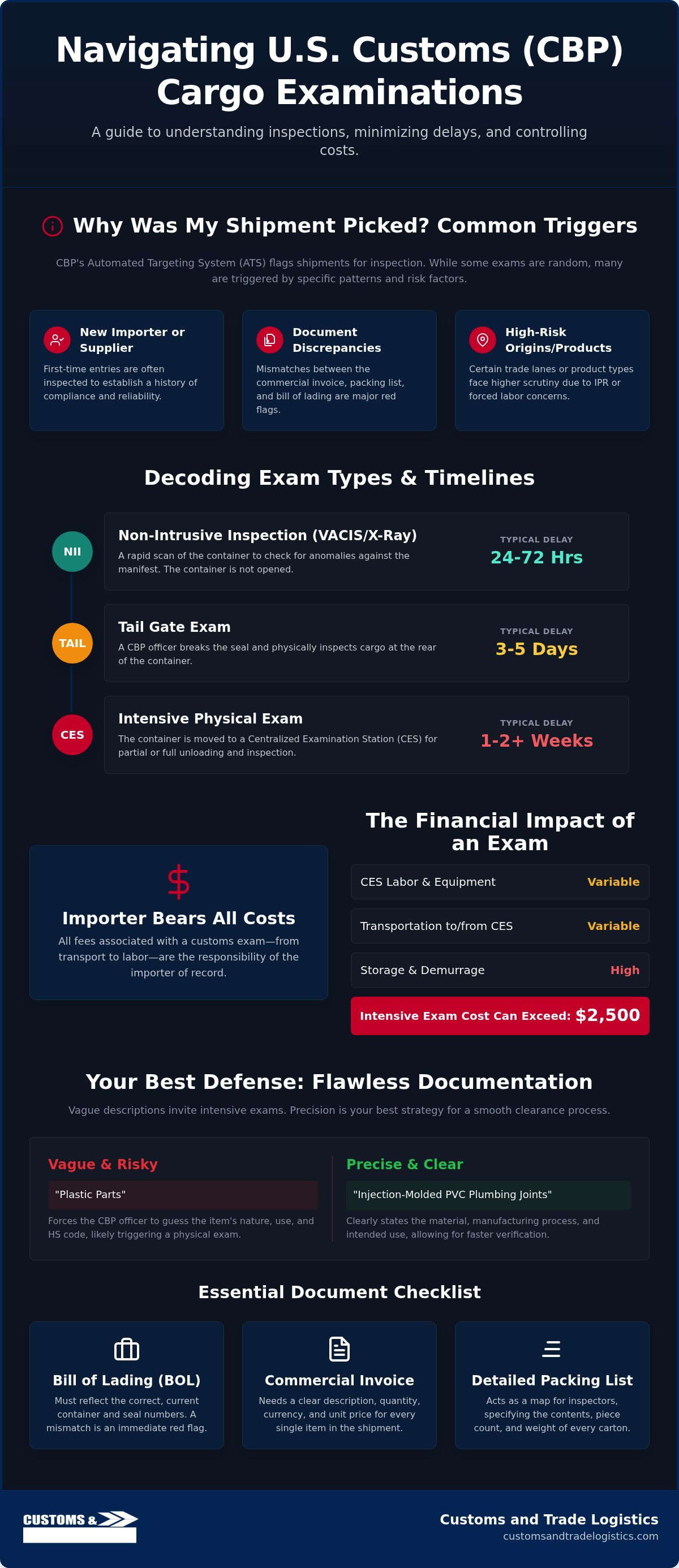
If you're new to the industry or shipping from a fresh supplier, your risk profile is naturally higher. CBP often inspects first-time entries to establish a history of reliability. Document discrepancies are another major red flag; if your Commercial Invoice and Packing List don't align perfectly, the system will likely trigger a hold. We also see increased scrutiny for specific trade lanes, particularly regarding import from China logistics. In 2026, enforcement focus has shifted heavily toward forced labor regulations and intellectual property rights, meaning certain product categories or origins may face more frequent "intensive" inspections than others.
The Timeline: What to Expect in 2026
Timing is everything in logistics. In 2026, standard wait times for a document review or a non-intrusive scan typically range from 24 to 72 hours, depending on port volume. However, if your shipment is moved to a Centralized Examination Station (CES) for an intensive exam, you should prepare for delays of one to two weeks. Port congestion and labor availability at the CES can extend these timelines significantly. Your customs broker monitors these statuses in real-time through the Automated Commercial Environment (ACE) system. They can see exactly when a shipment is released or if CBP has requested additional paperwork, keeping you informed so you can adjust your downstream delivery schedules accordingly.
The Essential Documentation Checklist for Exam Readiness
Document accuracy is the single most important factor when you're preparing for a CBP cargo examination. If the paperwork doesn't tell a clear story, the officer has no choice but to dig deeper. This is where "vague descriptions" become dangerous. Writing "plastic parts" instead of "injection-molded PVC plumbing joints" on a Commercial Invoice is an open invitation for an intensive exam. When the physical cargo matches the technical descriptions on your documents exactly, the inspection process moves much faster.
Start with these three essentials to keep your shipment moving:
- The Bill of Lading (BOL): This must reflect current container and seal numbers. Any mismatch here is an immediate red flag that suggests the cargo has been tampered with or misreported.
- The Commercial Invoice: Every item needs a clear description, quantity, and unit price. Ensure the currency is clearly stated and the buyer and seller information is current.
- Detailed Packing List: This is your map. It should specify exactly what is in every carton, down to the piece count and weight. If an officer chooses to open one specific box, your packing list should tell them exactly what they'll find inside.
Advanced Documentation for Targeted Audits
For trade-sensitive goods, you'll need more than just the basics. Manufacturer’s affidavits or proof of origin are often required to verify that goods aren't subject to anti-dumping duties or specific trade restrictions. If you're importing chemicals or medical devices, ensure your TSCA or FDA forms are filed correctly and match the rest of your entry. A professional customs clearance services us partner audits these docs before submission to catch errors that typically trigger exams. It's also vital to remember the importer responsibilities for examination costs, as missing paperwork often leads to expensive storage fees and unnecessary delays at the port.
Special Requirements for Amazon FBA Sellers
Amazon sellers face unique hurdles during customs inspections. If your FNSKU labels don't match the manifest, CBP may flag your shipment as "unidentified cargo," which can cause you to miss critical holiday inventory windows. Expert FBA freight forwarding services handle the "hidden" costs of exam-related re-labeling, ensuring that if a box is opened for inspection, it is resealed and labeled to Amazon's strict standards. Once cleared, managing the hand-off to FBA-approved carriers is the final step in protecting your seller rating. If you're feeling overwhelmed by these requirements, our team at Customs and Trade Logistics can review your documentation to ensure total compliance before your goods ever reach the border.
Decoding Exam Types: From Non-Intrusive to Intensive
Not all inspections are the same. CBP uses a hierarchy of exams that starts with a quick look and can escalate into a full physical inspection. Understanding this progression is a key part of preparing for a CBP cargo examination. If a "low-level" scan reveals an anomaly, the officer will likely order a more thorough check. This escalation is becoming more common following the June 2026 Executive Order, which increased scrutiny on declared values and classifications across all U.S. ports. You should view these exams as a series of hurdles; the goal is to clear the first one so you never have to deal with the others.
One of the most surprising facts for new importers is that CBP doesn't pay for these inspections. You do. Because CBP is a regulatory body, they don't operate the warehouses where physical exams happen. Instead, they utilize a Centralized Examination Station (CES). A CES is a private, for-profit facility authorized to handle the cargo. You are responsible for the costs of transporting the container to the CES, the labor to unload it, and the storage fees while it sits in their yard. Since you cannot personally visit the CES or speak with the officers on-site, your customs broker acts as your only advocate, managing the logistical hand-off and pushing for a timely release.
VACIS (X-Ray) and Tailgate Exams
The first level of inspection is usually a Vehicle and Cargo Inspection System (VACIS) exam, also known as a Non-Intrusive Inspection (NII). Think of this as a giant X-ray for your container. CBP uses gamma-ray or X-ray imaging to look for shapes or densities that don't match your manifest. If the scan is clear, your container is often released within 24 to 72 hours. A "Tailgate" exam is slightly more involved. An officer opens the back doors of the container to visually inspect the first few rows of cargo. They're looking for obvious signs of misdeclared goods or structural issues. These are the fastest and least expensive exams, but they require your paperwork to be perfect to prevent further escalation.
The Intensive (Full Strip) Examination
An Intensive Exam is the most rigorous and time-consuming type of inspection. During a "Full Strip," every single carton is removed from the container and opened by CES labor under CBP supervision. This process can take several days or even weeks if the port is congested. The logistical challenge doesn't end with the inspection; once cleared, the cargo must be re-stuffed into the container. It's rare for items to be packed as efficiently as they were at the factory, which increases the risk of cargo damage during the final leg of delivery. We often suggest that our clients use high-quality dunnage and clear labeling to help minimize the mess and potential for breakage during these physical handle-offs.
Mitigating Costs and Delays: A Tactical Action Plan
The "sticker shock" of a customs exam often hurts more than the delay itself. Beyond the inspection fees mentioned earlier, you'll face drayage charges for moving the container to the facility, daily storage rent, and significant labor costs for unboxing your goods. When preparing for a CBP cargo examination, you can use custom brokerage service fees as a baseline to help forecast these logistical expenses. Budgeting for a "worst-case" scenario ensures that a random inspection doesn't cripple your quarterly cash flow or catch your accounting team off guard.
Prevention is always more cost-effective than a cure. Pre-filing your entries allows your broker to catch documentation errors before your ship even docks. If the ATS flags a discrepancy early, we can often resolve it through additional data filing before a physical exam is even triggered. If an exam is flagged, your first call should always be to your broker. We act as the central point of contact between the steamship line, the port, and the CES to ensure no one is waiting on paperwork while your storage clock is ticking.
Avoiding Demurrage and Detention Penalties
It's vital to distinguish between port storage (demurrage) and equipment use fees (detention). While your container sits at a CES, the clock continues to run on the equipment you've rented from the carrier. We work to request "Free Time" extensions from steamship lines the moment an exam is ordered. This proactive step can save you hundreds of dollars per day in penalties. A diligent broker manages these negotiations, ensuring the carrier knows the delay is due to government intervention rather than importer negligence, which often provides the leverage needed for fee waivers.
Post-Exam Logistics: Getting Back on Track
Once the 1C Customs Release is issued, the race to avoid further storage costs begins. We immediately schedule the "Final Mile" delivery to your warehouse or redistribution center to clear the CES yard. If you're a new business owner, coordinating with experts in import logistics for startups helps you manage inventory flow during these unpredictable windows. Sometimes, CBP requires a "Redelivery" for a follow-up check; having a logistics partner who can pivot quickly prevents these rare requests from becoming total supply chain failures. If you need a partner to manage these complex port movements, reach out to Customs and Trade Logistics for expert oversight.
Partnering with a Customs Broker to Navigate Examinations
When you're preparing for a CBP cargo examination, you aren't just looking for a service provider; you're looking for an advocate. A customs broker serves as the essential liaison between your business, the port authorities, and the Centralized Examination Station (CES). At Customs and Trade Logistics, our 35 plus years of industry experience allow us to speak the language of CBP officers and CES managers. We understand the nuances of the port environment, which means we can often resolve minor document questions before they escalate into multi week delays. You shouldn't have to face a federal agency alone, and having a veteran partner ensures your interests are protected at every stage.
Technical expertise is your strongest defense against frequent inspections. Many exams are triggered by incorrect Harmonized System (HS) Code classifications or missing data elements required by the 2026 Enhanced Air Cargo Advance Screening (ACAS) regulations. We specialize in demystifying these complex requirements for SMBs and Amazon sellers. By auditing your product classifications and supplier data before your cargo ever reaches the border, we minimize the "red flags" that catch the eye of the Automated Targeting System. This proactive approach turns a potentially intimidating process into a manageable part of your growth strategy.
Our family owned brokerage offers a level of personalized attention that automated digital platforms simply can't match. In an industry where a single day of delay can cost hundreds of dollars, you need a partner who answers the phone and knows your shipment by heart. We provide a "safe pair of hands" for your logistics, acting as a knowledgeable bridge between your local operations and the global marketplace. As we move into the final months of 2026, onboarding with a dedicated team ensures you're ready for the increased scrutiny and forced labor enforcement protocols currently shaping U.S. trade.
How We Manage Your Exam From Start to Finish
- Real-time Monitoring: We track your entry status in the ACE system and notify you the second a flag appears so we can start the mitigation process immediately.
- Document Clean Up: Our team reviews your commercial invoice and packing list to ensure total accuracy before an officer begins their review.
- Financial Settlement: We handle the payment of drayage and labor fees directly with the CES, removing the administrative burden from your shoulders and expediting the release of your container.
Preparing for Your Next Shipment
Success in international trade is built on continuous improvement. After an exam is cleared, we conduct a post exam debrief to identify why the shipment was flagged and what we can do to avoid a repeat. We also guide our clients through CTPAT best practices, which can eventually lead to "Green Lane" eligibility and fewer inspections over time. If you're ready to secure your supply chain, let Customs and Trade Logistics handle your next customs entry with the care and expertise your business deserves.
Securing Your Supply Chain for the Long Haul
While a customs hold can feel like a setback, it doesn't have to be a disaster for your business. By prioritizing document precision and understanding the various levels of inspections, you're already ahead of the curve. The secret to successful importing is moving from a reactive mindset to a proactive one. It's helpful to remember that preparing for a CBP cargo examination starts long before your container reaches the port; it begins with the very first invoice you generate and the supplier relationships you build.
You don't have to navigate these complex federal regulations alone. With 35 plus years of family owned brokerage expertise, we provide national coverage across all U.S. ports to keep your shipments moving smoothly. Whether you're managing specialized Amazon FBA freight or navigating the intricacies of China imports, we act as your dedicated advocate at every stage of the process. Our goal is to replace your logistics anxiety with the peace of mind that comes from a steady, reliable partnership. Ready to clear the path for your next shipment? Get expert help with your US Customs entries and cargo exams today. We're here to help your business grow with confidence.
Frequently Asked Questions
How long does a CBP cargo examination typically take in 2026?
A simple VACIS or tailgate exam usually takes between 24 and 72 hours once the container is staged. However, an intensive physical inspection can last one to two weeks, or even longer if the port is experiencing high congestion. These timelines depend on the workload of CBP officers and the efficiency of the specific Centralized Examination Station (CES) handling your container. Your broker monitors these statuses daily to keep your delivery schedule updated.
What is the average cost of a Customs Intensive Examination?
You should budget between $1,200 and $2,500 for an intensive exam, though costs can climb higher for complex or oversized shipments. These fees are charged by the private CES facility for labor, drayage, and warehouse handling rather than by CBP itself. Smaller inspections like a VACIS scan are much more affordable, typically ranging from $150 to $350. Remember that these costs are separate from any duties or taxes you owe on the goods.
Can I be present during the physical inspection of my cargo?
Importers are not permitted to be present at the Centralized Examination Station during a physical inspection for security and safety reasons. These facilities are restricted areas where only authorized CES employees and CBP officers can handle the cargo. Your customs broker acts as your professional liaison, communicating with the facility managers to ensure the process moves as quickly as possible. They provide you with status updates so you aren't left in the dark.
Why was my shipment selected for an exam if I have a clean history?
CBP uses the Automated Targeting System (ATS) to flag shipments based on risk algorithms, but many selections are completely random. Even if you have a perfect compliance history, your shipment might be picked for a baseline check to ensure industry standards are being met. It's often just the "luck of the draw" rather than a specific concern about your business. CBP uses these random samples to verify that their targeting data remains accurate.
What happens if CBP finds a discrepancy during the inspection?
CBP may issue a request for information (Form 28) or a notice of action (Form 29) if they find an error. Depending on the severity, you might need to amend your entry or pay additional duties and taxes. In serious cases involving misdeclared goods or safety violations, CBP can issue penalties or seize the cargo entirely. This is why having a broker review your documents before filing is so important for protecting your business.
Who is responsible for paying the CES and storage fees during an exam?
The importer of record is legally responsible for all examination and storage costs associated with the inspection. Even if the exam was random and your cargo is found to be perfectly compliant, you must still pay the CES facility for their labor and the port for any storage fees. CBP doesn't reimburse businesses for these expenses because they're considered a necessary cost of participating in international trade. Planning for these potential costs is vital.
Does a Customs exam affect my future "Importer Score" with CBP?
Every exam result is recorded in your compliance history and influences how the Automated Targeting System views your future shipments. Passing an intensive exam without any discrepancies actually helps your long term standing with the agency. It proves that your documentation and physical goods are reliable and match your declarations perfectly. Over time, a consistent record of clean inspections can lead to a lower risk profile and fewer flags for your cargo.
How can I minimize the chances of being flagged for a cargo exam?
You can lower your risk by ensuring your product descriptions are highly specific and your HS codes are technically accurate. Avoid using vague terms on your commercial invoice that might trigger a manual review by an officer. Preparing for a CBP cargo examination by joining programs like CTPAT can also provide "Green Lane" benefits. These voluntary partnerships show CBP that you've secured your supply chain, which often results in significantly fewer inspections.


