
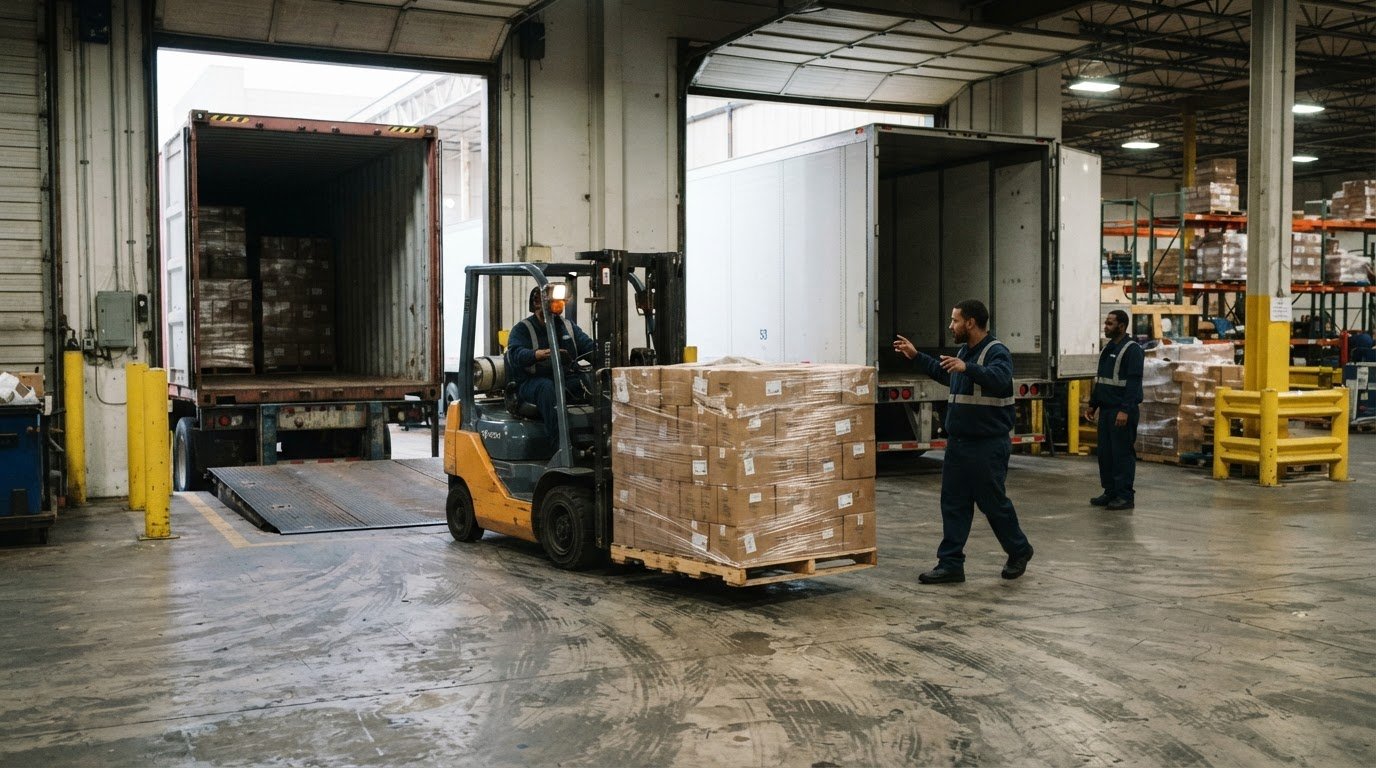
Keeping freight in its ocean container all the way to its destination isn’t automatically the simplest or lowest-cost choice. Transloading moves cargo from an ocean container into domestic transport equipment, where it can be sorted, consolidated, or routed to different destinations. Comparing transloading with direct-to-door container delivery means weighing extra handling and facility costs against the practicality and cost of moving the container intact inland.
It’s reasonable to favor direct delivery when fewer cargo transfers seem simpler. But shipment size, freight type, destination, and delivery plan can change which option is more efficient overall. This guide explains how transloading works, which cargo may be a good fit, and how the two approaches compare in cost and scheduling. It also covers how added handling affects coordination and cargo risk, making the trade-offs clearer before you choose a transport plan.
Key Takeaways
- Learn how transloading transfers freight between transport equipment and when the extra handling can support distribution plans.
- Identify which cargo is better suited to transfer and which may need to stay in specialized equipment.
- See how load weight, cargo volume, route, and handling needs shape the cost and efficiency comparison.
- Understand how delivery and redistribution services can help coordinate freight movement with your wider import plan.
What kinds of cargo are good candidates for transloading?
At a U.S. port, transloading often starts with drayage from the terminal to a nearby facility. Workers unload the ocean container, inspect and sort the freight, then load it into domestic trucks or rail equipment. The facility may separate an order by destination, combine compatible shipments, or adjust pallets for the next transport leg. These transfers suit cargo that standard equipment can handle and distribution plans that benefit from sorting or consolidation.
Palletized or packaged goods are common candidates, including food and beverages, automotive goods, and consumer packaged products. A retailer sending stock to several regions, for example, may need cartons sorted by destination. Manufacturers may also coordinate inbound shipments with production schedules or regional demand. In a transloading vs direct-to-door container delivery comparison, this ability to reorganize freight matters when the original load plan doesn’t match its destinations. Oversized, heavy, or flatbed freight may require specialized loading capabilities.
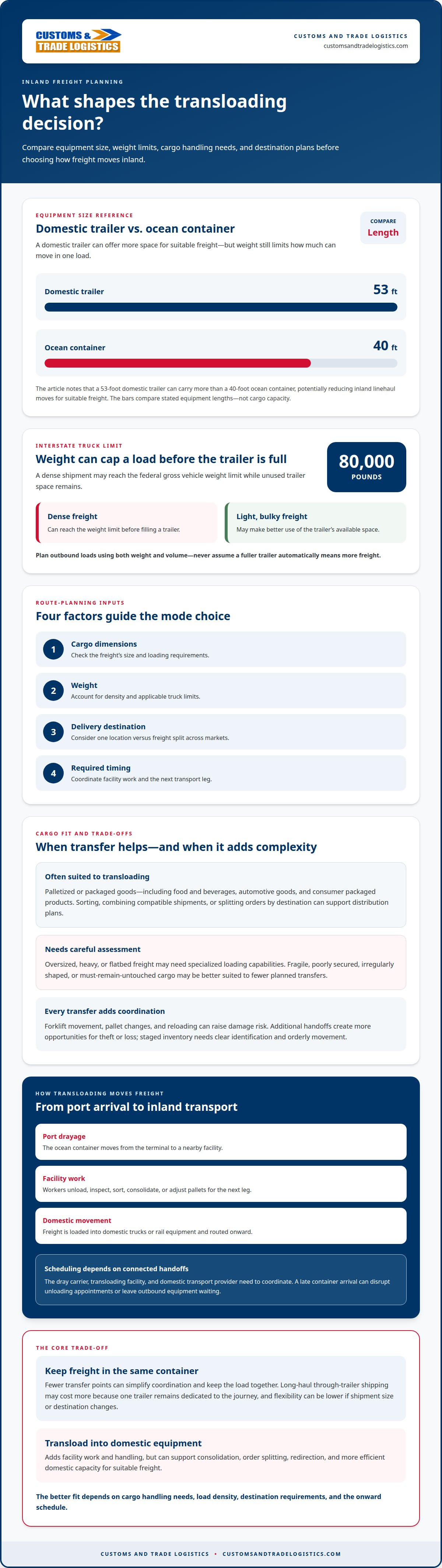
Each transfer adds handling. Forklift movement, pallet changes, and reloading can increase damage risk, especially for fragile, poorly secured, or irregularly shaped cargo. More handoffs also create additional opportunities for theft or loss. Inventory staged for regional distribution needs clear identification and orderly movement through the facility. Cargo that must remain untouched may be better suited to a route with fewer planned transfers.
Scheduling requires communication among the dray carrier, transloading facility, and domestic transport provider. A late container arrival can disrupt unloading appointments or leave outbound equipment waiting. That can affect manufacturers coordinating components with production or retailers replenishing stores. For the transloading vs direct-to-door container delivery decision, align the cargo’s packaging, destination split, loading needs, and onward transport schedule. Coordinating these details helps account for both facility work and the next leg of the journey.
Transloading compared with moving freight in the same ocean container
Intermodal shipping keeps freight in the same ocean container as it moves between ship, rail, and truck. Transloading transfers cargo into different equipment. At a port or inland rail facility, freight is unloaded, inspected, sorted, and loaded into domestic trailers or rail containers. This can help combine shipments, split orders, or redirect freight to different destinations. The trade-off is more handling than keeping cargo in its original container.
Direct movement minimizes transfers, but it doesn’t eliminate handling. Customs inspections at the border may require pallets to be unloaded, exposing freight to damage. Transloading facilities can inspect and prepare freight during a planned transfer, but each move requires suitable equipment and careful load control. Cargo packaged and palletized for forklift handling is easier to transfer than goods requiring specialized loading. This distinction matters when deciding whether to keep freight intact or move it through a facility.
Freight density also affects how much cargo fits in domestic equipment. The Federal Highway Administration states that a dense freight load can reach the 80,000-pound federal gross vehicle weight limit for a truck on interstate highways before filling a trailer. Light, bulky goods may make better use of a trailer’s available space, while dense cargo can reach its weight limit first. A provider must account for both weight and volume when planning outbound loads, rather than assuming a fuller trailer always means more freight.
Visibility differs by transfer plan, too. Digital tracking tools can show when a container becomes available, when it reaches a transloading facility, and when outbound loads depart. These milestones help coordinate the handoff between ocean transport, facility work, and inland movement. A shipment staying in one container has fewer transfer events to coordinate, while transloading offers more opportunities to sort or redirect cargo. For support planning freight movement, the decision turns on handling needs, load density, and destination requirements.
How a logistics provider chooses transportation modes based on cost and efficiency
A logistics provider compares the full route, not just the ocean leg. The decision starts with cargo dimensions, weight, delivery destination, and required timing. It also considers whether inventory should go to one location or be divided across markets. A shipment for one nearby warehouse may suit direct container delivery. Freight bound for several destinations may benefit from transloading and consolidation. This is a practical starting point for comparing transloading vs direct-to-door container delivery.
Moving freight in the same trailer can reduce transfer points and simplify coordination. Yet through-trailer shipping may cost more on long-haul routes because one trailer remains dedicated to the journey. Fuel, tolls, and carrier capacity also affect the comparison. This option offers less flexibility once cargo is moving, especially if its destination or shipment size changes. A provider weighs that constraint against keeping the load together and avoiding intermediate facility handling.
Transloading adds facility work, but can make domestic capacity more efficient. A 53-foot domestic trailer can carry more than a 40-foot ocean container, potentially reducing inland linehaul moves for suitable freight. Weight still matters: dense cargo can reach the interstate gross vehicle weight limit before a trailer is full. The provider checks both cube and weight before planning consolidation. Freight may also need different preparation for domestic transport than for its export journey.
Flexibility can tip the decision when demand or routing changes. Transloading may allow a provider to redirect freight, combine smaller shipments, or position inventory for regional destinations. Truck, rail, or a combination may suit the domestic leg, depending on distance, service needs, and budget. For example, cargo headed to several markets can be sorted into separate outbound loads. A single destination with stable demand may favor direct movement. Ultimately, transloading vs direct-to-door container delivery depends on the balance between capacity, routing options, and the work required at each handoff.
Transloading compared with direct container delivery
Direct container delivery keeps the loaded ocean container on its chassis for the trip to the receiving site. Transloading moves freight into domestic equipment before final delivery, adding a facility handoff but allowing cargo to be divided or routed separately. The practical choice depends on the destination: one warehouse ready to receive a full container differs from several locations needing smaller deliveries. Direct delivery can simplify the movement, while transloading can suit distribution plans that need sorting.
What site requirements apply to direct-to-door container delivery? The destination needs a suitable place for the truck and container, with enough access, clearance, and room for safe unloading. A narrow entrance, overhead obstruction, soft ground, or limited turning space can prevent a truck from reaching the planned drop point. For example, a warehouse with a loading area may accommodate a container more readily than a crowded site without maneuvering space. Site conditions shape the delivery plan.
What are U.S. port demurrage, detention, and free-time rules for container delivery? Demurrage generally applies when a container remains at the port or terminal beyond its allotted free time; detention generally applies when equipment stays outside the terminal beyond the allowed return period. Free-time allowances and charges depend on the applicable carrier or terminal terms, so no single figure applies to every shipment.
These timing terms matter because direct delivery must coordinate container availability, truck capacity, the receiving site, and equipment return. A missed delivery appointment can leave a container waiting, while transloading may let a facility unload it and return equipment sooner. That option adds handling and a facility transfer, so it is not automatically more efficient. Compare the destination’s access and receiving schedule with the shipment’s distribution needs. To plan the right container delivery approach, consider how the full container will be received and where each portion of freight needs to go.
Customs and Trade Logistics: Delivery and Redistribution Services
Customs and Trade Logistics helps businesses coordinate imported freight through Delivery and Redistribution Services. Use this support when cargo needs to move from arrival to a warehouse or when shipments must be distributed across destinations. Matching the delivery plan to the cargo, receiving site, and distribution needs helps determine whether direct delivery or a transfer best suits the movement.
International Freight Logistics supports the wider movement plan, while Customs Clearance Services address the customs-clearance part of importing. Businesses bringing goods from China can also use Import From China Consulting. Together, these services connect freight movement and import needs without treating every shipment as the same operation.
For help planning delivery or redistribution for an import, contact Customs and Trade Logistics.
Plan the route around your next decision
The next step is to match the transport plan to the shipment’s destination and receiving needs. Consider where the cargo must arrive, how it will be divided, and whether the receiving site can accept a container directly. These details turn the transloading-versus-direct-to-door decision into a workable plan, rather than a choice based on one cost or convenience alone.
For imports that need coordinated movement and clearance, Customs and Trade Logistics can support the next stage through its logistics and import services. The right plan should fit how your business receives and distributes goods, with each handoff considered before freight starts moving.
Contact Customs and Trade Logistics to discuss your import and delivery needs, and move forward with a plan that fits your operation.
Frequently Asked Questions
What is Transloading?
Transloading is the transfer of cargo from one type of transport equipment to another during its journey. Unlike a simple transfer, the work may also include separating an order, combining freight, or changing pallet arrangements. For example, goods packed for ocean travel can be reorganized into domestic loads for different receiving locations. That makes transloading useful when freight needs a new configuration before continuing.
What is Direct Shipping?
Direct shipping moves a shipment from its origin toward its destination without a planned transloading stop. The cargo stays together during the main journey, which can suit a full load destined for one receiving location. “Direct” describes the route and handling plan, not a guarantee that no inspection or operational stop will occur. For example, a single retailer receiving an intact container may prefer this approach.
When does transloading save money, and when does it add a step for nothing?
Transloading can reduce inland transport costs when compatible freight can be consolidated into fewer, better-used loads. It can also help divide a large shipment among destinations without sending a full container to each location. It may add unnecessary expense when one destination can receive the container and the cargo needs no sorting. Compare potential consolidation benefits with facility, labor, storage, packaging, and added handling costs.
What is transloading in container shipping?
In container shipping, transloading means unloading cargo from an international ocean container and transferring it into domestic transport equipment. At the facility, freight may be inspected, sorted, or prepared for a different route. For instance, workers might remove ocean-travel bracing that isn’t needed for the next leg. The container returns to the transport network, while the goods continue in equipment suited to their next journey.
What does direct-to-door container delivery mean?
Direct-to-door container delivery means transporting the shipping container to the recipient’s designated delivery site instead of unloading the goods at a transloading facility first. It can suit a business receiving one shipment at one location. The delivery plan depends on whether a truck can access the site and whether the recipient can unload the container. Limited access or receiving capacity may require a different arrangement.
How does transloading compare with direct-to-door delivery for cost and transit time?
Neither option is automatically less expensive or faster. Direct delivery avoids planned transloading facility work, while transloading can reduce inland moves when freight consolidates efficiently. Its facility transfer typically takes hours to a few days; the full transit schedule also depends on route coordination and onward transport. Compare the shipment’s weight, volume, destination, receiving arrangements, and handling needs to assess total cost and timing.


