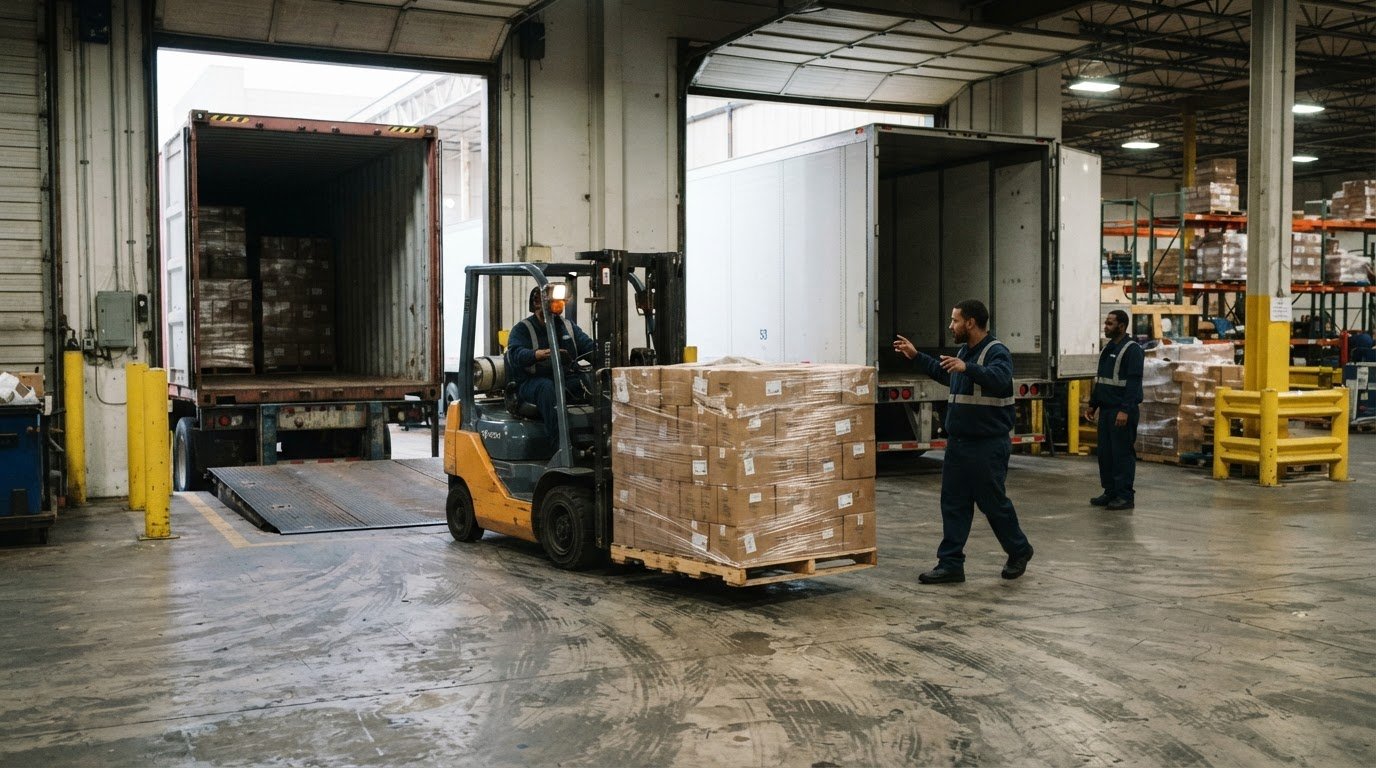

A direct route isn’t always the quickest or simplest choice. Send inventory straight to an Amazon fulfillment center when the products and cartons are ready for delivery; use a prep center when the shipment needs extra preparation or handling first. Routing an FBA shipment through a U.S. prep center adds an estimated 3-5 days, so that extra stop should solve a specific readiness need. Understanding how to set up final delivery for FBA shipments starts with choosing the route that fits the inventory.
If you’re weighing delivery options, balance preparation needs against extra handling. This guide explains how to choose a shipment method, prepare cartons, confirm destination details, and coordinate delivery timing. A logistics provider can help manage each handoff and keep inventory moving toward its assigned fulfillment center.
Key Takeaways
- Choose direct delivery when inventory is ready for the fulfillment center; use a prep center when extra handling is needed.
- Align product packaging and carton preparation with the shipment plan to help prevent avoidable delivery issues.
- Provide accurate ship-from and fulfillment-center destination details so the shipment can be routed correctly.
- Plan transportation and delivery appointments together, allowing time for each handoff on the way to the fulfillment center.
Carton and product packaging requirements
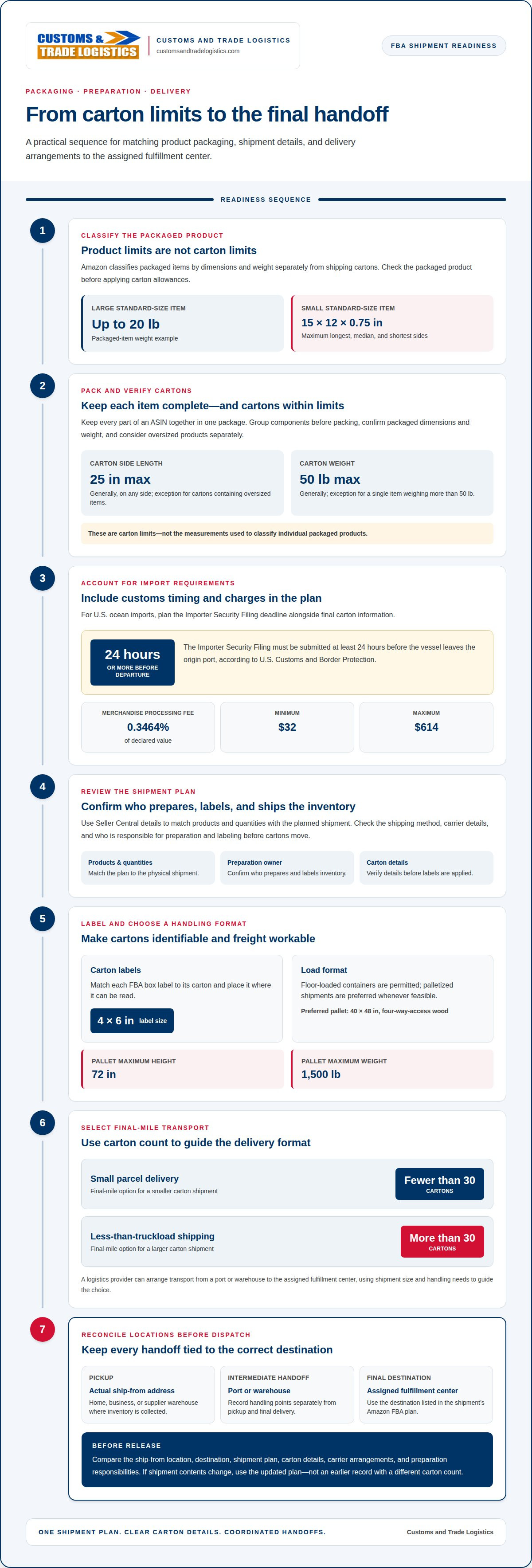
- Separate product limits from carton limits. Amazon classifies packaged items by dimensions and weight, while shipping cartons have separate limits. For example, a large standard-size packaged item can weigh up to 20 lb. A small standard-size packaged item can measure up to 15 inches on its longest side, 12 inches on its median side, and 0.75 inches on its shortest side. Keeping these categories distinct helps prevent a product’s size from being mistaken for a carton allowance.
- Match each item to its packaging needs. Keep every part of an ASIN together in one package so the product arrives complete. Group components before packing to avoid separating a required part into another carton. For standard-size products, confirm packaged dimensions and weight before adding them to the shipment plan. Consider oversized products separately because carton limits may include an exception for cartons containing oversized items.
- Keep cartons within shipment limits. Amazon FBA cartons generally must not exceed 25 inches on any side unless they contain oversized items. They generally must weigh no more than 50 lb, with an exception for a single item over that weight. These are carton limits, not the same measurements used to classify individual packaged products. A professional preparing cartons can account for both, then ensure carton contents and recorded shipment details agree.
- Coordinate packaging with import timing and charges. For US ocean imports, the Importer Security Filing must be submitted at least 24 hours before the vessel leaves the origin port, according to U.S. Customs and Border Protection. U.S. Customs and Border Protection lists the US Merchandise Processing Fee as 0.3464% of declared value, with a minimum of $32 and a maximum of $614. These import details belong in the shipment plan alongside final carton information, not as a substitute for it.
How a logistics provider handles carton labeling and shipment preparation
Final-mile options include small parcel delivery for fewer than 30 cartons and less-than-truckload shipping for more than 30. A logistics provider can arrange transport from a port or warehouse to the assigned Amazon fulfillment center, using the shipment’s size and handling needs to guide the choice.
- Review the shipment plan. Use Seller Central details to match products and quantities with the planned shipment. The plan also identifies the shipping method, carrier details, and who will prepare and label the inventory. Review it with your logistics provider before cartons move toward the fulfillment center.
- Confirm who handles preparation. The shipment plan records whether you or another party will prepare and label the inventory. Coordinate that responsibility with the shipping route so cartons do not arrive at a port or warehouse without the agreed preparation. Confirm carton details before labels are applied.
- Apply and position carton labels. The provider matches each FBA box label to the corresponding carton and places it where it can be read. FBA box labels can be printed on 4 × 6-inch labels. Clear, correctly matched labels help connect each physical carton to its shipment details during handling and delivery.
- Choose the handling format. Amazon permits floor-loaded containers, but prefers palletized shipments whenever feasible. Palletized freight should use 40 × 48-inch, four-way-access wood pallets whenever possible. A pallet’s maximum height is 72 inches and its maximum weight is 1,500 pounds, so the provider can plan pallet configuration around those limits.
- Coordinate the final handoff. The provider aligns the selected carrier method with the shipment plan and destination details before dispatch. For a smaller carton shipment, small parcel delivery may fit; a larger load may call for less-than-truckload transport. For FBA shipment coordination, label preparation and freight handoffs can be planned together.
Providing destination information for professional FBA delivery setup
- Record the pickup location accurately. The ship-from address tells the carrier where to collect the inventory. This could be a home, business, or supplier warehouse. Use the actual pickup location in the shipment details, then align collection arrangements with the freight route. For example, inventory collected from a supplier warehouse needs that warehouse’s address, not your office address.
- Use the fulfillment center destination tied to the shipment. The Amazon FBA shipping plan provides the destination for that shipment. Use those details to route the freight to the correct receiving location, rather than relying on an older shipment record or a general Amazon warehouse address. This is especially important when separate plans have different destinations.
- Match destination details to the shipment plan. Keep the products and quantities, shipping method, carrier details, and preparation and labeling responsibilities connected to the correct destination record. If you change the shipment contents, use the updated plan when arranging dispatch, not an earlier version with a different carton count.
- Keep each handoff location clear. A shipment may move from a supplier or port through a warehouse before final delivery. Record the pickup address, any intermediate handling point, and the Amazon fulfillment center as distinct locations. This prevents an intermediate warehouse from being mistaken for the final destination and makes the next step clear to everyone handling the freight.
- Reconcile details before dispatch. Before release, compare the ship-from location, destination, shipment plan, and carrier arrangements. If the pickup point is a supplier warehouse, make sure its address matches the collection plan. Confirm that the final destination matches the Amazon location assigned to the shipment. Consistent details help reduce routing confusion during delivery.
Delivery timing to fulfillment centers
Plan the Amazon FBA delivery as a chain of handoffs, not one travel estimate. Ocean transit from China to a fulfillment center usually takes 35-50 days; air freight is estimated at 8-14 days. Port-to-fulfillment-center trucking is estimated at 1-3 days.
- Build in each leg. Add customs clearance, port handling, inland transport, and any prep-center stop to the schedule. Routing through a U.S. prep center adds an estimated 3-5 days. These stages affect the arrival plan, so the correct format is a timeline that tracks each handoff, not only vessel or flight transit.
- Arrange the appointment. Amazon fulfillment centers generally require delivery appointments requested 24-72 hours in advance. A logistics provider coordinates the request through Amazon Carrier Central, using shipment and carrier details to seek an appointment slot. The provider then aligns dispatch timing with the appointment confirmation.
- Prepare appointment information. Coordinate the delivery request using the shipment plan, assigned destination, carrier details, and expected arrival timing. Shipment, carton, and pallet information help connect the request to the arriving load. Consistent records reduce the risk of a mismatch between the scheduled delivery and the freight presented at the warehouse.
- Follow progress through delivery. Coordinate shipment status with the carrier and confirm delivery using available transport updates and records. If a load is late, damaged, or arrives without an appointment, work with the carrier and fulfillment center to determine the next handling step. Record the freight’s condition and current location to clarify the issue.
- Account for possible charges. Appointment, missed-appointment, and other charges depend on the shipment and applicable terms, so there is no single fee for every FBA delivery. Review relevant transport and handling charges in the shipment plan before dispatch.
For help coordinating freight timing and the final handoff, plan your FBA delivery logistics.
Customs and Trade Logistics: Delivery and Redistribution Services
Customs and Trade Logistics helps Amazon sellers coordinate shipments from import arrival to final fulfillment-center delivery through Delivery and Redistribution Services. This can help when inventory needs freight handling after arriving in the United States or requires customs clearance before inland delivery.
International Freight Logistics supports planning across transportation legs, while Customs Clearance Services cover the import clearance stage. Sellers importing from China can also use Import From China Consulting to plan the wider import process. The right support depends on the inventory’s location, the steps still required, and the fulfillment-center destination assigned by Amazon.
For help planning the next delivery handoff, contact Customs and Trade Logistics.
Set Your Next FBA Shipment Up for a Clear Handoff
Before inventory begins its next journey, decide who will coordinate movement from origin through final delivery. A clear point of responsibility keeps shipment decisions connected as plans develop, especially when sourcing, transport, and fulfillment involve different parties. It also gives your business a clearer basis for planning replenishment and responding to changes in shipment details.
A practical approach to how to set up final delivery for FBA shipments starts with matching the route and support to each shipment’s needs. Consider where the inventory is, what work remains, and how the delivery handoff fits your operating schedule. With those priorities clear, you can plan a route around your business instead of relying on assumptions.
For support with the next shipment, contact Customs and Trade Logistics. A conversation can help you identify the logistics support that fits your import and delivery plans, so you can move forward with greater clarity.
Frequently Asked Questions
How can a logistics provider help determine whether to ship straight to an FC or use a prep center first?
Choose the delivery route based on whether inventory is ready for the assigned fulfillment center or needs more preparation. If products and cartons are ready, direct delivery avoids an extra handoff. A prep center may suit shipments that need additional preparation before onward transport. Consider whether the extra stop supports inventory readiness and fits the shipment schedule.
How can a logistics provider set up final delivery for an Amazon FBA shipment?
A logistics provider can help you set up final delivery for FBA shipments by coordinating movement from pickup to the assigned fulfillment center. This connects inventory details, carrier arrangements, preparation, and the final handoff. For example, if a supplier warehouse is the pickup point, its address must match the collection plan. Keeping each stage tied to the correct shipment helps avoid mix-ups.
What is final delivery in the Amazon FBA inbound shipping process?
Final delivery is the last transportation leg to the assigned Amazon fulfillment center. It follows earlier steps such as international transport and port handling, where applicable. For example, after imported inventory clears the port, a carrier may move it onward from the port or an intermediate warehouse. This completes the planned route to the shipment’s receiving destination.
How can a logistics provider select a carrier and arrange a delivery appointment for FBA shipments?
When setting up final delivery for FBA shipments, match carrier arrangements to the shipment format, pickup point, load details, and destination. An appointment request through Amazon Carrier Central uses shipment and carrier details to connect the request with the arriving load. Coordinate the requested time with dispatch so freight movement aligns with the appointment.
What are Amazon FBA warehouse delivery requirements for pallets, cartons, and labels?
Amazon FBA deliveries need cartons and labels that match the shipment plan, while palletized loads should follow the stated pallet specifications. Reconcile carton-level details with the physical load before dispatch. Keep every part of an ASIN together in one package so the fulfillment center receives the complete product, not separated components.