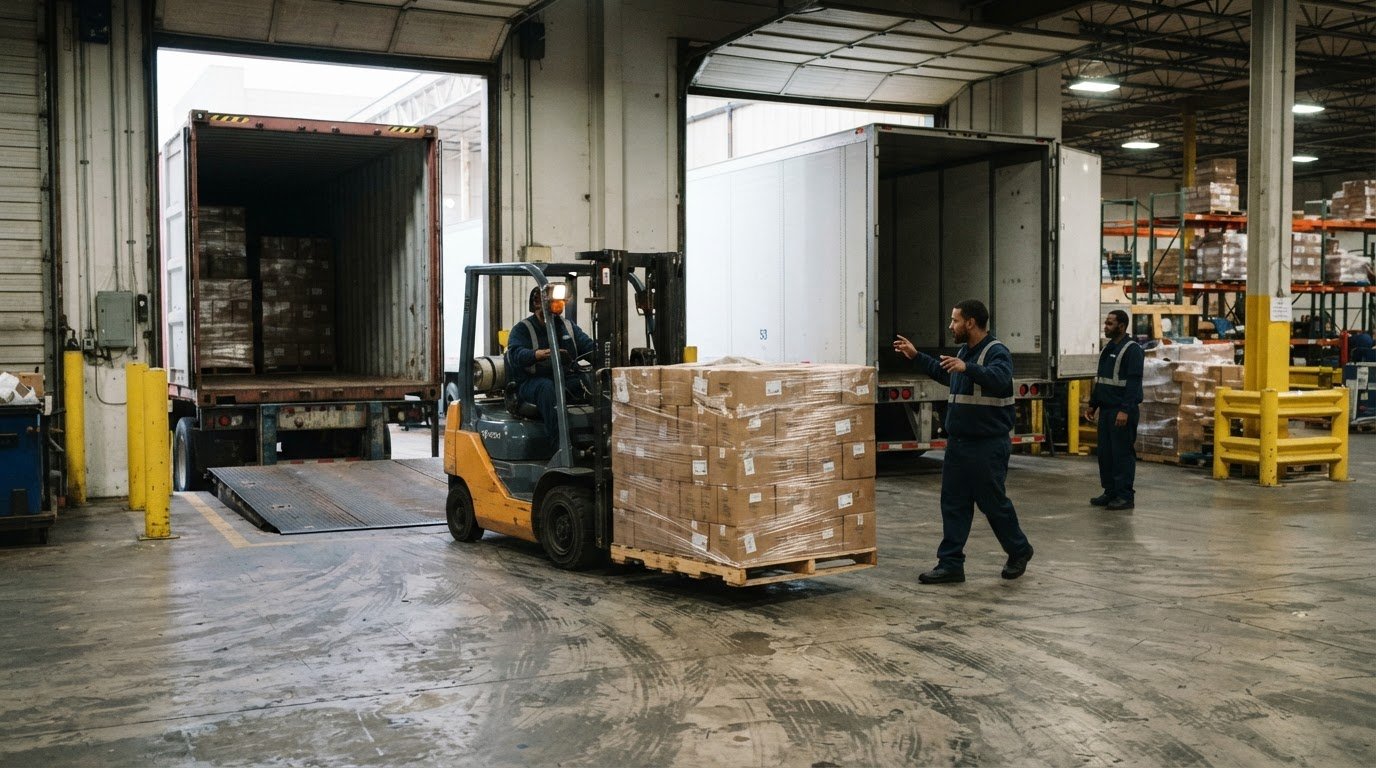

A ship can be delayed before it reaches the berth, then wait longer as cargo moves through a crowded terminal. That’s the practical reality of port congestion and its impact on shipping: limited infrastructure, labor shortages or a sudden rise in trade can slow unloading and delay deliveries.
A late shipment may look like a problem with one vessel or port. But congestion can ripple through schedules, cargo availability and inventory plans, making it harder to manage the wider supply chain.
This article explains the main causes of port congestion, how delays build and what they mean for importers. It also covers how infrastructure investment and alternative ports or routes can ease pressure, and why planning for schedule changes matters when goods are on the move.
Key Takeaways
- Recognize how infrastructure limits, workforce disruptions, weather and sudden demand can combine to slow cargo movement.
- Trace delays beyond the port to understand how they affect delivery schedules, inventory planning and equipment availability.
- Assess whether investment in terminal capacity and inland connections, or routing through an alternative port, could ease a bottleneck.
- Build flexibility into future shipment plans by allowing for schedule variability and avoiding reliance on a single route.
Infrastructure investment and alternative routing
For U.S. importers, reducing delays takes more than moving ships faster. Port capacity, inland connections and route choices all shape how cargo moves through bottlenecks.
Terminal Investment and Capacity
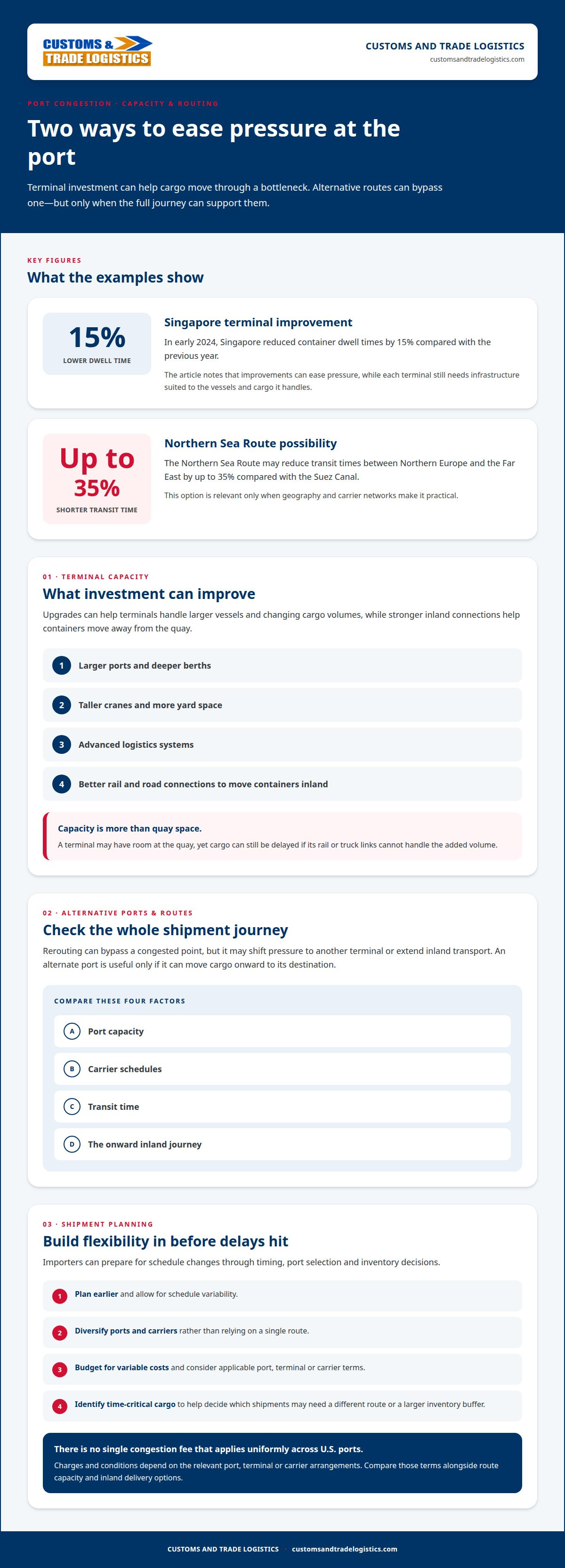
Terminal investment means expanding or upgrading facilities that receive, handle and move cargo. Larger ports, deeper berths, taller cranes, more yard space and advanced logistics systems can help terminals manage larger vessels and changing volumes. Better rail and road connections also move containers away from the quay, freeing room for incoming shipments. In early 2024, Singapore reduced container dwell times by 15% compared with the previous year. Such improvements can ease pressure, but each terminal needs infrastructure suited to the vessels and cargo it handles.
Alternative terminals can add flexibility when a primary port reaches capacity. Their value depends on available equipment, labor, yard space and inland connections, not just distance from the destination. A port with room at the quay may still leave cargo delayed if rail or truck links cannot handle the added volume.
Alternative Ports and Shipping Routes
Alternative routing shifts a shipment to a different port or sailing route to bypass a congested point. The Northern Sea Route may reduce transit times between Northern Europe and the Far East by up to 35% compared with the Suez Canal. That route is relevant only when geography and carrier networks make it practical. For other shipments, an alternate port may be more useful if it has workable inland connections to the final destination.
Before changing routes, logistics planners weigh port capacity, carrier schedules, transit time and the onward journey. Rerouting may ease one bottleneck but add pressure at another terminal or extend inland transport. The best alternative is a route that can move the shipment through every leg, not merely around a crowded harbor.
Shipment Planning and Congestion Measures
Shipment planning builds flexibility into timing, port selection and inventory decisions before delays disrupt delivery. Importers can plan future shipments earlier, allow for schedule variability, diversify ports and carriers, and budget for variable costs. Identifying time-critical cargo also helps businesses decide which shipments need a different route or a larger inventory buffer.
Ports and governments manage congestion through infrastructure projects, improved intermodal connections and operational coordination. There is no single congestion fee that applies uniformly across U.S. ports: charges and conditions depend on the relevant port, terminal or carrier arrangements. When comparing alternatives, consider those terms alongside route capacity and inland delivery options.
Causes including pandemic disruptions, e-commerce, labor shortages, and weather
Labor disputes, weather closures, infrastructure limits and equipment shortages can all slow cargo handling. When several occur at once, vessels wait, terminals lose capacity and shipping schedules slip.
Pandemic and E-Commerce Disruptions
Pandemic disruptions occur when sudden demand and operating constraints overwhelm normal port and transport capacity. COVID-19’s aftermath made congestion a major global supply-chain issue, while e-commerce adds pressure through frequent shipments and tight replenishment cycles. In 2022, a two-month lockdown in Shanghai left vessels waiting weeks for berth allocation. Those delays can then affect container availability and arrival plans far beyond China.
As cargo volumes shift, terminal operations and inland logistics must absorb the change. If containers arrive faster than trucks, rail services or yards can move them, the backlog grows. Importers may then face less predictable transit and need to adjust inventory plans.
Labor and Equipment Shortages
Workforce disruptions reduce the people and operating hours available to load, unload and move containers. Labor shortages, strikes, contract negotiations and safety restrictions can lower terminal productivity and delay vessel turnaround. Equipment shortages create another constraint: without enough chassis or other equipment to move containers, cargo can remain at the terminal even after unloading.
The effects spread across the logistics chain. Limited truck availability, rail congestion and delayed container pickup can prevent cargo from leaving the port efficiently. During the U.S. West Coast congestion crises of 2014-2015 and 2022, labor negotiations were among the factors reducing operational efficiency. Missed vessel schedules can also leave exporters with fewer opportunities to move cargo.
Infrastructure Limits and Labor Disputes
Infrastructure limits arise when berths, cranes, storage yards or inland connections cannot handle arriving ships and cargo smoothly. A terminal built for steady volumes may struggle with a sudden increase, while limited storage makes it harder to position containers for pickup. Labor disputes can compound these physical constraints by slowing work when ports need to clear accumulated cargo.
Weather creates a separate disruption. Hurricanes, typhoons, flooding, heavy fog and high winds can close terminals, delay vessel arrivals or reduce cargo-handling capacity. After severe weather, ports may need days or weeks to work through delayed vessels and containers. Disruptions at the Suez Canal or Red Sea can also force carriers to reroute vessels, shifting pressure to other ports and changing transit schedules.
For shipments affected by these disruptions, international freight logistics can help coordinate movement across changing routes and schedules.
What is port congestion and why does it matter?
Port congestion occurs when arriving cargo exceeds a terminal’s ability to handle it smoothly. Its effects reach beyond the harbor, influencing global schedules, freight movement and inventory planning.
Congestion Measurement and Affected Ports
Congestion is measured through indicators such as vessel waiting time, port dwell time and delays to scheduled calls. During July 13-19, 2026, Beira, Mozambique, recorded a median vessel wait of 22.03 days, the highest among the ports listed here. Conakry, Guinea, recorded 9.42 days in the same period. These snapshots show conditions at specific ports, not a permanent ranking.
Vessels waiting or maneuvering also consume fuel, adding emissions and environmental pressure around ports. The amount depends on vessel activity and how long ships wait.
Transit Times and Delivery Effects
Congestion lengthens transit when ships queue for berths, spend longer handling cargo or miss their next sailing window. A closure at a major Chinese port can delay departures, bunch vessel arrivals elsewhere and slow containers moving through connected routes. Importers may receive goods later than planned, while exporters can miss onward connections.
These ripple effects can continue after a port reopens. Containers and vessels may be out of position, and carriers must adjust schedules across multiple ports. Delivery timing can become less predictable even for shipments that never called at the original port.
Freight Rates and Vessel Availability
Congested vessels spend longer waiting or completing port calls, leaving less time for their next scheduled voyage. This reduces vessel availability across a carrier’s network and can limit space on particular routes. The effect depends on how widespread the delay is and whether carriers can adjust rotations or deploy other vessels.
Freight rates can also respond to capacity constraints and disrupted schedules. When space becomes harder to secure, importers may have less flexibility in sailing dates or route choices. A delay at one hub can therefore affect freight planning across connected services.
Impacts on Importers and Exporters
For importers, delayed arrivals complicate inventory decisions, replenishment and delivery commitments. Exporters may face equipment shortages at origin or miss vessel cutoffs when containers and ships are displaced. Both sides can lose planning flexibility as schedules shift across the global network.
For example, an import container may arrive after a planned distribution window, while an exporter’s cargo waits for another sailing. Tracking vessel waits, cargo dwell and schedule changes helps businesses understand where disruptions may affect delivery plans.
Causes of port congestion
Congestion often starts when cargo arrives faster than port operations can process it. The causes of port congestion and its impact on shipping can involve berths, cranes, container yards and inland transport. A delay in one area can strain the wider supply chain.
Yard capacity is a key pressure point. Once container yards operate above 75-80% utilization, positioning containers becomes harder and equipment takes longer to reach the next job. Hamburg’s yard occupancy was approximately 80%-85% in the Current Port Congestion Report updated July 27, 2026. At that level, each incoming container competes for limited space with cargo awaiting collection.
Volume surges create another bottleneck. Terminals designed for steady flows may be overwhelmed by sudden increases of 30-40%, especially when trucks, rail or chassis cannot keep pace. A container that stays on the dock blocks space for new arrivals. Delayed pickups can therefore affect vessel unloading, yard operations and onward delivery at the same time.
Ship size can intensify that strain. Vessels larger than 18,000 TEUs can generate more than 6,000 container moves during peaks lasting only a few hours. Even a capable terminal faces concentrated demand for cranes, labor, yard slots and transport equipment. If any part falls behind, cargo queues grow and vessel turnaround slows.
Network decisions can shift congestion rather than remove it. When carriers reroute cargo, alternative ports may receive more shipments than they can handle. To understand port congestion and its impact on shipping, consider how a route change may ease one severe bottleneck while affecting operations elsewhere. Importers should weigh port capacity alongside inland connections, equipment availability and cargo pickup plans.
If a supply chain faces recurring port bottlenecks, coordinate freight planning around congestion to help keep shipments moving.
Customs and Trade Logistics
Customs and Trade Logistics helps businesses coordinate import shipments when port delays disrupt arrival plans or complicate the next leg of delivery. Its customs clearance services and international freight logistics support goods through import processes and onward transport. For China-related supply chains, Import from China consulting can help businesses plan their approach, while delivery and redistribution services support the next stage after goods arrive.
Turn to Customs and Trade Logistics when a shipment’s route, clearance or delivery needs coordinated attention. The support needed depends on where the cargo is moving and what must be managed along the way. If port congestion is affecting your import plans, contact Customs and Trade Logistics to discuss your shipment.
Build More Flexibility Into Your Next Shipment
Understanding port congestion and its impact on shipping can help you make deliberate decisions before cargo is in transit. Consider how a schedule change could affect stock availability, customer commitments and the next step in delivery. A practical plan identifies shipments with the least room for delay and where route or timing flexibility matters most.
For a shipment affected by port disruption, Customs and Trade Logistics supports the import process with customs clearance, international freight logistics and import consulting for goods from China. Discuss your shipment’s route and logistics needs to plan support around the movement of your goods.
Contact Customs and Trade Logistics to talk through your import plans. With clear priorities and experienced logistics support, you can approach changing shipping schedules with greater confidence.
Frequently Asked Questions
What causes port congestion in global shipping?
Port congestion usually develops when vessel arrivals, cargo volumes and terminal-handling capacity fall out of balance. A burst of arrivals can occupy berths and yard space faster than containers move inland; labor, equipment or weather disruptions can deepen the queue. For example, if trucks cannot collect unloaded containers promptly, yard space tightens and port teams have less room to process cargo from arriving vessels.
How does port congestion affect shipping transit times and schedule reliability?
Congestion makes transit times less predictable by disrupting the planned sequence of vessel calls. A ship delayed at one port may reach later ports behind schedule, miss a service connection or have its next departure adjusted. For a business coordinating a delivery appointment, even a short schedule change can require revised transport arrangements and a new receiving plan.
How much does port congestion cost shippers, carriers, and consumers?
There is no single cost that applies to every shipment. Shippers may face added transport, handling or inventory expenses; carriers can incur higher operating costs when vessels and equipment spend longer waiting or out of position. Consumers may see some costs reflected in product prices, but the effect depends on the goods, supply chain and whether businesses absorb or pass on added expenses.
How do congestion-related delays affect ocean freight rates and surcharges?
Delays can tighten available vessel space and disrupt carrier schedules, which may influence freight rates on affected routes. Congestion-related surcharges are not universal: whether they apply, and how they are calculated, depends on the carrier’s terms and the shipment’s circumstances. When planning around a quoted rate, businesses should account for the route, service schedule and any applicable charges.
What are the impacts of port congestion on supply chains, inventory, and product availability?
Congestion can cause products to arrive later than the inventory plan expected, increasing the risk of a stock gap. A manufacturer waiting for an imported component, for example, may have other materials in stock but still be unable to complete an order. Delayed replenishment can also force changes to purchasing or distribution plans while the affected goods remain unavailable to customers.
What strategies can shippers use to avoid or reduce port congestion delays?
Shippers can improve resilience by planning orders earlier, identifying time-sensitive cargo and allowing flexibility in delivery dates. They can also consider alternate ports or routes, diversify carriers and build inventory buffers for goods that are difficult to replace quickly. For example, separating urgent cargo from routine replenishment can help a business prioritize shipments and choose routes that fit each delivery need.