

In the 2026 "Age of Enforcement," a customs broker who acts as a simple data entry clerk isn't just unhelpful; they're a direct threat to your business's survival. You probably already feel the pressure of heightened scrutiny from U.S. Customs and Border Protection. With the recent implementation of Executive Order 14411, the margin for error has vanished. It's frustrating to realize that a single misstep by your partner could lead to a $5,000 late ISF penalty or even a voided IOR number due to inaccurate Form 5106 data.
We want to replace that anxiety with the security of a true partnership. This guide reveals the critical red flags when hiring a customs broker so you can spot subpar service before it triggers a compliance audit. You'll learn how to distinguish between high-volume "paperwork filers" and the seasoned mentors who actually protect your bottom line. We will outline exactly what to look for during your vetting process to ensure your international trade operations remain smooth, predictable, and fully compliant.
Key Takeaways
- Understand why viewing your broker as a mere data entry clerk is a major legal liability in today's strict regulatory environment.
- Identify communication-based red flags when hiring a customs broker, such as slow response times during the sales phase or high account manager turnover.
- Learn to spot "hidden fee" traps and the dangers of "vague classification" where brokers guess HS codes to save time at your expense.
- Evaluate a broker’s expertise by testing their current knowledge of Section 301 tariffs and their specific experience within your industry.
- Discover how a family-owned, "safe pair of hands" approach offers the personal advocacy and security that large, impersonal firms often lack.
The Risks of a Bad Hire in the 2026 'Age of Enforcement'
To understand the stakes, we must first answer a basic question: What is a Customs Broker? At their core, these professionals are your legal representatives before U.S. Customs and Border Protection (CBP). They aren't just administrative assistants; they are the shield between your business and federal regulators. In the current "Age of Enforcement," triggered by Executive Order 14411 on June 3, 2026, the margin for error has narrowed significantly. One of the most dangerous red flags when hiring a customs broker is a firm that treats your imports as simple data entry rather than a high-stakes legal filing.
Why Your Broker’s Mistakes Are Legally Your Own
CBP expects you to exercise "Reasonable Care" in every shipment. This legal standard means you're responsible for the accuracy of every HS code and valuation submitted. If your broker guesses a classification to save time, you're the one who faces retroactive duty bills and potential audits. This is why finding the right customs clearance services us businesses rely on is a critical decision. A broker who skips the vetting process for your specific products is ignoring their duty of advocacy, leaving you exposed to penalties that could have been avoided with a more thorough partner.
The True Cost of a 'Cheap' Broker
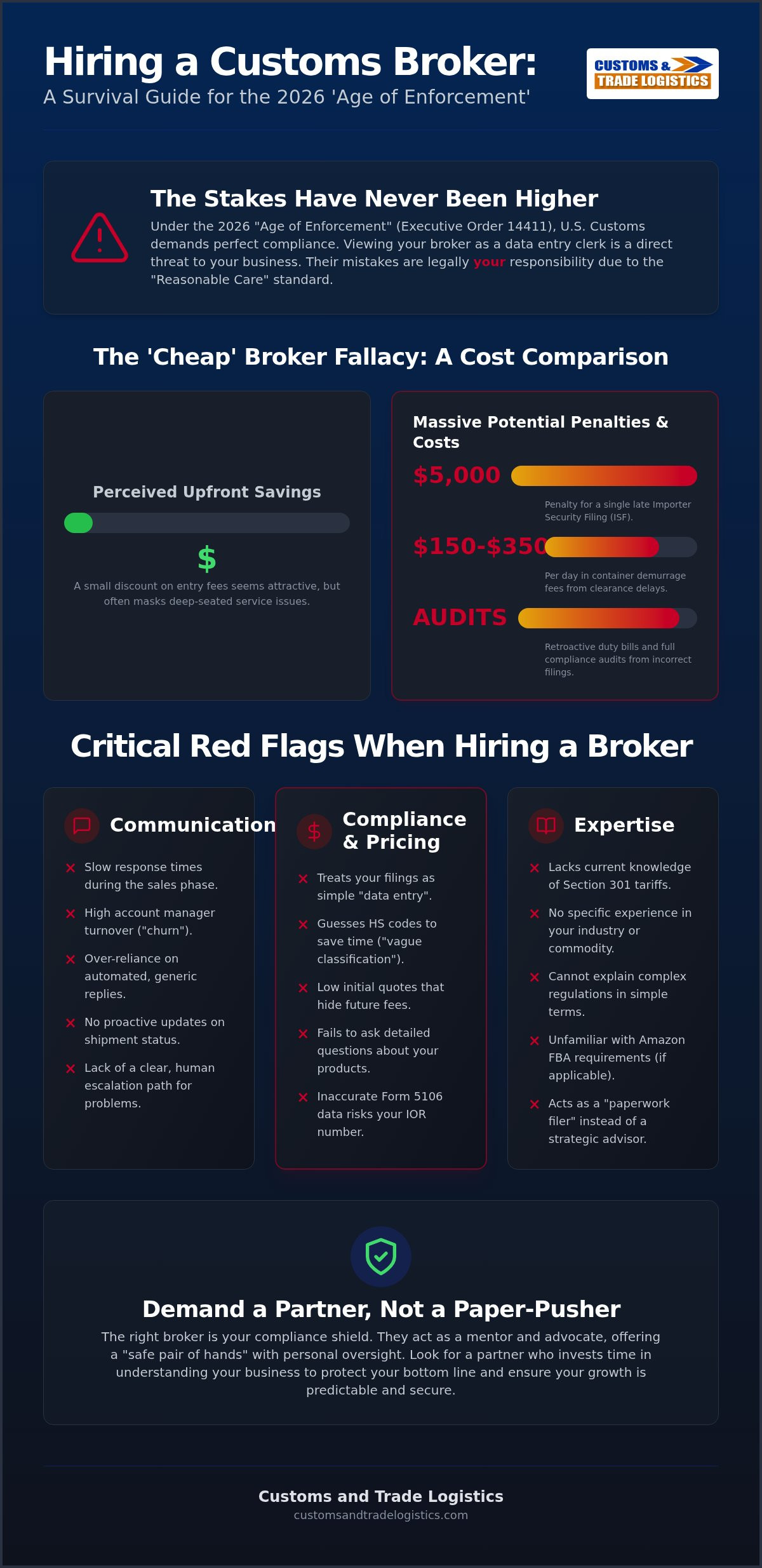
Low entry fees often mask the true cost of poor service. While you might save a small amount upfront, a sloppy broker can trigger container demurrage fees ranging from $150 to $350 per day if they fail to clear your cargo promptly. Even worse, the $5,000 penalty for a late Importer Security Filing (ISF) can wipe out an entire shipment's profit margin. When you're assessing the red flags when hiring a customs broker, look past the initial quote. Think of expert brokerage as compliance insurance that protects your brand from the "Age of Enforcement" scrutiny. Price-shopping in this field is a high-risk strategy that trades your peace of mind for a few dollars of short-term savings.
Communication Breakdown: Warning Signs of a Distant Broker
How long did you wait for a callback during the initial sales phase? If a potential partner takes days to respond when they are trying to win your business, imagine the silence you will face when a shipment is flagged for a cargo exam. One of the most telling red flags when hiring a customs broker is a lack of immediate, clear communication. In the high-stakes environment of 2026, where a single day of delay can trigger hundreds of dollars in demurrage fees, you need a partner who answers the phone. Large, impersonal firms often suffer from "Account Manager Churn," where your file is passed between junior clerks who don't know your business history. You deserve a direct line to a professional who understands official licensing and compliance standards, not just someone reading from a script.
Proactive updates are especially critical for China-to-US ocean freight. Because these routes are subject to frequent port congestion and shifting trade regulations, a "no news is good news" approach is a recipe for disaster. If you find yourself constantly chasing your broker for status reports, they aren't managing your logistics; you're managing them. You might find it more effective to consult with a dedicated partner who prioritizes personal oversight over automated ticket systems.
The 'Automated Reply' Trap
Technology should facilitate service, not replace it. Many digital-first forwarders rely on "canned" responses that provide generic tracking data without explaining the context of a delay. Small and medium enterprises (SMEs) need a mentor who can explain why a shipment is stuck and what the specific path to resolution looks like. A major red flag is the absence of a clear escalation path. If your only point of contact is a "no-reply" email address or a chatbot, your business is at the mercy of an algorithm during a crisis.
Special Considerations for Amazon FBA Sellers
Amazon sellers operate on razor-thin margins and strict delivery windows. A broker who doesn't understand the nuances of FBA redistribution can cause your inventory to be rejected at the warehouse gate, leading to massive logistical headaches. When vetting a partner, ask about their experience with Amazon's specific labelling and appointment requirements. If they seem confused by these details, it is a sign they lack the specialized knowledge required for FBA freight forwarding services. In the 2026 "Age of Enforcement," choosing a broker who understands the platform's unique compliance hurdles is the only way to protect your seller rating and your bottom line.
Compliance and Pricing Gaps: Avoiding the 'Hidden Fee' Trap
Have you ever received a quote that seemed too good to be true? In the world of international trade, it usually is. One of the most common red flags when hiring a customs broker is a suspiciously low "per entry" fee that lacks a comprehensive breakdown of standard logistics charges. These budget brokers often make up the difference by adding opaque surcharges later or, worse, by cutting corners on your compliance work. A reliable partner will always provide transparency in custom brokerage service fees, ensuring you can budget accurately without fear of "surprise" invoices after your cargo has already cleared the port.
The Power of Attorney (POA) is another area where you must remain vigilant. This document grants your broker the legal authority to act on your behalf with the U.S. government. If the POA contains overreaching legal language or seems intentionally vague, it's a major red flag. You need to know exactly what authority you're granting and for how long. A trustworthy mentor will walk you through this document, explaining your rights and responsibilities rather than just asking for a signature.
The 'One-Size-Fits-All' Classification Risk
Your specific products deserve a tailored HS code analysis. A major red flag when hiring a customs broker is a firm that never asks for product spec sheets, ingredient lists, or samples. If they are guessing your classifications to save time, they're essentially inviting a CBP audit. In 2026, the "Age of Enforcement" means that lazy classification triggers immediate red flags at the border; leading to inspections that can cost between $300 and $1,000 per exam. Don't settle for a partner who treats a complex electronics shipment the same way they treat a load of basic textiles.
Understanding the Invoice: Service Fees vs. Duties
You should always demand a clear breakdown of what constitutes a government pass-through versus a broker’s service fee. For example, the Merchandise Processing Fee (MPF) is currently set at 0.3464% of the entered value; this is a federal requirement, not a broker charge. If you see "Administrative" or "Miscellaneous" fees that weren't explained upfront, ask for a justification. A transparent fee schedule is the hallmark of a professional firm; it allows small businesses to maintain predictable margins and avoid the "hidden fee" trap that often plagues those who prioritize the lowest initial quote.
Assessing Industry Expertise: Is Their Knowledge Outdated?
Do you know if your broker stays up to date with the latest trade wars? In 2026, the regulatory environment shifts almost weekly. One of the major red flags when hiring a customs broker is an ignorance of current Section 301 tariffs on China imports. These tariffs can add 25% or more to your landed costs. If your broker isn't proactively discussing these updates with you, they aren't a partner; they're a liability. You need a mentor who understands the "Age of Enforcement" and can steer you away from outdated classification habits that no longer pass CBP scrutiny.
The "generalist" problem is another concern for specialized importers. A firm that clears basic textiles might be completely lost when handling complex electronics or FDA-regulated goods. With over 35 years of industry experience, we've seen how specialized knowledge prevents costly delays at the border. If a broker doesn't offer Import From China Consulting as a core service, they likely lack the granular expertise needed to navigate the specific compliance hurdles of that trade lane. If you want to ensure your business has this level of protection, speak with a seasoned customs expert who understands your specific industry.
The 'Digital Black Box' vs. Human Oversight
Many new, tech-first brokers sell you on a slick dashboard while hiding their lack of expertise behind a "digital black box." While software is a helpful tool, it cannot replace the judgment of a licensed professional. AI often fails to account for nuanced regulatory shifts that a human mentor would spot immediately. A significant red flag is having no direct access to the person actually signing your customs entries. You should always be able to ask why a specific decision was made. If you're only interacting with a chatbot, your compliance is at risk.
Navigating Port-Specific Nuances
Does your broker have national coverage across all US ports? Each port has its own local operational quirks and exam tendencies. A broker who only knows one port might struggle when your shipment is diverted or when you need specialized Delivery and Redistribution Services after clearance. This end-to-end oversight is especially vital for new businesses looking to scale. For those just starting out, understanding import logistics for startups is the first step toward long-term growth. When you vet a partner, ask for a concrete checklist of how they handle 2026 regulations at different ports of entry to ensure they have the reach you need.
Choosing a Partner Who Values Your Growth
Finding a partner who values your long term success transforms the import process from a source of stress into a competitive advantage. While we've spent time identifying the red flags when hiring a customs broker, it's equally vital to recognize the "green flags" of a dedicated partner. A family owned firm offers a level of personal investment that large, impersonal forwarders simply can't match. This "safe pair of hands" approach replaces the constant anxiety of CBP audits with the security of professional oversight. For growing Amazon brands, this transition from a simple vendor to a seasoned mentor is what allows you to scale without being sidelined by regulatory hurdles.
The 5-Question Interview Checklist
Before you sign a Power of Attorney, use this checklist to verify that your potential partner has the expertise and transparency you require. If they hesitate to answer any of these, consider it a final warning sign.
- Question 1: Who is my daily point of contact, and are they a licensed broker? You need to know you aren't being handed off to a junior clerk.
- Question 2: How do you handle Section 301 tariff updates for China imports? They should have a proactive system for alerting you to duty changes.
- Question 3: Can you provide a transparent breakdown of all service fees? Demand clarity on what's a government pass-through versus their own service charge.
- Question 4: What is your process for verifying HS codes for new products? Look for a methodical approach that involves reviewing your spec sheets.
- Question 5: What is your protocol if a shipment is flagged for a CBP exam? A good broker has a plan for coordinating with truckers and terminals to minimize storage costs.
Why Customs and Trade Logistics is the Right Choice
Customs and Trade Logistics brings a 35 year legacy of demystifying the complexities of global trade. We've built our reputation on a blend of professional assurance and approachable warmth, acting as a stabilizing force for SMEs and Amazon sellers. Our specialization in China-to-US logistics means we've already navigated the exact challenges you're facing in the 2026 "Age of Enforcement." We don't just file entries; we provide the protective care your business needs to thrive in a regulated world.
Vetting is the first step toward a seamless international shipping chain. Don't let the red flags when hiring a customs broker lead to costly delays or audits. Instead, choose a partner who views your compliance as their own responsibility. Your peace of mind starts with a reliable advocate who is deeply invested in your growth. If you're ready to move forward with a partner who values personal connection as much as technical accuracy, it's time to start your journey with a firm that treats your business like family.
Protecting Your Global Trade Future
Navigating international trade in 2026 doesn't have to be a source of constant worry. By staying alert to the red flags when hiring a customs broker, you can pivot from simply reacting to delays to building a resilient, compliant supply chain. Remember that a true partner offers more than just data entry; they provide the defensive strategy needed to navigate shifting tariffs and strict federal oversight. You deserve a mentor who answers your questions before they become crises.
Customs and Trade Logistics brings 35+ years of family-owned expertise to every shipment. We provide national clearance at all US ports and specialize in the nuances of China-to-US logistics. Our team acts as your dedicated advocate, ensuring your business stays on the right side of the "Age of Enforcement" while you focus on scaling your brand. We're here to lift the administrative burden from your shoulders and replace it with a sense of security.
Secure your imports with a partner you can trust—contact Customs and Trade Logistics today. Your international operations are in safe hands when you choose a partner who treats your success as their own. Let's build a predictable, efficient journey for your cargo together.
Frequently Asked Questions
What is the biggest red flag when interviewing a customs broker?
The most significant of the red flags when hiring a customs broker is a lack of transparency during your initial consultation. If a potential partner can't clearly explain their vetting process or hesitates to provide a direct point of contact, they're a liability. You need a mentor who prioritizes communication over automation. A broker who "ghosts" you during the sales phase will surely leave you stranded during a CBP cargo exam.
Can I switch customs brokers if I am unhappy with my current one?
You can switch your customs broker at any time by revoking your current Power of Attorney (POA) and issuing a new one to your chosen partner. Many businesses make this move when they outgrow a generalist or feel like just another number at a large digital forwarder. Transitioning to a family-owned firm often provides the "safe pair of hands" and personal advocacy that high-volume agencies lack.
Do I need a customs broker specifically for imports from China?
While any licensed broker can file your entries, the complexity of Section 301 tariffs makes specialized Import From China Consulting essential. These shipments face intense scrutiny in the 2026 "Age of Enforcement." A specialist understands the granular classification hurdles and anti-dumping duties specific to China trade lanes. This expertise prevents the costly misclassification errors that trigger retroactive duty bills and federal audits for uninformed importers.
Why are some customs brokerage fees so much lower than others?
Suspiciously low fees are often one of the red flags when hiring a customs broker; they usually indicate a low-touch, automated service model. These "budget" brokers often cut corners on HS code verification or hide additional surcharges in the final invoice. While you might save a few dollars on the entry fee, the lack of expert oversight can lead to thousands of dollars in demurrage and penalties.
What happens if my broker makes a mistake on my customs entry?
Legally, the Importer of Record is responsible for all errors on a customs entry, even if the broker made the mistake. You'll be the one paying the back-duties and penalties to CBP. This is why choosing a diligent partner with 35+ years of experience is so important. You aren't just buying data entry; you're buying a legal safeguard for your business's financial health and reputation.
How do I verify if a customs broker is properly licensed in the US?
You should always ask for the firm's corporate license number and verify it through the official U.S. Customs and Border Protection website. A legitimate partner will have no trouble providing this information or discussing their 2026 annual permit status. Verification is a simple step that protects you from fraudulent actors using AI-generated paperwork or voice deepfakes to pose as legitimate trade professionals.
Should I use my freight forwarder's in-house broker or hire an independent one?
In-house brokers offer convenience, but they often prioritize the forwarder's logistics volume over your specific compliance needs. Hiring an independent, family-oriented broker ensures you have a dedicated advocate who is solely focused on your legal protection. This independent oversight provides a necessary "check and balance" in your supply chain, ensuring that speed never comes at the expense of accurate classification or regulatory safety.
What is a 'Reasonable Care' standard and how does it affect me?
Reasonable Care is the legal standard that requires you to act with the diligence of a prudent businessperson when importing goods. CBP expects you to vet your broker, verify your HS codes, and ensure your valuations are accurate. You can't simply blame your broker for errors; you must prove you took active steps to ensure compliance. Choosing a seasoned mentor is the best way to meet this high legal burden.


