

What if a broker can clear your shipment, but the paperwork, freight coordination, and final delivery are left to separate parties? Knowing how to vet a customs broker means looking beyond a quote or a smooth first conversation. Find out who is qualified to handle customs entry, who manages the supporting documents, and where the broker’s responsibility ends.
It’s reasonable to want clear answers before trusting someone with an import. Unclear responsibilities and handoffs can create confusion while a shipment is moving, especially when you’re comparing customs brokerage alone with broader logistics support. The right fit depends on your goods, shipping needs, and the level of coordination you expect.
This guide gives you a practical framework for reviewing credentials, communication, compliance processes, and service scope. You’ll learn what to ask about document handling, customs entry, freight coordination, and delivery, so you can compare brokers on more than price. Customs and Trade Logistics brings more than 35 years of industry experience supporting U.S. importers with customs clearance and connected logistics needs. Map responsibility from the first documents through final delivery to choose a brokerage relationship with clearer expectations and fewer surprises.
Key Takeaways
- Learn how to vet a customs broker by checking credentials, service scope, and how the broker explains its compliance process.
- Use current official CBP resources to verify credential procedures, then clarify who is responsible for each step of the entry.
- Compare brokerage, paperwork handling, freight coordination, container transport, and delivery to spot gaps between services.
- Ask focused questions about import experience, document handoffs, responsibilities, and communication before authorizing work.
- Decide whether brokerage-only support fits your shipment or whether coordinated freight and delivery support better match your needs.
Why Vetting a Customs Broker Matters Before Your First Entry
A customs entry is more than a formality. The information filed can affect whether a shipment moves through the customs process smoothly or prompts questions and delays. Before authorizing a broker, understand what they handle, what information they need from you, and who is responsible for each handoff.
A customs broker supports the customs entry process, but hiring one doesn’t transfer every import responsibility to them. Brokerage is distinct from arranging international freight, coordinating with a supplier, transporting a container, or delivering goods to their destination. Some providers focus on customs clearance; others coordinate several stages. A good fit starts with a clearly defined scope.
What a customs broker does, and what the importer remains responsible for
Customs brokers help importers prepare and submit customs entry information as authorized representatives. The Importer of Record (IOR) supplies accurate details about the goods and transaction and remains responsible for its import obligations. A broker can work from the information you provide, but unclear product descriptions or incomplete transaction details remain issues for the importer to address.
A shipment may need more than entry filing. Supplier documents must reach the right person, freight must be coordinated, and cargo may need transport and final delivery. Confirm which tasks fall within the brokerage agreement and which are handled separately. Don’t assume that “customs broker” means full shipment management.
Risks a careful vetting process can help reduce
Incomplete paperwork or vague product details can prompt questions, corrections, or other processing issues. Even when the information exists, a shipment can be harder to manage if no one knows who must provide it, review it, or pass it along. Clear communication before filing helps expose gaps while there’s still time to address them.
Vetting can’t guarantee that every entry will proceed without complications. It helps you understand the broker’s qualifications and process, set expectations for communication, and identify where your team must stay involved.
- Qualifications: Know who is handling customs brokerage and how to verify their credentials.
- Scope: Identify whether support covers entry preparation only or also connects with freight and delivery coordination.
- Handoffs: Agree on who supplies, checks, and shares documents and shipment updates.
Credentials, process, and service scope belong together. A qualified broker is a practical fit only when responsibilities and handoffs are clear. That’s the foundation of how to vet a customs broker before your first entry.
How to Verify a Customs Broker’s Credentials and Compliance Process
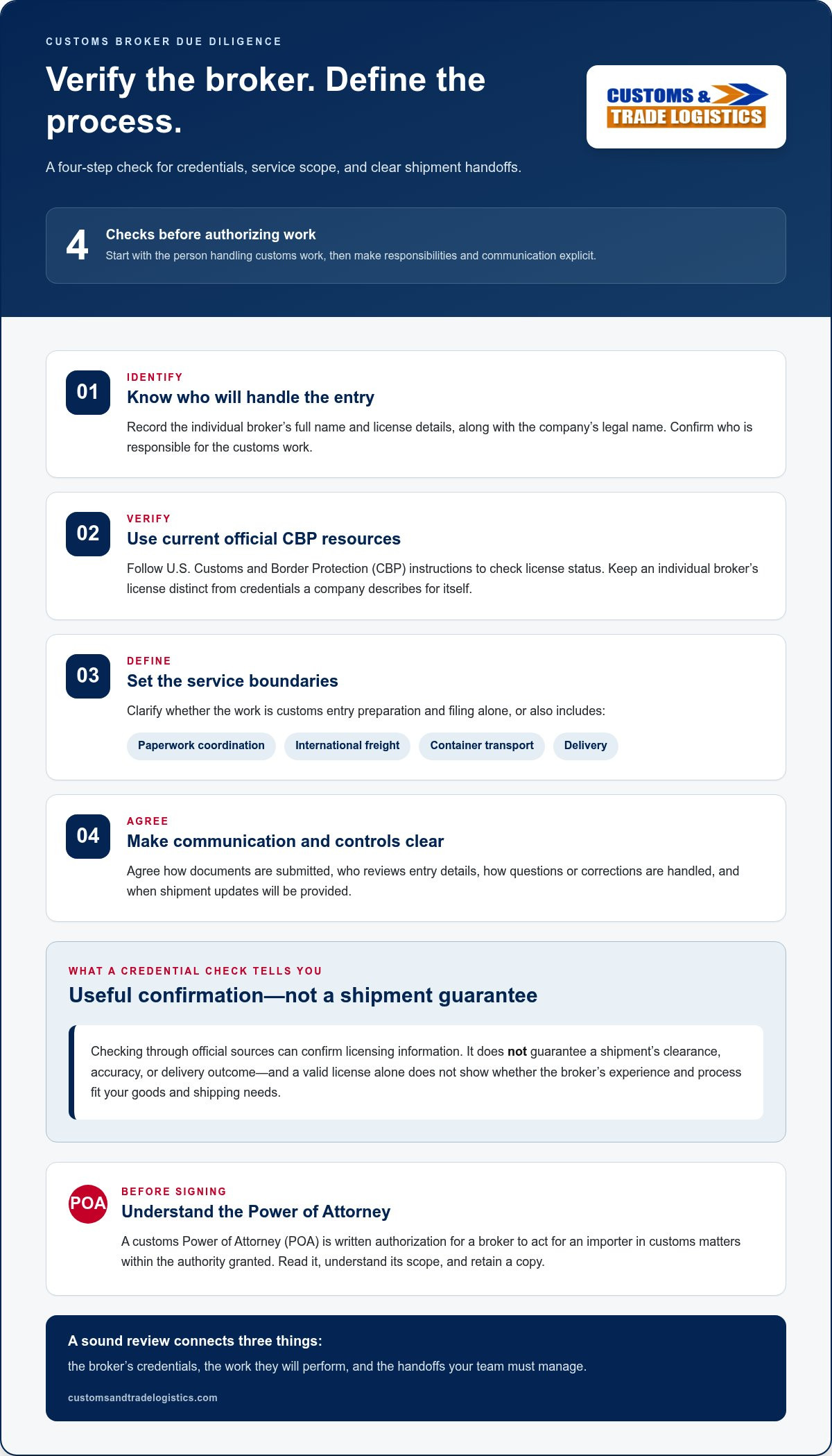
A credential check is a useful first step, not a complete assessment. To learn how to vet a customs broker, follow a sequence: identify who will handle the entry, verify their credentials through official resources, define the work they’ll perform, and agree on how they’ll keep you informed. U.S. Customs and Border Protection (CBP) is the relevant federal authority for customs broker licensing; its guidance explains who is licensed, regulated and empowered by U.S. Customs and Border Protection.
- Identify the broker. Record the individual broker’s full name and license details, along with the company’s legal name. Confirm who is responsible for customs work.
- Check current credential information. Use CBP’s current official broker resources and follow their instructions to verify license status. If a company describes its own credentials, distinguish that statement from the individual broker’s license.
- Define the service scope. Establish whether the work covers customs entry preparation and filing alone or also includes paperwork coordination, international freight, container transport, or delivery.
- Review communication and controls. Agree on how documents are submitted, who reviews entry details, how questions or corrections are handled, and when you’ll receive updates.
A credential check through official sources can confirm licensing information, but it does not guarantee a shipment’s clearance, accuracy, or delivery outcome. A valid license matters, but it can’t tell you on its own whether a broker’s experience and operating process fit your goods and shipping needs.
Check the broker’s identity and license status
Match the broker’s name and license details against the current CBP process rather than relying only on a website or proposal. Keep the individual’s credentials separate from the company’s broader capabilities: a company may coordinate logistics and paperwork, while a licensed broker handles customs work. Ask who will prepare and submit your entry, and get a specific answer.
Review authority, documentation, and filing controls
A customs Power of Attorney (POA) is written authorization for a broker to act for an importer in customs matters within the authority granted. Read the document before signing, understand its scope, and retain a copy. Before filing, establish who supplies and checks invoices, product details, and other entry information, and how the final information is approved.
Set a clear recordkeeping routine. Know where submitted documents and filing records will be kept, who can access them, and how corrections will be shared. These steps help prevent uncertainty about which version is current or who needs to act next. For importers who want customs clearance connected with shipping and delivery planning, customs clearance and freight coordination support can connect those parts of the import journey.
Compare Broker Service Scope, Communication, and Shipment Coordination
A service description can bundle several import tasks, but the responsibilities behind each task still need to be clear. Compare what’s included, who owns each handoff, and how updates reach your team. For a closer look at customs entry support, read this customs clearance services guide. You can also use U.S. Customs and Border Protection’s broker resources to review the regulatory context as you assess credentials.
Map who handles each stage of an import
Trace the shipment from supplier handoff to final delivery. Customs clearance concerns the entry process; freight coordination arranges movement between locations, while container transport and delivery redistribution cover later movement toward the destination. A written responsibility map shows where one party’s work ends and another’s begins.
| Service area | Clarify responsibility | Handoff to map |
|---|---|---|
| Customs brokerage | Who prepares and submits customs entry information? | Who supplies and reviews the entry documents? |
| Paperwork coordination | Who gathers, checks, and shares shipment documents? | How are missing or revised details communicated? |
| International freight | Who coordinates the shipment’s international movement? | When does freight information reach the customs team? |
| Container transport | Who arranges movement after the relevant release and handoff? | Who coordinates the next transport step? |
| Final delivery | Who arranges delivery or redistribution to its destination? | Who confirms delivery instructions and communicates changes? |
Use the table as a starting point, then record the agreed boundaries in writing. This makes it easier to spot an uncovered step, such as a shipment arriving before the customs team has the documents it needs.
Assess communication and fit for your business
Good communication is practical, not just friendly. Notice whether explanations make unfamiliar customs terms understandable and document requests specific. Clarify who your day-to-day contact is, how updates are shared, when you should expect routine communication, and who handles an urgent question or correction. Your team should also know where to find the latest submitted information and what needs its review.
Match the setup to your operation. Occasional, straightforward shipments may call for a narrower scope; frequent imports, complex products, limited in-house staffing, or several delivery steps may benefit from more coordination. If you import from China, this China import logistics guide offers additional context. A clear scope and communication plan help you decide whether the arrangement fits your business before work begins.
Use These Questions to Vet a Customs Broker Before Authorizing Work
Before work begins, get a clear picture of how the brokerage process will fit your imports. These questions help you understand experience, document responsibilities, communication, and shipment scope. They don’t promise that every shipment will move without a hitch. They help both sides identify what information is needed and who is responsible for each step.
Questions about experience, products, and entry preparation
- What experience applies to shipments like mine? Look for a specific explanation of how the broker’s experience relates to your product type, shipment pattern, and documentation needs, rather than a general claim of expertise.
- What information must I provide about my products, supplier, and transaction? The answer should clarify what your team needs to gather and who will review those details for entry preparation.
- How are missing or inconsistent documents handled before submission? Clarify how gaps are identified, who follows up for corrections, and how updated documents are distinguished from earlier versions.
- What happens if product or transaction details change? Establish how revised information is shared and whether the entry is reviewed again before filing.
Questions about accountability, updates, and escalation
- Who is my main point of contact? Identify the person or team coordinating routine communication and where document requests should go.
- How will I receive updates on filing status and next steps? A useful explanation names the communication method and clarifies what updates cover, including any action needed from your business.
- How are customs entry and shipment coordination connected? If freight, container transport, or delivery is part of the arrangement, establish who coordinates each stage and where the handoffs occur.
- What happens if a shipment needs attention? Understand how an issue is escalated, who communicates it, and how decisions and follow-up actions are documented.
Clear answers should describe responsibilities and handoffs in plain language. The right process may vary with shipment complexity, business size, and the support required. Customs and Trade Logistics is a family-owned customs brokerage and logistics consulting firm with more than 35 years of industry experience. It supports importers with customs clearance, paperwork handling, freight coordination, and delivery needs.
For additional guidance tailored to growing companies, explore this import support guide for small businesses. The Customs and Trade Logistics website also describes support for connecting customs clearance with freight and delivery planning.
Choose a Broker Relationship That Supports Your Whole Import Journey
The right brokerage relationship is a fit across four areas: verified credentials, clear responsibilities, dependable communication, and service scope that matches your shipment. Brokerage-only support may suit an importer who already coordinates freight and final delivery in-house. If your team also needs help arranging international freight, container transport, or delivery redistribution, coordinated support can make the handoffs easier to manage.
Match support to your importing operation
Think about how often you import, how much product and supplier information each shipment requires, and who on your team can manage documents and logistics. A business with occasional, straightforward shipments may need a focused customs entry process. More frequent shipments, complex product details, or limited in-house capacity may call for closer coordination across several stages.
Smaller importers shouldn’t have to guess their way through unfamiliar steps. Accessible guidance can clarify what information is needed, who provides it, and what happens next. Amazon sellers can explore this Amazon seller import guide for considerations related to their import and fulfillment needs.
Make the next step clear and manageable
Before discussing an import, gather a simple outline of the shipment: what you’re importing, supplier details, the expected shipping arrangement, available product and transaction documents, and where the goods need to go. Note how often you expect to ship and which tasks your team can handle. You don’t need to know every customs term in advance. A clear starting picture helps shape a practical conversation about scope and responsibilities.
Customs and Trade Logistics is a family-owned customs brokerage and logistics consulting firm with more than 35 years of industry experience. Its importer-focused support connects customs clearance with international freight coordination and delivery needs, helping small and medium-sized businesses understand how each part of an import fits together.
Vetting a broker isn’t about finding a promise that nothing will go wrong. It’s about choosing a capable partner, understanding your own role, and agreeing on a process that suits your operation. With clear information and defined handoffs, importing can feel easier to plan and manage. Discuss your import logistics needs with Customs and Trade Logistics.
Move Forward With a Clear Import Plan
Choosing a customs broker is about more than confirming credentials. The right fit combines a clear compliance process with defined responsibilities, responsive communication, and service scope that matches your shipment. Before authorizing work, make sure you understand who supplies and reviews documents, who handles customs entry, and whether freight and delivery coordination are part of the arrangement.
That’s the practical heart of how to vet a customs broker: verify qualifications, discuss how the process works, and map each handoff through the shipment’s journey. These steps won’t guarantee every entry will be problem-free, but they can help you set expectations and make informed decisions.
Customs and Trade Logistics is a family-owned customs brokerage and logistics consulting firm with more than 35 years of industry experience, supporting importers across U.S. customs ports. Its work can connect customs clearance with international freight coordination and delivery needs, giving small and medium-sized businesses experienced support as they plan imports.
Ready to bring your shipment details and logistics questions into focus? Discuss your import logistics needs and take the next step with a clearer plan.
Frequently Asked Questions
How do I verify that a customs broker is licensed?
Use current official resources from U.S. Customs and Border Protection (CBP) to check the individual broker’s license status. Start with the broker’s full name and identifying details, then follow CBP’s current instructions for verifying credentials. Distinguish the individual’s license from the company’s broader logistics services. A license check is one part of how to vet a customs broker; it doesn’t establish that the broker’s service scope or communication process fits your imports.
What questions should I ask before hiring a customs broker?
Ask about experience with shipments and product details like yours, what supplier and transaction information you must provide, and how missing or revised documents are handled. Clarify who prepares and submits entry information, what other shipment tasks are included, and who coordinates freight or delivery. Ask who your main contact will be, how updates are shared, and how issues are documented and escalated. Clear answers should define responsibilities without promising perfect outcomes.
Can a customs broker guarantee that my shipment will clear customs?
No broker can guarantee a customs clearance outcome. A broker can help prepare and submit entry information based on the details and documents available, but customs decisions and shipment processing can depend on factors outside the broker’s control. The importer also remains responsible for providing accurate product and transaction information. Focus on whether the broker explains its process, identifies information it needs, and communicates next steps if questions or issues arise.
What is the difference between a customs broker and a freight forwarder?
A customs broker supports the customs entry process, while a freight forwarder generally coordinates transportation of goods between locations. Customs clearance and freight movement are distinct tasks, even when a business coordinates both. Neither term automatically means a provider manages supplier communication, container transport, or final delivery. Before work begins, map each stage of your import and identify who handles the documents, entry, international freight, and delivery handoffs.
How much does it cost to hire a customs broker?
Costs depend on the work involved and the shipment’s requirements, so there isn’t one universal fee. Customs entry preparation and submission may be scoped separately from international freight coordination or delivery arrangements. Review a written breakdown that distinguishes brokerage and logistics service charges from other import-related charges, and clarify which tasks are included. Comparing scope alongside cost helps you understand what support you’re paying for without assuming every quote covers the same work.
What happens if customs paperwork is incomplete or inaccurate?
Incomplete or inconsistent documents can lead to follow-up questions, requests for corrected details, or processing problems that affect shipment movement. The broker may need clarification or updated information before proceeding, while the importer remains responsible for accurate product and transaction details. Keep a clear process for identifying the current document version, approving entry information, and responding to requests. Prompt, organized communication can help address gaps, but it can’t guarantee a particular customs outcome.
Should a small business use a customs broker?
A customs broker can be helpful when a small business needs support preparing and submitting customs entry information or understanding the steps involved in an import. The right level of support depends on shipment frequency, product complexity, and your team’s capacity to manage documents and logistics. Some businesses need brokerage support; others may benefit from coordinating customs clearance with freight and delivery planning. Clear responsibilities and accessible explanations make the process easier to manage.