

What if a shipment that looks ready to sail is already at risk of a customs hold? The common mistakes when importing from China often start before goods leave the factory: inaccurate paperwork, an incorrect HTS code, or a shipping quote that leaves key costs unclear. Importing isn’t just delivery. It also involves a legal filing where details can affect clearance and landed cost.
It’s understandable to focus on product quality, production timing, and getting your goods on the water. But US import requirements have tightened: since June 24, 2026, the $800 de minimis threshold has been suspended, and certain CPSC-regulated consumer products require electronic certificate data at entry starting July 8, 2026. Small oversights can lead to expensive delays.
This guide breaks down 10 costly errors and explains what to check before shipping. You’ll learn how to prepare key documents, review classification and customs value, account for agency requirements, and understand how Incoterms affect cost visibility and control. Use it as a practical roadmap for moving goods through US Customs with fewer surprises and a clearer landed-cost plan.
Key Takeaways
- Understand why customs clearance is a legal declaration, and how paperwork errors can lead to delays and port charges.
- Learn what to review in your product classification and customs value, including details such as assists and tooling costs.
- Compare DDP and FOB to see how your shipping term can affect cost transparency and control over your customs entry.
- Discover why FDA, EPA, FCC, and CPSC requirements can apply alongside Customs clearance.
- Spot common mistakes when importing from China and build a steadier process by vetting suppliers and planning compliance before placing an order.
The High Cost of Silence: Why Minor Errors Lead to Major Delays
Customs clearance isn’t simply a shipment being waved through. It’s the legal declaration of imported goods to the US government, including information about the products, their value, and their classification. A shipping error, such as a missed sailing, disrupts transportation. A compliance violation, such as an inaccurate declaration, can trigger a customs hold, examination, or penalty. The distinction matters: tracking may show where a shipment is, but it can’t correct the entry data holding it there.
After 35 years in customs and trade logistics, we’ve seen how quickly a paperwork issue can ripple through a business. If a shipment is held or Customs requests documents, prompt, accurate responses can help keep a manageable issue from becoming a longer disruption. Have supporting records and a point person ready to respond.
The Ripple Effect of Administrative Mistakes
One missing or inconsistent document can stall progress across the supply chain. If the commercial invoice describes goods differently from the packing list or product details, the broker may need clarification before filing or responding to Customs and Border Protection (CBP). While the shipment waits, delivery plans, production schedules, and customer commitments may also need to change.
Port storage and equipment charges depend on shipment-specific terms and deadlines, not a single universal rate. Demurrage generally accrues when a container remains at the terminal beyond its allowed time. Detention can apply when equipment isn’t returned within the permitted period after leaving the terminal. An exam hold is a government-directed inspection or review that prevents cargo from moving until the required examination and release steps are complete. Port or equipment charges may continue during the hold, adding costs while delivery and business plans are disrupted.
The “Safe Pair of Hands” Philosophy
Software can organize documents, but it can’t replace informed guidance when a product description is unclear or a filing raises questions. Small businesses and first-time importers benefit from understanding what information is needed and why. A customs broker prepares and transmits entry information and communicates with CBP on the importer’s behalf. This can help organize the process, but it doesn’t remove the importer’s responsibility for accurate details.
That approach supports Informed Compliance: importers learn their responsibilities and provide complete, accurate information, while Customs makes requirements and guidance available. Gather product specifications and shipment documents early, then resolve discrepancies before cargo moves. Incoterms clarify how buyers and sellers divide certain costs, tasks, and risks. The neutral overview of Incoterm rules can help explain the terminology, though it doesn’t replace customs requirements. Addressing these common mistakes when importing from China before shipping is more useful than discovering them after a hold.
Classification and Valuation: The #1 Source of Customs Fines
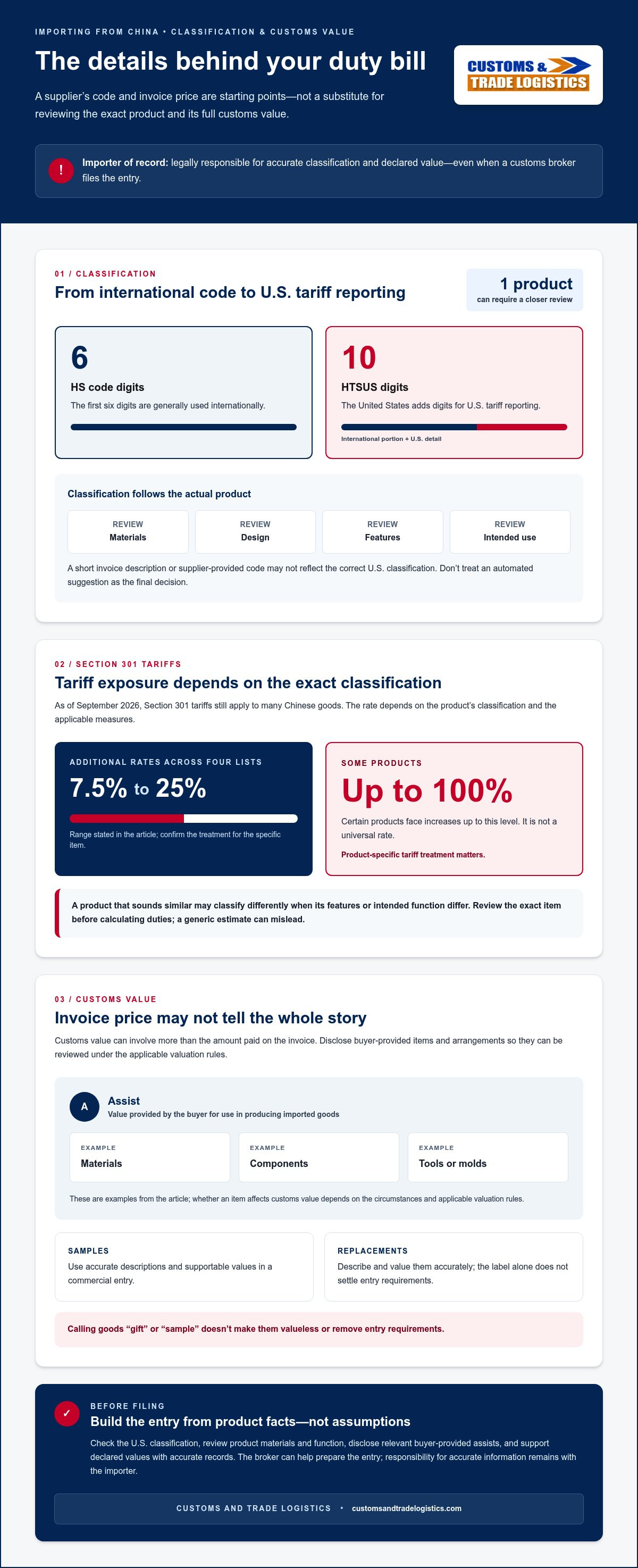
A supplier’s suggested Harmonized Tariff Schedule (HTS) code can be a useful starting point, but don’t accept it without review. The supplier may classify goods under China’s export system or use a code that doesn’t match US requirements. An incorrect classification can lead to incorrect duties, a corrected entry, delays, and potential penalties. Classification depends on the item’s actual materials, design, features, and use, not just its invoice description.
The importer of record is legally responsible for the accuracy of the entry, including classification and declared value, even when a broker files on the importer’s behalf. U.S. Customs and Border Protection outlines importers’ responsibilities and the importance of reasonable care. Don’t let an automated suggestion or supplier-provided code substitute for an informed classification decision.
HTS Code Blunders: Is Your Product Really What You Think?
The first six digits of an HS code are generally used internationally; the United States adds digits to create the 10-digit HTSUS classification used for US tariff reporting. A “plastic toy” and an “electronic learning device” might look similar in a brief product description, but their features and intended function could point to different classifications. That doesn’t establish a fixed duty difference, such as 25 percentage points. It shows why you need to assess the specific product before calculating duties.
Section 301 tariffs still apply to many Chinese goods as of September 2026. Additional rates range from 7.5% to 25% across four lists, and some products face increases up to 100%. The correct rate depends on the product’s classification and applicable measures, so confirm the tariff treatment for the exact item rather than relying on a general estimate.
The Valuation Trap: Beyond the Invoice Price
Customs value may involve more than the amount paid on the invoice. An “assist” is certain value provided by the buyer, directly or indirectly, for use in producing imported goods. Depending on the circumstances and applicable valuation rules, examples may include materials, components, tools, or molds supplied to the manufacturer. Disclose these arrangements so they can be reviewed properly instead of assuming they don’t affect value.
Samples and replacements also need accurate descriptions and supportable values in a commercial entry. Calling goods “gift” or “sample” doesn’t make them valueless or remove entry requirements. Deliberately undervaluing merchandise is a serious red flag that can invite scrutiny, corrections, penalties, or an audit. It doesn’t automatically mean an audit is mandatory, but it’s a risk no importer should create.
These are among the most consequential common mistakes when importing from China. Customs and Trade Logistics’ China import consulting helps small and medium-sized businesses and Amazon sellers work through classification and entry details before they become costly surprises.
Incoterm Misunderstandings: The DDP vs. FOB Conflict
A low freight quote can look reassuring until the shipment arrives and charges or customs questions surface. Incoterms set out certain responsibilities between buyer and seller, including delivery tasks, costs, and when risk of loss transfers. They don’t replace US Customs rules or automatically decide who is legally responsible for an import entry. That distinction matters when comparing Delivered Duty Paid (DDP) with Free on Board (FOB).
DDP can appear hands-off because, under the agreed term, the seller arranges transportation and is responsible for delivery, import clearance, and applicable duties. But the buyer may have limited visibility into the carrier, customs broker, entry data, or charges included in the quote. If something goes wrong at a US port, resolving it can be difficult when the supplier, overseas broker, and local parties each control only part of the process.
Why DDP Isn’t Always “Hands-Off”
Review the written quote and sales terms for destination handling, delivery, and other charges that may not be included in the headline price. Be clear about who will be named as importer of record and who will receive the entry documents. A power of attorney authorizes a customs broker to act for an importer, so understand its scope and the parties involved before signing. If a DDP shipment is held, your options and ability to resolve the issue depend on the contract, the entry arrangement, and who controls the information.
FOB and EXW: Taking Back Control
With FOB, the seller delivers the goods aboard the vessel at the named port of shipment, and risk generally transfers to the buyer at that point under Incoterms 2020. The buyer typically arranges ocean freight and US import clearance, giving the business more direct oversight of the freight plan and customs entry. This doesn’t eliminate risk: if cargo is damaged after transfer or held for a compliance issue, the relevant contract terms, insurance, and import responsibilities still matter.
EXW places more responsibility on the buyer, who generally arranges collection from the seller’s premises and much of the onward movement. That can be complex when the buyer has limited experience coordinating logistics at origin. Compare the full, itemized landed-cost picture, not just the supplier’s freight quote. Supplier-led shipping may simplify coordination, while independent freight coordination can provide clearer control over service providers and charges. A US-based customs broker can help align entry preparation with the buyer’s shipment plan.
These details are easy to miss among the common mistakes when importing from China. For a clearer view of budgeting beyond the freight quote, read Understanding Custom Brokerage Service Fees.
The "Other" Agencies: Forgetting FDA, EPA, and CPSC
A shipment can satisfy US Customs and Border Protection (CBP) entry requirements and still need review by another federal agency. These Partner Government Agencies (PGAs) regulate specific products, so “customs cleared” isn’t always the whole compliance picture. Depending on the item, agencies may include the Food and Drug Administration (FDA), Environmental Protection Agency (EPA), Federal Communications Commission (FCC), and Consumer Product Safety Commission (CPSC).
This catches importers who assume a simple product needs no extra paperwork. Sunglasses may raise requirements based on their design and intended use; wooden furniture may involve plant-material rules. The requirements depend on the product, its materials, and how it’s marketed. Identify relevant requirements before ordering, not after the shipment reaches a US port.
Partner Government Agency Red Flags
Use the product’s features to identify which agency rules may apply. For example:
- FDA: Food, cosmetics, medical devices, and other FDA-regulated products can require agency-specific information or compliance steps. Don’t assume every item that touches skin is regulated in the same way.
- EPA and FCC: Pesticides and certain chemical or emissions-related products may fall under EPA rules. Electronics with radio-frequency functions may be subject to FCC requirements; motorized goods can raise additional agency questions depending on their design and use.
- CPSC: Children’s products subject to applicable safety rules may require a Children’s Product Certificate (CPC). Starting July 8, 2026, importers of CPSC-regulated consumer products must electronically file certificate-of-compliance data at entry, including for General Certificates of Conformity and CPCs.
Wood products need careful attention, too. The Lacey Act declaration applies to certain plant products, not automatically to every wooden item. Determine whether the product and its materials require a declaration, and gather relevant plant and sourcing details early. Don’t assume the requirements changed in 2026 simply because you’re shipping this year.
Intellectual Property and Trademarks
Compliance isn’t limited to agency forms. A product that copies a protected brand name, logo, or distinctive design may draw scrutiny, even if the supplier calls it a “lookalike.” CBP can detain or seize goods suspected of infringing intellectual property rights when their marks are counterfeit or likely to confuse consumers about the product’s source. If you’re importing branded goods, keep authorization and purchase records that support your right to use the brand.
Agency and intellectual-property checks are easy to overlook among the common mistakes when importing from China. Customs and Trade Logistics helps small and medium-sized businesses and Amazon sellers plan China imports and customs clearance. Learn more about China import compliance and customs clearance.
Logistics Roadmap: Building a Resilient China-to-US Strategy
A reliable import process starts before freight is booked. These steps help catch the common mistakes when importing from China while there’s still time to adjust product details, paperwork, and shipping plans.
- Vet the supplier and request product details early. Collect accurate specifications, materials, intended use, packaging information, and product images. Clear details support classification and help identify possible agency requirements before production or shipment.
- Plan customs clearance before placing the order. A customs broker can review product and shipment information early, helping identify entry considerations and build a more realistic landed-cost estimate before you commit to a purchase.
- Compare customs bond options as your volume grows. A continuous customs bond may suit businesses making regular imports, while other options may fit occasional shipments. It doesn’t automatically reduce costs, so compare the approach with your expected shipment frequency and needs.
For a broader view of preparation, transportation, and delivery, read this guide to Import From China Logistics.
The Amazon FBA Specific Roadmap
Amazon is generally the destination or ultimate consignee for an FBA shipment, not the importer of record. The seller must arrange import clearance and ensure the entry identifies the responsible importer correctly. Also distinguish cargo requirements for US entry from Amazon’s separate shipment-preparation rules: labels, carton details, and pallet preparation must match the applicable FBA shipment plan. Review both sets of requirements before goods leave China. See the Amazon Seller Import Help guide for more FBA freight-planning context.
Scaling with a Logistics Partner
Your process should grow with your business. A first-time importer may need help understanding documents and entry steps; an established brand may need consistent coordination across repeat orders, freight, clearance, and redistribution. Professional freight coordination can improve visibility into the shipment plan and help identify avoidable charges, though actual landed costs depend on the goods, route, and terms.
Customs and Trade Logistics is a family-owned brokerage with 35 years of experience supporting small and medium-sized businesses and Amazon sellers. The team takes a mentor-like approach to China import consulting and customs clearance, offering guidance as your importing operation develops. Contact Customs and Trade Logistics for a consultation to plan your next import with a clearer roadmap.
Make Your Next China Import a More Confident One
The common mistakes when importing from China often begin before a shipment sails: incomplete paperwork, inaccurate classification or valuation, unclear shipping terms, and overlooked agency requirements. A stronger process starts early. Gather product details, plan customs entry before ordering, and account for every party and requirement involved in moving goods to the United States.
That preparation gives you a clearer view of compliance obligations and landed costs, and helps reduce avoidable surprises as your business grows. You don’t have to work through every detail alone. Customs and Trade Logistics brings 35+ years of family-owned expertise, customs clearance across US Customs ports, and specialized support for small and medium-sized businesses and Amazon FBA sellers.
Ready to plan your next shipment with a knowledgeable partner? Get a Professional Customs Consultation and take the next step with greater clarity and confidence.
Frequently Asked Questions
What is the most common reason US Customs seizes goods from China?
There isn’t one confirmed reason that accounts for most seizures. Misclassification, inaccurate value declarations, suspected intellectual property violations, and failure to meet applicable product requirements can all create serious problems. A shipment may also be held for review without being seized, so don’t treat every delay as a seizure. To reduce common mistakes when importing from China, provide accurate product descriptions and supporting documents, and address compliance requirements before shipment.
Can I import from China to the USA without a customs broker?
Yes, an importer may handle customs entry without hiring a broker, but the importer remains responsible for meeting applicable requirements and providing accurate information. The work can involve classification, valuation, entry documents, and requirements from other government agencies. If you’re new to importing or have complex goods, a customs broker can help prepare and submit entry information and communicate with Customs and Border Protection (CBP) on your behalf.
How much are the typical customs clearance service fees in 2026?
There isn’t one standard customs clearance service fee for every import. The service charge depends on the work involved, such as entry preparation, shipment details, and any coordination needed. Customs charges and other government-agency requirements are separate from a broker’s service fee. For budgeting, distinguish brokerage and logistics service charges from duties, taxes, and government fees, and request an itemized breakdown so you can understand which costs apply to your shipment.
What happens if my HTS code is wrong on a China import?
An incorrect HTS code can lead to a duty calculation that needs correction, a request for information, shipment delays, or penalties depending on the circumstances. It may also affect eligibility for other tariff measures. The importer of record is responsible for the accuracy of the entry, even if a supplier suggested the code or a broker filed the paperwork. Review the product’s materials, features, and use before confirming its US classification.
Do I need a single entry bond or a continuous bond for China imports?
The right bond depends on your import pattern and the entry requirements for your shipment. A single-entry bond generally covers a particular entry, while a continuous bond is designed to cover multiple entries during its term. If you import regularly, compare the options based on shipment frequency, entry details, and applicable requirements rather than assuming one always costs less. A customs broker can help explain which bond arrangement fits your importing activity.
How do I know if my Chinese supplier is using the correct Incoterms?
Check the written sales agreement and shipping quote for the specific Incoterm, named place or port, and version being used. Incoterms allocate certain delivery tasks, costs, and risks between seller and buyer, but they don’t replace US Customs rules or determine every responsibility in the transaction. Ask for a clear breakdown of freight, destination charges, import clearance, and duties, then compare those terms with your planned import arrangements.
What is the “Importer of Record” and why is it my responsibility?
The importer of record is the party responsible for ensuring imported goods are properly entered into the United States and that required information is accurate. That responsibility includes providing correct product details, classification, and customs value, as well as supporting compliance with applicable requirements. A customs broker can prepare and transmit entry information, but hiring one doesn’t transfer the importer’s legal responsibility for the accuracy of the declaration.
Does US Customs check every container coming from China?
No, CBP doesn’t physically examine every container. Shipments are subject to review and selection for examination based on government screening and other factors; the exact selection process isn’t public. Even without a physical inspection, importers still need accurate entries and required documents. Prepare as though your shipment could be reviewed, keep supporting records organized, and respond promptly if CBP or another agency requests information.