

The U.S. Chamber of Commerce estimates that 97% of U.S. importers are small businesses with fewer than 500 employees. Even a small shipment involves paperwork, entry requirements, and delivery decisions that may be unfamiliar. Finding a reliable customs broker for small business imports means looking beyond entry filing to the support that keeps each step connected.
If you’re unsure what documents to prepare or whether your shipment is getting the attention it needs, you’re not alone. A dependable broker should explain the process clearly and coordinate customs clearance with freight and delivery planning when needed. That connected support can make importing easier to manage, whether you’re bringing in goods from China or handling another international shipment.
This article explains what to look for in customs brokerage support, what information to gather before your shipment moves, and how freight and delivery coordination fit into the process. Customs and Trade Logistics has more than 35 years of experience serving small and medium-sized businesses, helping importers navigate each stage with practical guidance and careful coordination.
Key Takeaways
- Finding a reliable customs broker for small business imports starts with checking communication, relevant experience, and the broker’s process.
- Customs clearance and freight coordination are different tasks. Knowing the distinction helps you identify the support your shipment needs.
- Organize supplier, product, shipment, and delivery details before the process begins. Document needs vary by shipment.
- Plan how customs paperwork, transportation, and final delivery fit together.
- Customs and Trade Logistics supports small and medium-sized businesses with customs clearance and international freight logistics.
Why a Reliable Customs Broker Matters to a Small Business
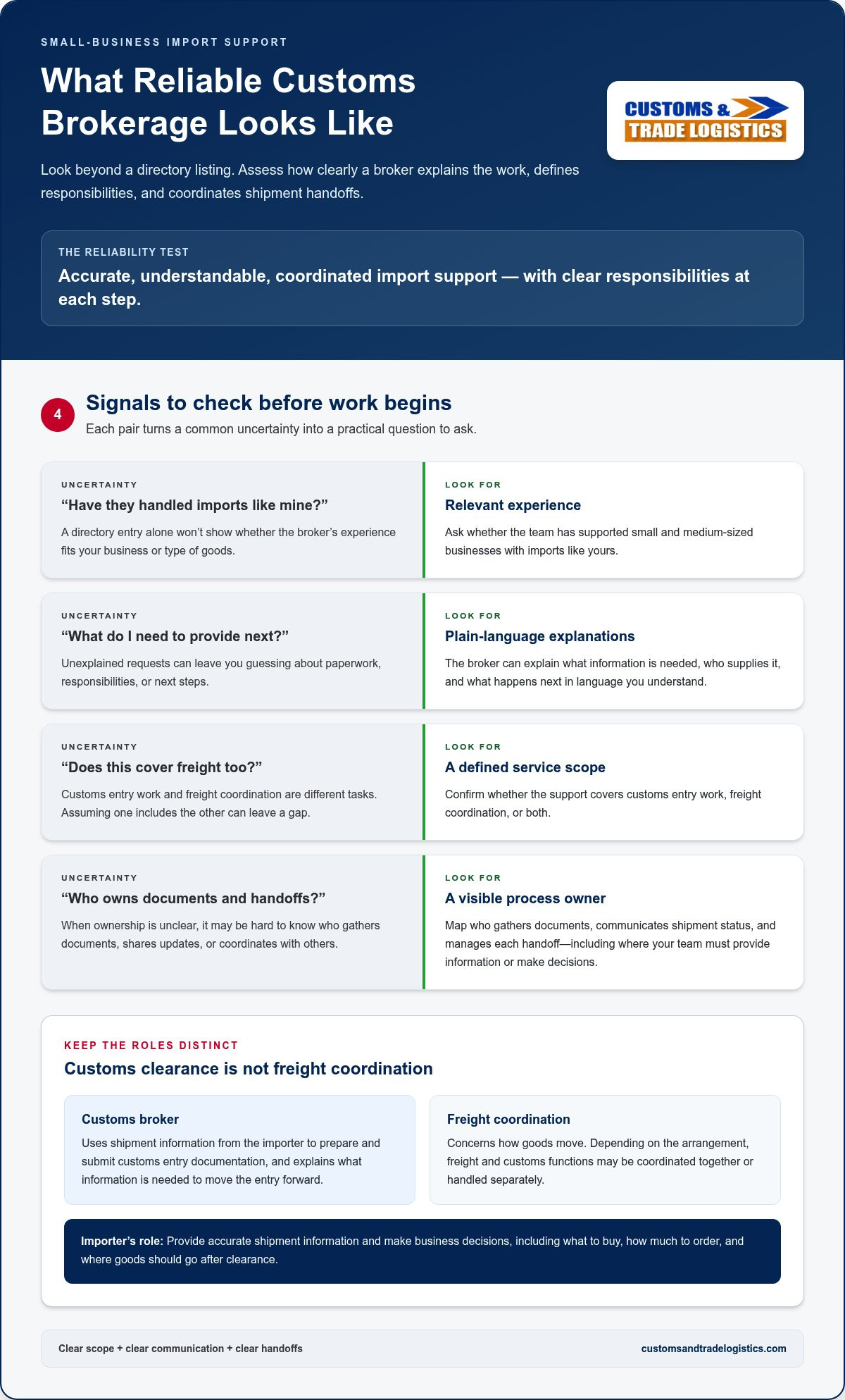
A small import can involve several moving parts: supplier details, product information, transportation, customs paperwork, and delivery planning. A customs broker handles the customs-clearance portion. Using shipment information from the importer, the broker prepares and submits customs entry documentation and explains what information is needed to move the entry forward. A customs broker supports this part of international trade, but does not automatically manage the entire import journey.
That distinction matters. Freight coordination concerns how goods move; customs clearance concerns the information and steps required for goods to enter the country. Depending on the arrangement, these functions may be coordinated together or handled separately. A broker can help connect information among the importer, supplier, and transportation stakeholders. The importer still makes business decisions, such as what to buy, how much to order, and where goods should go after clearance.
What does a customs broker do for a small business?
Imagine a small retailer importing a first order of kitchenware. The business gathers details about the goods and purchase, and the broker uses that information to prepare and submit the customs entry. If a detail needs clarification, clear communication helps the importer respond and keeps the relevant shipment parties aligned. The broker supports the customs process; the business remains responsible for providing accurate information and making its own commercial decisions.
This guidance can be especially useful when there’s no in-house trade specialist to organize unfamiliar requirements. Accurate, complete paperwork helps reduce avoidable back-and-forth. Clear updates about shipment timing also help the business plan for arrival and delivery. Brokerage support cannot remove every variable from importing, but it gives a small team an experienced point of contact for customs-related steps.
When does professional customs support become useful?
Support can help with a first import, when the process is new, and with repeat shipments, when a consistent way to gather and share information can save time. It can also help when order volume grows or shipment details change, such as a different product mix or delivery requirement. A reliable process makes it easier to identify what information is needed for each shipment without assuming every import is identical.
If you’re finding a reliable customs broker for small business imports, consider how customs work fits alongside transportation and delivery planning. For a closer look at the clearance process, read this customs clearance services guide. Clear roles and steady communication help you manage each shipment with greater confidence.
How to Recognize a Reliable Customs Broker for Small Business
A broker’s directory entry may help you locate a professional, but it won’t tell you how well their support fits your business. Look for practical signs of a dependable working relationship: relevant experience, plain-language communication, a clear service scope, and a process for documents and shipment handoffs. Reliability means accurate, understandable, coordinated import support, with clear responsibilities at each step.
Which experience and communication signals matter?
Experience with small-business imports and your type of goods can help a broker explain which shipment details matter and what you need to do next. You shouldn’t have to decode unexplained requests or guess who is responsible for supplying a document. Useful communication means clear explanations of paperwork, responsibilities, and shipment status, with enough context to plan your next steps.
Use this checklist as a starting point:
- Relevant experience: Has the team supported small and medium-sized businesses with imports like yours?
- Clear explanations: Can they describe the information needed and next steps in language you understand?
- Defined scope: Is it clear whether the support covers customs entry work, freight coordination, or both?
- Process ownership: Do you know who gathers documents, shares updates, and manages handoffs?
For another reference point, use current U.S. Customs and Border Protection resources to review broker information and the agency’s latest terminology and guidance. A directory can help with basic research, but it won’t show how a broker manages communication and responsibilities. The International Trade Administration explains that customs brokers assist importers with customs-related requirements, a role distinct from freight forwarding.
A family-owned team with deep industry experience can make unfamiliar import steps easier to navigate. Customs and Trade Logistics is family-owned and operated, with over 35 years of industry experience serving small and medium-sized businesses. Experience can help clarify the process, but it does not guarantee a particular shipment outcome.
How do you assess service scope and accountability?
Before work begins, map the shipment journey: who handles customs entry information, who coordinates transportation, and who communicates at each handoff? These functions can be connected, but they are not interchangeable. A clear outline helps prevent gaps, such as assuming freight arrangements also cover customs paperwork. It also shows where your team needs to provide information or make decisions.
Use these criteria while finding a reliable customs broker for small business imports, then discuss your import needs and how customs clearance and logistics coordination can fit your shipment.
Customs Broker, Freight Forwarder, or Both: What Does a Small Importer Need?
Customs clearance and transportation coordination are connected, but they address different parts of an import. A customs broker focuses on customs entry documentation and submission. Freight coordination arranges how goods move between locations. Some small businesses need help with one function; others benefit from coordinating both. The right scope depends on how your supplier ships, the shipment’s complexity, and what needs to happen after arrival.
| Support | Primary role | May suit an importer who… |
|---|---|---|
| Customs brokerage | Prepares and submits customs entry information using details supplied by the importer. | Already has transportation arrangements and needs help with the customs-clearance process. |
| Freight coordination | Organizes transportation and relevant shipment handoffs. | Needs help arranging movement from the supplier toward the intended destination. |
| Combined support | Connects customs clearance with freight and delivery planning. | Would rather coordinate related shipment stages through a connected logistics process. |
What does customs brokerage cover compared with freight coordination?
Consider a small retailer ordering goods from an overseas supplier. Brokerage covers the entry paperwork and information needed for customs processing. Freight coordination covers the transportation plan, such as arranging movement by container. Once the goods are moving toward their destination, delivery redistribution can help plan how they reach the retailer’s intended recipients or locations. These are distinct tasks, even when information from one stage affects the next.
A business with transportation already arranged may need customs brokerage alone. If it also needs help connecting the supplier, international movement, and final delivery, broader logistics coordination may be useful. The same arrangement won’t suit every importer.
When can coordinated import logistics simplify the process?
Coordination can reduce the number of separate handoffs an importer must manage. For example, clear communication about paperwork and shipment movement helps a small team understand which information relates to customs entry and which details concern transportation or delivery. Coordination does not remove the importer’s responsibility to provide accurate information or make business decisions, but it can make responsibilities easier to follow.
Customs and Trade Logistics handles customs clearance, international freight logistics, paperwork, shipping coordination, container transport, and delivery redistribution. This connected support can be practical for businesses importing from China or managing other international shipments. As you consider finding a reliable customs broker for small business needs, match the support to your actual shipment stages rather than assuming you need a bundled arrangement. For more on coordinating each part of a shipment, explore this international shipping logistics overview.
How to Prepare for a Customs Broker Relationship
Preparation gives your broker a clearer picture of the shipment and helps identify what information may be needed before goods move. Start early, share accurate details, and keep updates together in one place. Document needs vary by product and shipment, so use these steps as a practical starting point, not a complete legal checklist.
What information should you organize before an import?
Gather the information you have, then work through the details in order. Your broker can help clarify which shipment details are relevant to customs entry and coordination.
- Supplier and importer details: Organize contact information for your overseas supplier and importing business.
- Product information: Prepare clear descriptions of the goods, including what they are and how they’re sold or used. Be specific when you have more detail than a broad product label.
- Purchase and commercial documents: Collect available records related to the transaction, such as invoices or order information.
- Shipment plan: Share what you know about the shipping method, expected arrangements, and available transport documents.
- Destination and delivery needs: Explain where the goods need to go after arrival and any delivery or redistribution requirements.
This list helps you get organized, but it isn’t exhaustive. Requirements can differ by product and shipment. Use appropriate official guidance for current requirements, and provide your broker with complete, consistent information as early as you can. For a closer look at preparing documents, read this guide to customs paperwork for small businesses.
How can you keep shipment communication clear?
Agree on the basics before the shipment moves: who supplies each document, who receives updates, and which contact handles questions. Set a simple communication rhythm around the shipment’s main stages: share paperwork and changes early, exchange updates at key shipment milestones, then coordinate delivery details as the goods approach their destination.
For example, if an order’s product mix or delivery destination changes, promptly tell the people coordinating the paperwork and transportation. Clear handoffs help prevent teams from working with different information. Customs and Trade Logistics coordinates import paperwork and shipping steps alongside international freight logistics and delivery redistribution, connecting stages that might otherwise fall to a small business to manage separately.
Preparing for an import and finding a reliable customs broker for small business needs go hand in hand. Discuss your import shipment to explore customs clearance and logistics coordination for your business.
How Customs and Trade Logistics Supports Small Business Imports
Once you understand the roles involved in an import, the next step is finding support that connects the right pieces for your shipment. Customs and Trade Logistics is a family-owned customs brokerage and logistics consulting firm with over 35 years of industry experience. The firm works with small and medium-sized businesses, including Amazon sellers, helping make unfamiliar import steps more manageable through practical guidance and coordinated logistics support.
What support can small and growing importers expect?
Customs and Trade Logistics provides customs clearance and international freight logistics across U.S. Customs ports. For an import, that can include customs paperwork, shipping coordination, freight movement, and delivery or redistribution planning. Connecting these stages helps a small business keep track of the information moving between the supplier, transportation arrangements, customs process, and intended delivery destination.
Businesses importing from China can also use the firm’s import consulting services. An online seller receiving goods for fulfillment, for example, may have different needs from a small retailer arranging delivery to its own location. Shipment details and business requirements shape the logistics plan, so coordination can be adapted to the project rather than treated as a one-size-fits-all package.
Support can extend from planning a shipment with a foreign supplier through customs clearance and onward delivery coordination. Not every task becomes the broker’s responsibility: the importer still supplies accurate information and makes its own purchasing and delivery decisions. Clear roles help everyone understand the handoffs and keep the shipment process organized.
What is a practical next step for your next shipment?
Before starting a conversation, gather the details you have about your supplier, products, shipment plan, and delivery needs. You don’t need to have every answer in place. Sharing what you know helps clarify the shipment’s moving parts and where customs clearance, freight coordination, paperwork handling, or delivery redistribution fit. Customs and Trade Logistics tailors logistics support to the project instead of relying on a fixed plan for every importer.
If you’re finding a reliable customs broker for small business imports, a clear conversation about your shipment is a useful next step. Talk with our team about your import and discuss support to help your goods move from supplier to intended destination.
Make Your Next Import Easier to Manage
Finding a reliable customs broker for small business imports means looking for more than paperwork support. Clear communication, defined responsibilities, and coordination between customs clearance, freight, and delivery planning can help you manage each shipment with greater confidence.
Prepare the supplier, product, shipment, and delivery details you have, then decide which parts of the import journey need coordination. A customs broker supports the customs process, while transportation and delivery planning address other stages. Understanding how those responsibilities fit together helps you choose support that suits your business.
Customs and Trade Logistics is a family-owned customs brokerage and logistics consulting firm with over 35 years of industry experience. The team supports small and medium-sized businesses, including Amazon sellers, with customs clearance and international freight logistics across U.S. Customs ports.
Ready to discuss your shipment? Talk with our team about your import. Practical guidance and a clear plan can make your next import easier to manage.
Frequently Asked Questions
How do I find a reliable customs broker for a small business?
When finding a reliable customs broker for small business imports, compare relevant experience, communication, and the support included. Look for someone who explains requested information and responsibilities in plain language. Clarify whether the service covers customs clearance alone or also freight coordination. You can review current broker information through U.S. Customs and Border Protection (CBP) resources, then assess how the service fits your shipment and business needs.
What should a small business look for in a customs broker?
Look for experience with businesses and goods similar to yours, along with guidance you can understand and use. A broker should explain what paperwork they handle, what information you need to provide, and who coordinates shipment handoffs. That clarity helps you plan your part of the import process and avoid assuming customs entry support automatically includes freight arrangements or delivery planning.
Can a customs broker help with international shipping as well as customs clearance?
Yes. Customs clearance and international freight logistics can be arranged as connected support, but they are distinct functions. Customs brokerage focuses on customs entry information and submission; freight logistics concerns arranging the movement of goods. Coordinating both can help align paperwork, shipment handoffs, and delivery planning. Customs and Trade Logistics provides customs clearance and international freight logistics for businesses managing imports.
Does a small business need a customs broker for every import?
There isn’t one answer for every business or shipment. Commercial imports require customs entry under current U.S. requirements, but the brokerage arrangement can vary, including support arranged through a carrier. The product, shipment details, and applicable requirements matter. Review current CBP guidance for your situation and understand who will handle the entry process before the goods ship, so responsibilities are clear.
What documents should I prepare before speaking with a customs broker?
Gather supplier and importer details, clear product descriptions, shipment plans, and available commercial records, such as purchase or invoice information. Include transportation details you already have and explain where the goods need to go after arrival. Treat this as a starting set, not a complete checklist: document needs vary by product and shipment. Accurate, consistent information helps the broker identify the next steps.
How much does a customs broker cost for a small business?
Customs brokerage fees depend on the services involved and the shipment details. The total scope may differ if you need customs entry support alone or coordination that also includes freight logistics and delivery planning. Before proceeding, understand what work the fee covers and whether other shipment-related charges are separate. Share your shipment details with Customs and Trade Logistics to discuss the support and fees relevant to your import.
Can a customs broker help with imports from China to the United States?
Yes. A customs broker can support customs clearance for goods imported from China, while freight logistics can coordinate transportation and shipment handoffs. Customs and Trade Logistics also provides import-from-China consulting, alongside customs clearance and international freight logistics. Share supplier, product, shipment, and delivery details early so the paperwork and coordination needs are clear. Requirements depend on the goods and shipment, so don’t assume every import follows the same process.