

What happens when your high-tech shipping dashboard shows a "status exception" at midnight, and the only help available is a chatbot that can't explain why your cargo is flagged? You aren't alone if you feel caught between the convenience of modern apps and the need for a real expert who understands the June 2026 customs enforcement overhaul. When comparing a digital freight forwarder vs traditional broker, the choice often comes down to who will stand by you when the new 50% penalty floor for violations is on the line. Are you prepared to handle the new July 8 requirements for certificates of conformity on your upcoming shipments?
We understand the stress of watching profit margins disappear into hidden fees or simple paperwork errors that lead to weeks of port delays. This guide will show you how to maintain 100% compliance with US Customs and lower your total shipping costs in an era of rising freight rates. We'll compare automated speed against human-led expertise to help you find a partner who actually picks up the phone during a crisis, ensuring your supply chain remains a source of growth rather than a source of anxiety.
Key Takeaways
- Understand the fundamental differences between the software-driven model of a digital freight forwarder vs traditional broker to see which fits your business's risk profile.
- Learn why the "instant quote" lure often masks significant compliance risks that could trigger the strict new 2026 customs penalties.
- Identify the hidden administrative costs of digital platforms and how to evaluate your true total cost of ownership beyond the initial shipping rate.
- Discover why a human-led, tech-enabled partner provides the security needed to navigate complex documentation and avoid the frustration of automated chatbots.
- Gain a clear framework for choosing a partner who provides both modern efficiency and the dedicated oversight of a seasoned logistics mentor.
Digital Freight Forwarder vs. Traditional Broker: Defining the 2026 Landscape
Choosing between a digital freight forwarder vs traditional broker is no longer just a matter of tech preference. By mid-2026, the logistics industry has split into two distinct camps, each offering a very different promise to your bottom line. At its core, every freight forwarder performs the same fundamental task: coordinating the movement of cargo from a manufacturer in one country to a warehouse in another. However, the method of execution determines whether you're treated as a data point in a software ecosystem or a valued partner in a long-term business relationship.
The distinction matters immensely in 2026 because the regulatory environment has become significantly more unforgiving. With the June 2026 executive order introducing a 50% penalty floor for customs violations, the "safe pair of hands" provided by a seasoned professional often outweighs the convenience of a mobile app. Whether you're moving standardized electronics or complex textiles subject to the latest July 2026 HS code requirements, your choice of partner dictates your level of exposure to these new financial risks.
What is a Digital Freight Forwarder?
Digital forwarders are essentially software companies that happen to move freight. They prioritize the "Uber-ization" of logistics, offering instant online quoting, self-service portals, and sleek API integrations that plug directly into your e-commerce store. These platforms are built for speed and transparency, appealing to high-volume shippers who deal with standardized goods that rarely face customs scrutiny. If your cargo is predictable and your main goal is seeing a real-time dot on a map, these automated platforms offer a seductive, low-touch experience.
What is a Traditional Customs Broker?
A traditional customs broker is a licensed professional whose primary focus is your legal standing with U.S. Customs and Border Protection (CBP). While they use modern technology to track shipments, their real value lies in their role as an advocate and compliance expert. They specialize in customs clearance services us, ensuring that every piece of paperwork is meticulously vetted before it reaches a port of entry.
In a volatile trade environment, 35 years of experience often beats a one-year-old algorithm. Algorithms are excellent at processing data, but they lack the intuition to spot a potential red flag in a new supplier's documentation or the personal relationships to expedite a shipment when a port is congested. A traditional broker doesn't just provide a platform; they provide a stabilizing force that manages the heavy administrative burden so you can focus on growing your business.
- Digital Forwarders: Best for standardized, low-risk cargo where speed is the only metric.
- Traditional Brokers: Essential for complex imports, high-value goods, and businesses that require 100% compliance assurance.
Automation vs. Expertise: Speed, Compliance, and the Risk of Delays
Is an instant quote worth a week-long delay at the port? Many digital platforms offer a "set it and forget it" experience that feels modern and efficient until a shipment hits a regulatory snag. When evaluating a digital freight forwarder vs traditional broker, it's vital to look beyond the user interface. While software excels at repetitive data entry, it often lacks the nuance required for high-duty imports or goods subject to specific certifications. Industry leaders often share expert insights on digital brokerage, noting that while automation handles standard lanes well, it often struggles with exceptions that require human intervention.
The "Instant Quote" trap is a common pitfall for growing businesses. A low initial price on a screen rarely accounts for the complex reality of HTS classification or the new 50% penalty floor for customs violations. If a platform's algorithm misclassifies your cargo, you aren't just paying more in duties; you're risking a full-scale audit. Focusing on reducing customs clearance delays requires a proactive approach that software simply cannot replicate. A human expert catches these errors before they reach the port, saving you from mounting storage fees and frustrated customers.
The Speed Paradox: Quick Booking vs. Slow Clearing
Digital speed in the office doesn't always translate to physical reality at the port. You might book a shipment in seconds, but if the documentation is incomplete, that cargo will sit idle. The Automated Broker Interface (ABI) is the voluntary program that allows participants to file import data electronically with U.S. Customs and Border Protection for faster processing. While both digital and traditional brokers use this system, a human broker vets the data before it's sent. This extra step ensures that goods subject to new July 2026 requirements, like children's products requiring specific certificates, don't get flagged for inspection.
Compliance Oversight: The Broker as Your Legal Safeguard
Managing your Power of Attorney (POA) and Customs Bonds is a serious administrative task. Software patterns can sometimes trigger automated audits if the data looks repetitive or fails to account for changing trade laws. Family-owned firms act as a "safe pair of hands," providing the diligent oversight needed to keep your business in good standing. If you're feeling overwhelmed by these administrative hurdles, reaching out to a team specializing in International Freight Logistics can provide the clarity and security you need to grow.
- Human Oversight: Catching classification errors before they become legal liabilities.
- Proactive Problem Solving: Resolving port issues through personal relationships rather than support tickets.
- Risk Mitigation: Navigating the new 2026 enforcement standards with expert guidance.
The Hidden Challenges of Digital-Only Platforms for Complex Imports
Have you ever tried to explain a Section 301 tariff exclusion to a chatbot? It's a frustrating experience that usually ends in a generic support ticket while your cargo sits idle. The "Black Box" problem is a significant risk when choosing a digital freight forwarder vs traditional broker. Automated platforms often provide excellent visibility when everything goes right, but they offer very little help when a shipment goes off-course. When a container is flagged for an intensive exam, you need a person who can pick up the phone and talk to the terminal operator, not a software update.
Logistics is rarely a straight line. While a digital platform might show your shipment is "in transit," it won't tell you that the specific trade lane is currently facing a $2,000 Peak Season Surcharge that wasn't in your initial quote. A traditional broker provides the oversight needed to anticipate these shifts. They act as a stabilizing force, lifting the administrative burden from your shoulders and ensuring you aren't surprised by hidden fees at the port.
Why China Imports Demand a Human Touch
Managing import from China logistics involves navigating a minefield of anti-dumping duties and complex trade agreements. Software is often too rigid to handle the nuances of foreign supplier coordination. A seasoned broker acts as a cultural and logistical bridge, catching paperwork errors that an algorithm would ignore. For instance, if a supplier in Ningbo uses a slightly incorrect description for a children's product, it could trigger the new July 8, 2026 requirements for a General Certificate of Conformity. Without human oversight, that single word choice could result in a total shipment rejection at the port.
Amazon FBA and E-commerce Specifics
Amazon FBA and e-commerce sellers face unique hurdles that most digital-only apps aren't designed to solve. Amazon's strict warehouse requirements mean that a "door-to-door" quote is often just the beginning of the journey. If your logistics provider doesn't understand redistribution or the specific labeling needs of an FBA center, you'll face rejected deliveries and lost sales. A reliable import logistics partner manages these granular details for you. They ensure your inventory moves seamlessly from the port to the shelf, protecting your "In Stock" status and your seller reputation.
- Exception Handling: Resolving disputes with carriers that automated systems can't process.
- Regulatory Expertise: Navigating Section 301 exclusions and anti-dumping duties.
- End-to-End Care: Managing the final mile to Amazon warehouses with precision.
International freight disputes are rarely black and white. Whether it's a dispute over a weight restriction at the Panama Canal or a damage claim, a digital platform's terms of service often leave the importer holding the bag. A traditional broker provides the protective care of a dedicated advocate. They value the personal connection and your business's growth as much as technical compliance. This human-led approach turns a complex, intimidating process into a manageable part of your daily operations.
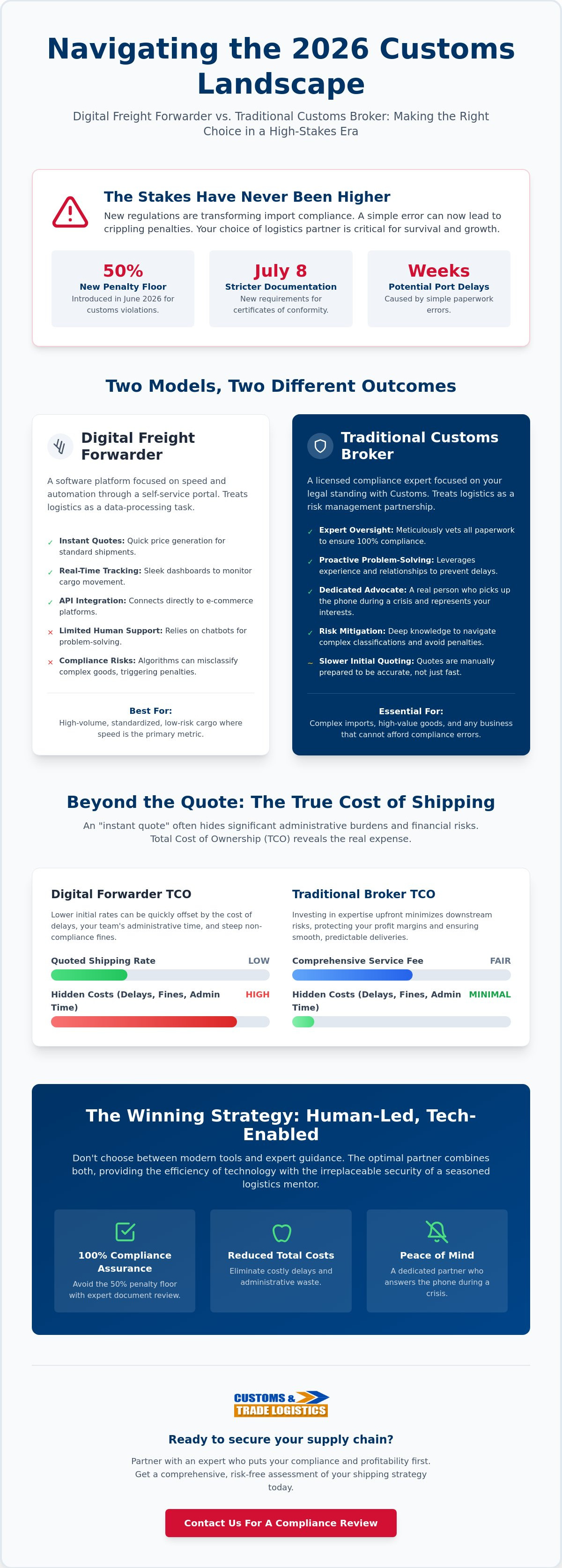
Comparing Service Fees and Total Cost of Ownership (TCO)
How much does that "instant" quote actually cost your business by the time the goods reach your warehouse? Logistics costs are like an iceberg. While the ocean freight rate sits visibly at the top, the bulk of your expenses are submerged in administrative overhead, duties, and potential fines. When comparing a digital freight forwarder vs traditional broker, looking only at the initial booking fee is a mistake that can drain your capital. A digital platform might offer a lower entry price, but they often lack the incentive to help you lower your long-term tax burden through legal tariff engineering.
The true cost of "free" or low-cost software is often your own compliance record. If you aren't paying for professional oversight, you're likely the one responsible for every data entry error the software misses. A seasoned broker saves you money by identifying the most favorable HTS classifications and ensuring you only pay what you legally owe. This expertise provides a significant return on investment, especially when navigating the 2026 Merchandise Processing Fee (MPF) limits, which currently range from a minimum of $33.58 to a maximum of $651.50 per entry.
Direct Fee Comparison
Digital models often rely on subscription fees or "platform access" charges that apply regardless of your shipping volume. In contrast, traditional custom brokerage service fees are typically structured per entry. This per-entry model ensures you only pay for the work being done. Small businesses often find they pay more for "automated" errors than they would for professional fees. A human-led partner includes value-add services like delivery coordination and redistribution that apps often charge for as expensive add-ons. If you want to ensure your cargo moves without surprise expenses, investing in professional Customs Clearance Services is the most predictable path forward.
The Cost of Non-Compliance
The financial impact of a single mistake in 2026 is higher than ever before. With the new 50% penalty floor for violations, a simple classification error is no longer a minor slap on the wrist. Choosing the wrong HTS code can result in paying ten times the expected duty amount if a product is accidentally categorized under a high-tariff chapter. Beyond the immediate fine, repeated errors damage your standing as an Importer of Record, leading to more frequent inspections and higher bond premiums.
- Duty Savings: Expertise in tariff engineering can reduce your tax liability by thousands annually.
- Penalty Avoidance: Human vetting prevents the liquidated damages that software-triggered audits often cause.
- Predictable Budgeting: Transparent per-entry fees eliminate the "hidden" costs of digital platform subscriptions.
Building a compliant history with U.S. Customs is an asset for your business. It leads to faster releases and fewer exam fees over time. A traditional broker acts as your mentor in this process, guiding you through the administrative maze so you can focus on your growth. This protective care ensures that your total cost of ownership remains low, even as global trade regulations become more complex.
Choosing Your Partner: Why a Hybrid, Human-Led Approach Wins for SMBs
Many industry voices frame the choice between a digital freight forwarder vs traditional broker as a battle between the past and the future. This is a false choice that ignores the reality of modern logistics. You don't need to sacrifice the speed of a digital portal to gain the security of a licensed expert. The most successful importers in 2026 are those who embrace a hybrid model. They use technology to provide visibility while relying on human brains to navigate the messy, unpredictable world of international trade. If your business is moving beyond standardized shipments, you need more than a dashboard; you need a dedicated advocate.
Assessing your needs comes down to complexity and risk. If you only ship low-value, non-regulated items, an automated platform might suffice. However, as soon as you deal with textiles, electronics, or food products, the risk of a software error becomes too high. A tech-enabled traditional expert provides the "safe pair of hands" that venture-backed apps cannot replicate. They offer the same tracking data you've come to expect but back it up with the professional assurance that only comes from decades of experience at the port.
Questions to Ask Any Potential Logistics Partner
Before you commit your cargo to a new partner, you must look past the sleek user interface. Ask these specific questions to see if they can truly protect your bottom line:
- Who answers the phone at 3 AM when a container is held? If the answer is a chatbot or a general support queue, your cargo is at risk.
- How do you handle HTS disputes with US Customs? You need a partner who will actively defend your classification and fight for your duty savings.
- Can you manage FBA freight forwarding services from the factory to my doorstep? Moving goods from China to an Amazon warehouse requires a specialized touch that simple shipping apps often lack.
The Customs and Trade Logistics Difference
At Customs and Trade Logistics, we bridge the gap between modern efficiency and old-school reliability. With over 35 years of family-owned dedication, we've seen every trade war, regulatory shift, and port strike of the last three decades. We don't just provide a platform; we act as a seasoned mentor for your business. Our team provides national coverage across all US ports, ensuring that your cargo receives a personal touch whether it's landing in Los Angeles or Savannah.
Transitioning from a digital app to a dedicated consultant is easier than you think. It starts with a conversation about your specific supply chain goals and an audit of your current compliance standing. We're here to demystify the import process and lift the heavy administrative burden from your shoulders. If you're ready for a partner who values your growth as much as you do, contact us today for a consultation. Let's ensure your 2026 shipping season is defined by total resolution and peace of mind.
Securing Your Supply Chain for 2026 and Beyond
Deciding between a digital freight forwarder vs traditional broker ultimately comes down to how much risk your business can afford. While automated platforms offer speed during the booking phase, the real test of a partner happens at the port when regulations shift or documentation is questioned. You've seen how human oversight prevents the costly classification errors that trigger massive penalties. You also know why a "set it and forget it" approach often leads to hidden fees. By prioritizing a partner who offers both modern visibility and seasoned advocacy, you ensure your goods move seamlessly from the factory to the warehouse.
We're ready to act as your dedicated mentor in this complex industry. With over 35 years of industry experience and national coverage across all US Customs ports, we provide the reliable support your business needs. Whether you require specialized expertise in China-to-US logistics or help navigating the strict requirements of Amazon FBA, our team is here to protect your interests. Let our family-owned expertise secure your supply chain; contact Customs and Trade Logistics today. We look forward to helping you import with total confidence and peace of mind.
Frequently Asked Questions
Is a digital freight forwarder safer than a traditional broker for first-time importers?
Traditional brokers are generally the safer choice for those new to international trade because they provide personalized mentorship through complex legal filings. While an app might allow you to book a shipment in seconds, it won't explain the nuances of your legal responsibilities as an importer. A broker acts as a safe pair of hands, ensuring your first experience doesn't result in a permanent red flag on your customs history.
Can a traditional customs broker offer the same tracking visibility as a digital app?
Yes, most modern traditional brokers utilize advanced logistics technology that provides the same real-time tracking visibility found in digital-only apps. The primary difference is the human context behind the data. When a delay appears on your dashboard, a traditional broker is already communicating with the terminal to resolve the issue, while a digital platform may only offer an automated status update without a solution.
Why are digital freight forwarders often cheaper for small shipments?
Digital platforms often achieve lower upfront rates by using high-volume automation and standardized shipping lanes for simple cargo. However, when comparing a digital freight forwarder vs traditional broker, it's important to look at the total cost. Those lower initial rates often hide the lack of personal advocacy, which can lead to expensive storage fees or misclassification penalties if your cargo encounters even a minor regulatory hurdle.
What happens if a digital forwarder makes a mistake on my customs entry?
You remain legally liable for all fines and penalties assessed by U.S. Customs and Border Protection, regardless of the platform used. Automated systems can sometimes apply incorrect HTS codes, which may trigger an audit or lead to significant duty underpayments. Resolving these errors through a chatbot can be incredibly frustrating, whereas a traditional broker provides a direct line of communication to correct the filing and mitigate potential damages.
Do I need a separate customs broker if I use a digital freight forwarder?
You aren't required to use the in-house broker provided by a digital forwarder. Many savvy importers choose to hire an independent, specialized customs broker to ensure a higher level of compliance oversight. This separation of duties ensures that your freight carrier isn't just rushing the entry through to meet their own delivery schedule, providing you with an objective advocate who prioritizes your legal standing.
How do service fees compare between digital and traditional logistics partners?
Digital partners typically favor subscription models or platform access fees that charge you for the technology itself. Traditional partners usually charge per-entry service fees, which means you only pay for the specific work performed on each shipment. This transparent, per-entry model often helps small businesses manage their cash flow more effectively because they aren't paying for premium software features that they don't use every month.
Can a traditional broker help with Amazon FBA shipments from China?
Traditional brokers are exceptionally well-suited for Amazon FBA because they understand the granular requirements of redistribution and labeling. Navigating the journey from a Chinese factory to a specific US fulfillment center involves multiple logistical hurdles that software often misses. A seasoned broker manages these details personally, ensuring your inventory meets Amazon's strict delivery windows and avoiding the rejected shipments that can hurt your seller rating.
What is the biggest risk of using an automated shipping platform in 2026?
The biggest risk is the lack of human intervention when facing the new, stricter customs enforcement standards of 2026. With penalty floors now set at 50% for violations, an automated platform's inability to handle complex regulatory exceptions can be financially devastating. Relying solely on software leaves you vulnerable during a crisis, whereas the human-led approach provides a stabilizing force that protects your business's long-term growth.


