

What if the biggest benefit of an independent customs broker isn’t simply getting paperwork filed, but connecting customs expertise to the rest of your shipment workflow? If entry details, documents, and handoffs are difficult to oversee, you’re not alone. The benefits of using an independent customs broker can include practical support with customs clearance and coordination, while you keep control of key import decisions.
An independent broker can help organize customs clearance alongside freight arrangements and onward delivery. Brokerage does not guarantee against delays, duties, or compliance issues. Importers still need to provide accurate shipment information and make important decisions. Knowing who handles each task helps prevent confusion and makes the process easier to follow.
In this article, you’ll learn what an independent broker can and can’t do, how their support fits into a shipping workflow, and what your business should continue to manage. For small and midsize importers with limited in-house trade expertise, a knowledgeable partner can make a complex process easier to coordinate. Customs and Trade Logistics brings more than 35 years of experience helping businesses connect customs clearance with freight and delivery planning.
Key Takeaways
- Understand what “independent” means in customs brokerage and why it describes the business relationship, not a guaranteed result.
- Explore the benefits of using an independent customs broker, from specialist attention to clearer shipment handoffs and added administrative capacity.
- Compare independent brokerage, bundled logistics support, and in-house administration to see how responsibilities and staffing needs can differ.
- Learn how sharing shipment context, organized documents, and clear task ownership can help your broker prepare entries and coordinate work.
- See how Customs and Trade Logistics brings more than 35 years of experience to customs clearance and international freight support for small and midsize businesses.
What an Independent Customs Broker Does, and What “Independent” Means
An independent customs broker is engaged separately to help an importer prepare and submit customs entry information for goods entering the United States. “Independent” describes the business relationship: the broker isn’t necessarily part of the freight forwarder’s, carrier’s, or seller’s organization. It doesn’t promise faster release, lower duties, or a particular customs decision.
Brokerage is one part of an import shipment, not the whole journey. A broker can organize shipment details for an entry and communicate with the importer about information needed for customs processing. Freight transportation moves the cargo; supplier selection and purchasing decisions belong to the importer; and final delivery follows the relevant transport and release steps. The agreed scope of work determines who handles each handoff.
A customs broker helps an importer prepare and submit customs entry information, while U.S. Customs and Border Protection reviews the submission and determines whether the cargo may be released. The broker’s role does not transfer the importer’s business decisions or responsibility for providing accurate shipment information. Review the details you supply, including product descriptions, quantities, and commercial documents. For a general overview of broker roles and how relationships can vary, see What is a Customs Broker?
How an independent broker differs from a bundled service arrangement
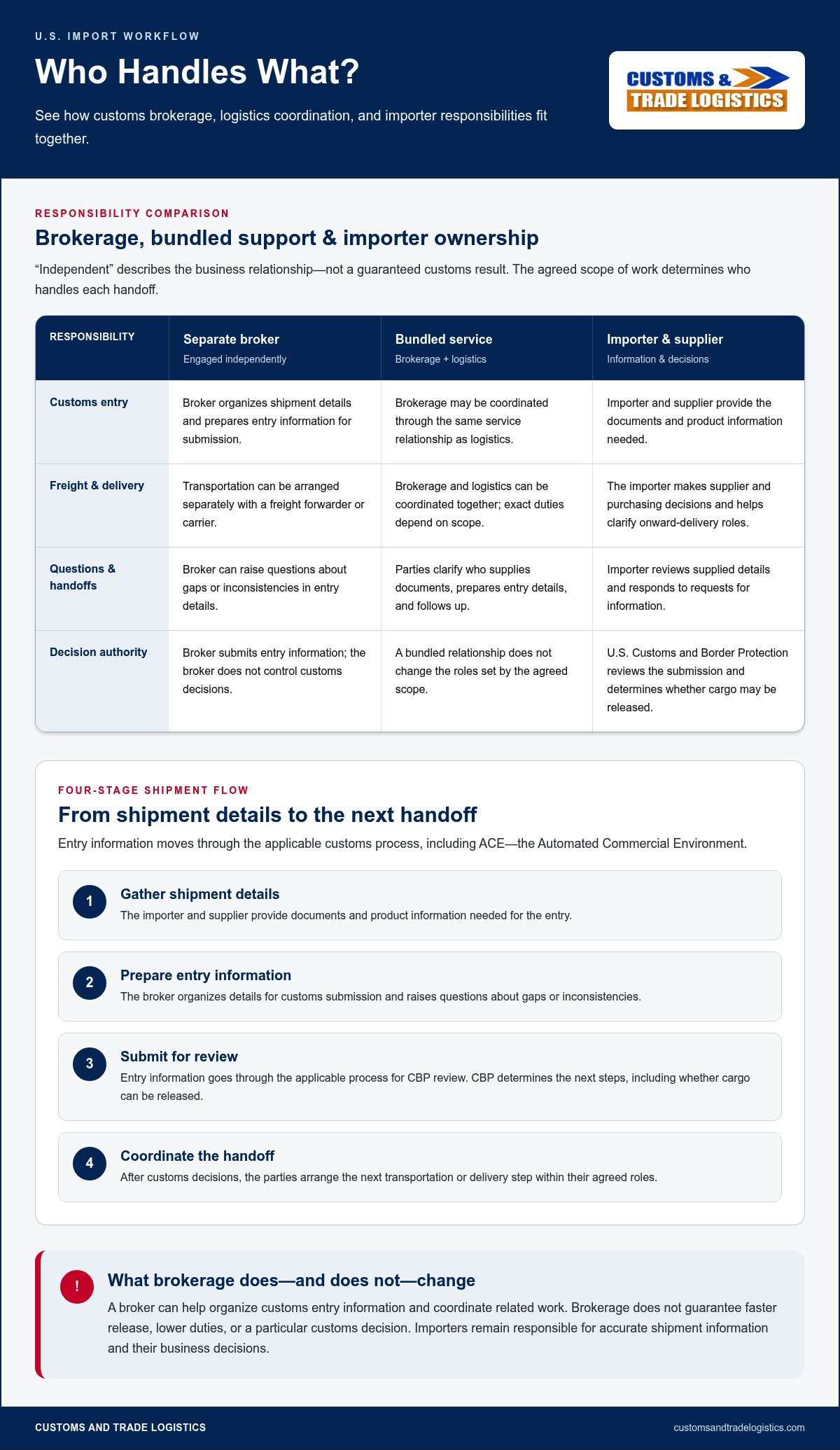
You can engage a broker separately while working with a freight forwarder or carrier for transportation. In a bundled arrangement, brokerage and logistics may be coordinated through one service relationship, but the responsibilities still depend on the agreed scope. In either model, clarify who supplies documents, prepares entry information, and follows up on questions.
For example, a forwarder might coordinate cargo movement from the supplier, while a separately engaged broker prepares customs entry information using documents supplied by the importer. Make that handoff clear by identifying who sends the invoice and packing details, who responds to information requests, and who coordinates onward delivery.
Where customs brokerage fits in a U.S. import shipment
The process usually starts with information from the supplier and importer. The broker uses the relevant details to prepare entry information for submission through the appropriate customs process, including the Automated Commercial Environment (ACE), the U.S. government’s electronic trade processing system. CBP reviews the entry and determines the next steps, including whether the cargo can be released. Timing and outcomes can depend on the shipment and government review.
- Gather shipment details. The importer and supplier provide the documents and product information needed for the entry.
- Prepare entry information. The broker organizes details for customs submission and raises questions about gaps or inconsistencies.
- Submit for review. Entry information moves through the applicable process for CBP review.
- Coordinate the handoff. After customs decisions, the parties arrange the next transportation or delivery step within their agreed roles.
Clear roles make the benefits of using an independent customs broker easier to realize. You know who is handling entry preparation, who is moving the freight, and which decisions and information remain in your hands.
Five Benefits of Using an Independent Customs Broker
The benefits of using an independent customs broker show up in the everyday work of importing: identifying questions that need attention, keeping information aligned, and coordinating handoffs without assigning every trade task to an already busy employee. The value depends on your shipment, the support you engage, and how clearly everyone shares responsibilities. A broker does not take over the importer’s role or control customs decisions.
- Specialist attention. A broker can focus on customs entry details and flag gaps or inconsistencies for review before submission. Your team can then check the questions against its source records. This review does not guarantee an error-free entry.
- Clearer handoffs. Separating brokerage from transportation can make it easier to identify who prepares entry information, coordinates cargo movement, and handles onward delivery. Clear ownership reduces the chance of tasks being overlooked between parties.
- More administrative capacity. Smaller importers can draw on trade-process experience without assigning every customs task to an in-house employee. Your team still manages supplier and purchasing decisions and shares relevant shipment information with the broker.
- Better shipment oversight. A broker can help you understand the status of customs-related work and identify information that needs follow-up. This gives you a clearer view of one part of the shipment, even though carriers and customs authorities control their own actions.
- More informed questions. Specialist support can help turn unfamiliar entry details into practical questions for your supplier or internal team, so you can direct uncertainties to the right people.
More focused guidance for import decisions
Before preparing an entry, a broker may review the shipment context and ask about unclear product descriptions, quantities, or document details. A consistent point of contact can help distinguish customs-process questions from commercial choices, such as what to buy or which supplier to use. The International Trade Administration outlines this support in its explanation of the Role of Customs Brokers in International Trade. Guidance can help you identify issues to resolve, but it doesn’t determine your business decisions or promise lower duties or faster clearance.
Better coordination across paperwork and logistics
Customs entry preparation works best when shipment information matches across documents and the teams coordinating transport and delivery. Imagine an importer whose supplier invoice describes a product differently from its shipping records. A broker may flag the mismatch, and the importer can work with the supplier to confirm the correct information. The broker can coordinate relevant customs and logistics details, but can’t control supplier responses, carrier schedules, or CBP review.
Brokerage support can make shipment responsibilities and next steps clearer, but it cannot guarantee when customs will release cargo. Complete source information matters, and external events or customs review can still affect a shipment. If you want help connecting customs work with freight coordination, customs and international freight support can be part of a more joined-up workflow.
Independent Broker vs. In-House or Bundled Support: What Changes?
There’s no single arrangement that fits every importer. The right setup depends on how often you ship, how involved your shipments are, and how much customs knowledge your team can manage internally. An independent broker can add specialist support without taking over your commercial decisions or guaranteeing a customs outcome. Compare how each model may work, then clarify the scope and handoffs that matter to your business.
Responsibility clarity
Independent brokerage: Brokerage tasks can be defined separately from freight services, so responsibilities need clear handoffs.
Bundled logistics support: Several services may be coordinated through one arrangement, but the scope of each task still needs to be understood.
In-house administration: Internal ownership may be direct, provided staff responsibilities are assigned and understood.
Internal staffing demands
Independent brokerage: Your team supplies shipment details and manages business decisions while drawing on external customs expertise.
Bundled logistics support: Coordination may involve fewer separate service relationships, depending on what’s included.
In-house administration: Your business must allocate employee time and develop the expertise needed for its customs work.
Coordination needs
Independent brokerage: You may need to connect the broker with the forwarder, carrier, supplier, or delivery team.
Bundled logistics support: Services may be coordinated within one provider relationship, though the exact handoffs vary.
In-house administration: Staff coordinate directly with external parties and keep shipment information aligned.
Access to specialist guidance
Independent brokerage: You engage customs-focused support separately.
Bundled logistics support: Guidance may be part of a wider logistics arrangement, depending on scope.
In-house administration: Guidance relies on your team’s experience and any outside support it uses.
When independent brokerage may fit a small or midsize importer
If your team handles purchasing, sales, and operations with limited staff, external customs expertise may help without requiring you to build every capability in-house. Consider shipment frequency, the complexity of your goods and documents, and whether employees have time to coordinate customs tasks. For example, an Amazon seller importing products may use a separate broker for focused entry support while retaining supplier and inventory decisions.
Questions that make roles and handoffs clearer
Before work begins, map who provides product descriptions, values, origin details, and shipping documents. Agree on who prepares customs entry information, coordinates freight, and follows up when details are missing. Responsibilities can differ by shipment and agreement, so write down the handoffs rather than relying on assumptions. The custom brokerage service fees guide can help you understand how scope and fee structure relate.
Whichever model you choose, the importer remains responsible for commercial choices and accurate shipment information. Independent support can provide specialist guidance, but it doesn’t eliminate coordination or guarantee customs release. Aim for a workable division of responsibilities that matches your team’s capacity and shipping needs.
How to Get More Value From an Independent Customs Broker
Good broker support starts with useful information and clear working habits. You don’t need to become a customs specialist, but preparing shipment details, sharing source records, and agreeing on handoffs can help the broker focus on entry work and surface questions for your team. These steps make the benefits of using an independent customs broker more practical in your day-to-day process.
Prepare shipment information before customs entry work begins
Gather the information you have about the goods and transaction, then keep it consistent across the records you share. Depending on the shipment, relevant details may include:
- Product descriptions and quantities
- Country of origin information
- Transaction value and supporting commercial records
- Supplier details and shipment documents
- Planned shipping arrangements and destination information
Use this as a starting point, not a universal document checklist. Exact information and document needs depend on the goods and transaction. A broader overview of the US customs clearance process can help you understand where entry preparation fits into an import shipment.
If an invoice description differs from your product records, or you’re unsure how a detail should be represented, flag the question early. Don’t guess at product, value, or transaction information just to complete a file. Share the source records and explain what’s uncertain so the broker can identify what needs clarification. This preparation supports the broker’s work, but it isn’t a substitute for shipment-specific guidance about applicable documentation or compliance requirements.
Keep customs and freight responsibilities visible
Set out who owns each handoff, especially when the broker, supplier, forwarder, carrier, and delivery team are separate parties. A simple responsibility record can note who communicates with the supplier, coordinates transportation, supplies entry information, responds to questions, and arranges delivery. It should also show where your team makes or approves business decisions.
Clear roles reduce avoidable handoff confusion by showing who acts next, what information they need, and who should receive an update.
A practical workflow can follow four steps:
- Share context. Explain what the goods are, where they’re coming from, and any relevant shipment plans or uncertainties.
- Organize source records. Keep the documents together and identify which details need clarification.
- Agree on ownership. Record who handles customs entry information, freight coordination, supplier questions, and onward delivery.
- Review progress. Agree on a reasonable update rhythm, such as updates at key shipment milestones or when a decision or missing detail needs attention.
A shared status note can capture the current step, outstanding questions, responsible person, and next action. This gives your team an understandable view of the process without assuming every party controls customs decisions or carrier schedules. Customs and Trade Logistics connects customs clearance with international freight logistics to support importers across shipment stages. Discuss your customs and freight coordination needs as part of planning a clearer import workflow.
How Customs and Trade Logistics Supports Independent Importers
Independent support is most useful when customs work connects clearly with the rest of an import shipment. Customs and Trade Logistics is a family-owned customs brokerage and logistics consulting firm with more than 35 years of industry experience. The team supports small and midsize businesses with customs clearance and international freight logistics, helping importers coordinate shipment details across the process instead of treating each handoff as an isolated task.
For a business with limited in-house trade expertise, that joined-up view can make responsibilities easier to follow. Support includes customs paperwork coordination, international shipping arrangements, and delivery redistribution, based on the needs of the project. The firm works with importers across U.S. Customs ports, including small businesses and Amazon sellers. Importers stay in control of purchasing and supplier decisions, while logistics planning connects the supplier, customs clearance, and onward delivery.
Support for businesses importing from China and other suppliers
A shipment plan begins with the supplier and the importer’s intended delivery arrangement. Import From China consulting and freight coordination help businesses plan how goods move from the supplier toward U.S. customs clearance and final delivery. Customs and Trade Logistics coordinates these connected steps, while the importer provides shipment information and makes its own commercial decisions. For a broader look at planning this route, explore the Import From China logistics guide.
Each shipment has its own details. Product information, supplier arrangements, transport plans, and delivery needs shape the coordination required. China-specific requirements and customs outcomes can depend on the goods and transaction, so avoid assumptions based on another shipment. Clear, accurate information gives everyone involved a shared starting point and helps identify questions that need attention as the plan takes shape.
A practical next step for planning your import
Before discussing an import workflow, outline what you’re shipping, where it’s coming from, your expected timing, and how you want the goods delivered. Include the shipment context you already have, such as supplier details, available product information, or known coordination needs. You don’t need to have every answer prepared. A clear picture of the project helps identify which parts of customs clearance, freight coordination, and delivery planning need to work together.
Customs and Trade Logistics tailors coordination to the project, bringing customs clearance, international freight logistics, import consulting, and delivery redistribution together as connected parts of the import process. This practical support helps smaller teams manage shipments without building every trade capability internally. It doesn’t guarantee customs release timing or remove the importer’s responsibility for its decisions and shipment information, but it can give the workflow clearer structure.
Understanding the benefits of using an independent customs broker is one step; applying that support to your shipment is the next. Discuss your import logistics needs and outline the workflow you want to coordinate.
Make Your Next Import Easier to Plan
Make broker support a repeatable part of your import planning. After a shipment, note which questions took time to resolve, where information was unclear, and which handoffs could be smoother next time. Those observations can help your team prepare earlier, keep decisions visible, and build a more consistent process as your importing needs change.
The benefits of using an independent customs broker are strongest when the working relationship supports your business goals while leaving key decisions in your hands. Start with an upcoming shipment: identify what you’re importing, what you already know, and where you need help connecting customs work with freight or delivery planning.
Customs and Trade Logistics can help you shape a practical approach around your import workflow. Discuss your import logistics needs and take the next step with greater clarity.
Frequently Asked Questions
Can an independent customs broker work with my existing freight forwarder?
Yes. You can arrange customs brokerage separately from freight forwarding, with each party handling its agreed responsibilities. Before a shipment moves, establish who sends the broker the commercial invoice and shipment details, who shares transport updates, and who follows up on missing information. For example, your forwarder may coordinate cargo movement while your broker handles customs entry preparation. Clear handoffs help you get the benefits of using an independent customs broker without disrupting an existing workflow.
Does using an independent customs broker guarantee faster customs clearance?
No. A broker can help prepare and coordinate entry information, but can’t control customs review, examinations, or release timing. Even a well-organized entry may need attention from customs authorities before cargo is released. You can support the process by supplying accurate information promptly and responding to questions, but shipment timing may also depend on factors outside your control. Treat a broker as process support, not a promise of a specific clearance date.
Is a customs broker the importer of record?
Generally, no. A customs broker and the importer of record have distinct roles; hiring a broker doesn’t automatically make that broker the importer. The importer typically provides shipment and transaction information, while the broker may assist with customs entry work under the agreed arrangement. The exact responsibilities depend on the transaction and current U.S. Customs and Border Protection requirements. Confirm the applicable terminology and obligations for your shipment rather than relying on a general description.
What happens if U.S. Customs examines my shipment?
Customs authorities decide whether to examine cargo and what review is needed. If an examination occurs, the broker may help coordinate customs-related communications, relay requests for information, and keep the importer informed about the entry process. You may need to provide relevant records or clarify shipment details. An examination doesn’t establish a particular outcome or release date, so avoid making delivery plans that assume the cargo will be released immediately.
Can I change customs brokers while a shipment is in transit?
A broker change may be possible, but an active shipment can make the transition more involved than changing support for future imports. Timing, authorization, access to shipment records, and the status of any entry already underway may all matter. Don’t assume a new broker can simply take over without coordination. Before changing arrangements, identify who is handling current communications and clarify the steps that apply to your shipment under current requirements.
Do I need a customs bond if I hire a customs broker?
Hiring a broker and determining whether a bond is needed are separate questions. A broker’s involvement doesn’t, by itself, establish the bond requirements for your import. Requirements can depend on shipment circumstances and current customs rules, so don’t treat a general answer as a decision for every transaction. Clarify the bond question for the specific goods and entry before shipment planning is finalized, using current customs guidance.
Will a customs broker pay import duties on my behalf?
Payment arrangements vary, so don’t assume that broker involvement means duties will be paid for you. The parties should make clear who is responsible for arranging payment, how any funds are handled, and what records the importer will receive. A broker may help coordinate payment steps if the agreement provides for it, but handling a payment is distinct from determining the importer’s underlying responsibilities. Clarify the current legal and contractual details for your arrangement.