

A container can be ready to move on paper and still sit at the terminal because a release or pickup step is unfinished. Learning how to avoid demurrage fees starts before the vessel arrives, not when a charge appears on an invoice.
Unexpected fees can disrupt your landed-cost budget, especially when customs paperwork, carrier release, terminal procedures, and trucking involve different parties. Reduce preventable delays by coordinating those handoffs early and recording the free-time terms for each shipment. Those terms vary, so don’t assume a previous container’s deadline applies to the next one.
This guide explains what starts and stops the demurrage clock, how demurrage differs from detention, and what to coordinate before arrival so cargo can move promptly after release. You’ll also learn what to do when a delay puts free time at risk or a charge doesn’t match your records. A clear plan for documents, customs clearance, and pickup helps you manage the process with greater confidence.
Key Takeaways
- Demurrage applies when cargo remains at a marine terminal beyond the free time set by shipment-specific terms.
- Free-time deadlines depend on the governing carrier and terminal terms, so identify the start and end points for each shipment.
- Learn how to avoid demurrage fees by coordinating documentation, customs release, and inland pickup before the container arrives.
- Assign clear ownership for each handoff and act promptly when a release or pickup warning signals a possible delay.
- If charges arise, limit further delays, verify shipment status, gather records, and compare the invoice with the applicable terms.
What Are Demurrage Fees, and When Do Importers Face Them?
Demurrage is a charge that may apply when imported cargo remains at a marine terminal beyond the free time allowed under the shipment’s applicable terms. The key details are where the container is waiting and whether the relevant free-time period has expired. This definition distinguishes terminal storage time from delays that occur later in the shipment journey.
There isn’t one free-time allowance for every container. The governing carrier, terminal, equipment type, and shipment terms can affect how the period is calculated, including when it starts and ends. Check the terms for the specific shipment rather than carrying over a deadline from a previous container. A familiar process on one shipment may not apply to another.
Demurrage is separate from customs duties, customs brokerage fees, and ordinary transportation charges. Those costs relate to other parts of importing and moving goods; demurrage relates to cargo remaining at the terminal after the applicable free time. The broader Demurrage concept appears in several industries, but ocean importers should focus on the carrier and terminal terms governing their container. Understanding that distinction is a useful first step in learning how to avoid demurrage fees.
What is the difference between demurrage and detention?
Demurrage generally concerns container cargo dwelling at the marine terminal beyond the applicable free time. Detention generally concerns the carrier’s equipment being kept outside the terminal longer than the allowed period, often while the container is being unloaded or before the empty equipment is returned. The exact terms and calculations can vary by contract, so use the shipment’s terms as your guide.
For example, a container that remains inside the terminal while awaiting pickup may incur demurrage. Once it leaves the terminal, time spent at the importer’s facility and the return of the empty container may fall under detention terms. The container’s location and status have changed, so the charge category may change too.
Why can a container accrue demurrage?
The central condition is straightforward: the container is still at the terminal after its applicable free time ends. Several issues can contribute. Required release steps may remain incomplete, documents may contain errors or be missing, or customs processing may take longer than expected. A truck, chassis, or pickup slot may also be unavailable when the container is ready to move.
Not every delay is within the importer’s control, and customs is not automatically the cause. Terminal congestion, carrier procedures, and other shipment-specific constraints can also hold cargo in place. Identify which handoff is preventing movement and who owns the next action. That helps distinguish a document or coordination gap from an external disruption and gives you a clearer basis for responding.
How Free Time, Customs Release, and Terminal Pickup Fit Together
A container’s path from vessel arrival to pickup involves several handoffs. Shipment documents support customs entry and other release steps; arrival information helps with planning; then terminal availability and pickup requirements determine when a truck can collect the cargo. These steps can move on separate tracks, so progress in one doesn’t automatically complete the others.
Customs release alone doesn’t necessarily mean a container is ready for pickup. Carrier or terminal release, applicable payments, equipment availability, and pickup or appointment requirements may also need attention. The sequence and conditions depend on the shipment. The Federal Maritime Commission’s information on detention and demurrage provides useful context on how these charges relate to cargo movement and the supply chain.
Which milestones should importers track?
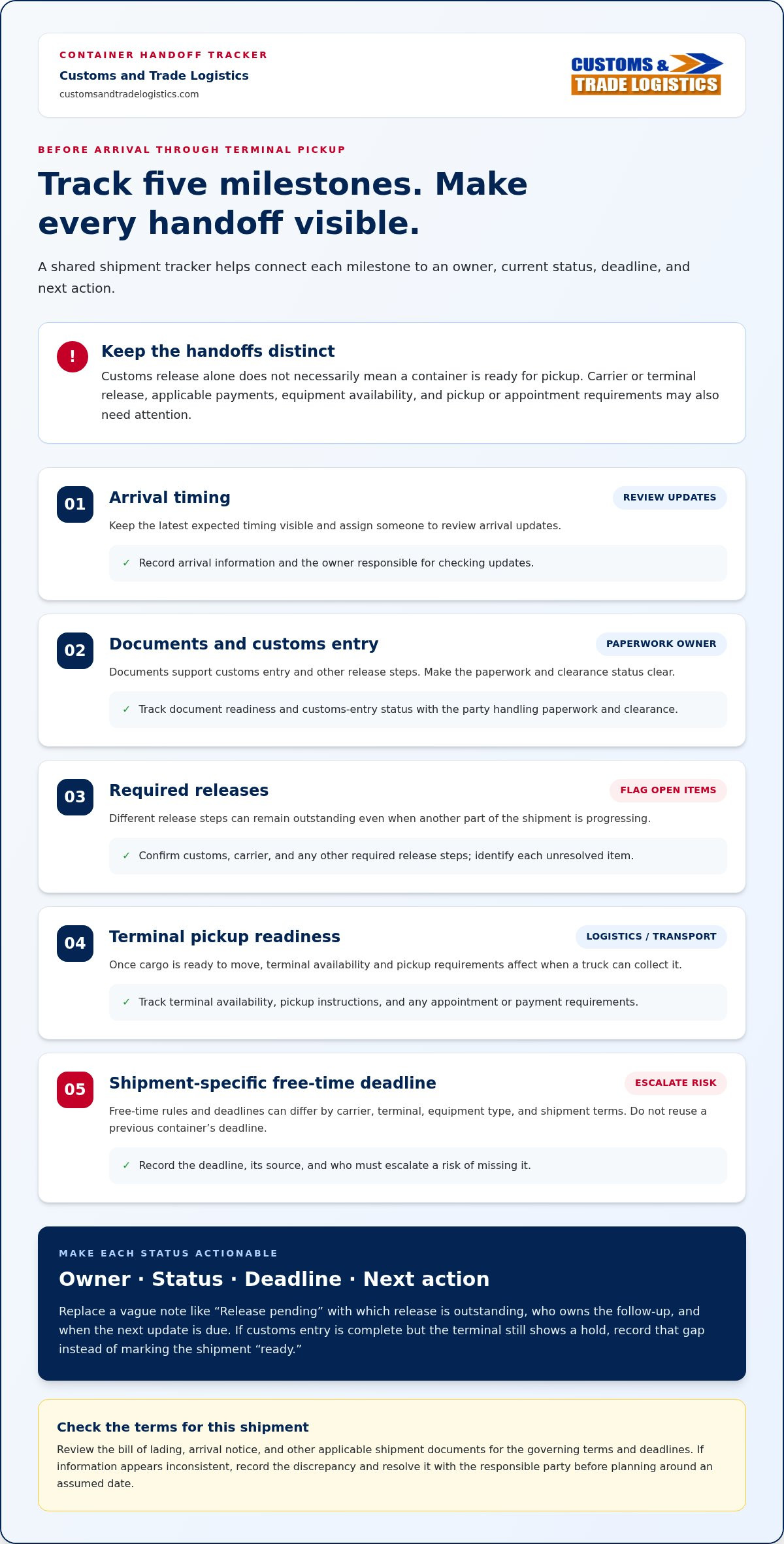
Use one shipment tracker to connect each milestone to an owner, current status, deadline, and next action. A shared record makes handoffs visible and helps prevent “I thought someone else had it” delays. Include:
- Arrival information and the latest expected timing, with an owner responsible for reviewing updates.
- Document readiness and customs-entry status, assigned to the party handling paperwork and clearance.
- Confirmation of customs, carrier, and any other required release steps, with unresolved items flagged.
- Terminal availability, pickup instructions, and any appointment or payment requirements, assigned to the logistics or transport coordinator.
- The applicable free-time deadline and its source, along with the person responsible for escalating a risk of missing it.
Make each status specific. “Release pending” is less useful than a note identifying which release is outstanding, who owns the follow-up, and when the next update is due. If the customs entry is complete but the terminal still shows a hold, record that gap instead of marking the entire shipment “ready.” This creates a practical handoff between customs clearance and transportation planning.
Why do shipment-specific terms matter?
Free-time rules, charge terms, and operating steps can differ by carrier, terminal, and shipment. Don’t assume a deadline from an earlier import applies to the current container. Review the bill of lading, arrival notice, and other applicable shipment documents to identify the terms and deadlines for this move. If information appears inconsistent, record the discrepancy and resolve it with the responsible party before planning around an assumed date.
Pay close attention to how the terms define the relevant start and end points. An arrival notice may provide useful timing, but the applicable shipment terms govern the free-time calculation. Record the stated deadline and its source, then update your tracker if a carrier or terminal notice changes the operational picture.
This joined-up view helps you spot the next dependency before it becomes a terminal delay. Customs and Trade Logistics coordinates customs clearance and freight coordination to help manage these connected handoffs.
Which Common Delays Put Importers Most at Risk of Demurrage?
Demurrage risk can build at any handoff between preparing shipment information and moving a container out of the terminal. A paperwork issue may hold up a release; a completed customs step may leave another requirement outstanding; and a ready container may have no pickup arranged. Look for the first blocked step, identify who owns it, and record the next action.
A customs broker’s release update is valuable, but it doesn’t automatically mean the carrier and terminal have cleared every pickup prerequisite. Use this table to connect early warning signs with a practical response and an accountable party.
| Delay | Early warning | Preventive response and owner |
|---|---|---|
| Documentation | Shipment details are incomplete or inconsistent, or a requested document is still outstanding. | The importer and paperwork owner should reconcile the details and provide corrections to the responsible party promptly. |
| Customs processing | Entry status is unclear, or a request for information has no recorded response. | The importer and customs broker should identify the open item, its owner, and the next action, then save written updates. |
| Carrier or terminal release | Customs status shows released, but another hold or release confirmation remains unresolved. | The logistics coordinator should identify the specific outstanding requirement and follow up with the carrier or terminal. |
| Inland pickup | No truck, chassis, appointment, or workable pickup plan is confirmed as cargo readiness approaches. | The transport coordinator should align availability and pickup requirements with the terminal and delivery plan. |
| Congestion or disruption | Schedules shift, capacity is constrained, or terminal operations affect the planned move. | The importer and logistics partner should confirm the revised status, document impacts, and escalate time-sensitive decisions. |
Which paperwork and release problems can delay pickup?
Incomplete or inconsistent shipment information creates coordination risk, but it doesn’t prove that paperwork caused a delay. A mismatch can prompt questions or leave status unclear, so compare shipment records and resolve discrepancies with the party responsible for that information. If updates don’t show whether customs, carrier, or terminal release is pending, record the specific hold and next step in writing. Keep those updates with the shipment file.
Clear records also help establish what was known and when. The Ocean Shipping Reform Act of 2022 Federal Register document provides background on demurrage and detention billing requirements, useful context if you later review an invoice.
How can transportation and terminal constraints add risk?
Even when paperwork is progressing, appointment availability, drayage capacity, terminal operating schedules, or cargo readiness can affect pickup. Coordinating in advance with a logistics and freight provider such as Nikos Transport & Storage can help secure reliable transport and interim warehousing before free time expires. Confirm that the container is available, understand the appointment process, and coordinate truck and chassis arrangements against the current terminal status. Assign an owner to each confirmation, not just to the shipment overall. Preparation can expose a constraint earlier, but it can’t remove congestion or prevent every operational disruption.
Tracking these handoffs is a practical part of how to avoid demurrage fees: spot a blockage while there’s still time to respond, rather than assuming one completed release means the container can move.
Avoiding Demurrage: Pre-Arrival & Arrival Checklist
A dependable process starts before the vessel arrives and continues until the container has left the terminal. Give every step an owner, a clear status, and a next action. This keeps documents, release checks, and transportation arrangements moving together instead of relying on one person to catch every handoff.
What should importers complete before arrival?
Start with the shipment record. The importer gathers and checks documents, the customs broker handles assigned clearance steps, and the transportation coordinator plans inland movement. Confirm the shipment-specific free-time terms, required releases, and expected status updates. Planning ahead helps expose dependencies, though it can’t remove disruptions or guarantee terminal availability.
- Build the shipment file. The importer collects the relevant documents and checks key shipment details for consistency. Assign a paperwork owner to resolve missing information with the responsible party.
- Map release requirements. The importer and customs broker identify customs-entry status and any other release steps that apply. Record each requirement separately so a completed customs step isn’t mistaken for full pickup readiness.
- Record the governing terms. The importer or logistics coordinator notes the applicable free-time deadline and the document or notice that states it. Don’t carry over a deadline from another shipment.
- Set update ownership. Assign a person to review arrival information and gather updates from the relevant carrier, terminal, broker, or transport contact. Each open item should have a next action and follow-up point.
- Prepare the pickup plan. The transportation coordinator reviews pickup requirements, appointment needs, equipment arrangements, delivery instructions, and any redistribution plan with the responsible parties. Understanding dedicated haulage vs shared freight can help teams select the right transport model and secure carrier capacity before arrival.
- Define escalation triggers. Set clear triggers for follow-up, such as an unresolved release, unclear availability, or a pickup plan that no longer fits the stated deadline. Record who must be notified and what decision is needed.
Keep a reusable tracker with these fields: shipment reference, deadline and source, owner, status, dependency, next action, follow-up time, and escalation contact. Use plain status labels such as “pending,” “confirmed,” or “blocked,” and add a short note explaining what must happen next. This gives the team a shared view without confusing general shipment progress with readiness to move.
What should the team do when the container becomes available?
Before dispatch, the transportation coordinator checks the latest terminal status, confirms that required releases are complete, and reviews pickup instructions and appointment status. The importer or delivery coordinator confirms the destination can receive the load and that any redistribution arrangements are ready. If a dependency remains unresolved, escalate it to the party responsible and record the response, decision, and time.
Customs and Trade Logistics connects customs paperwork with freight and delivery coordination through coordinated import logistics support.
Managing Unavoidable Demurrage and Invoices
Even a well-coordinated shipment can face disruption. Congestion, changing terminal operations, or other shipment-specific constraints may leave limited room to prevent charges. If a container is delayed or an invoice arrives, respond methodically: limit further delay where possible, establish the current status, gather records, then compare the billed period and terms with the shipment timeline. A careful review can identify questions to raise, though it can’t guarantee a charge will be reversed.
- Contain further delay. Establish whether the container is still at the terminal and what currently prevents release or pickup. Identify the next actionable step, assign an owner, and keep the pickup plan moving where possible.
- Verify the shipment status. Confirm the container’s location, release status, availability, and any remaining pickup requirements. Separate confirmed information from assumptions, and record who supplied each update.
- Gather the timeline. Collect arrival notices, release confirmations, terminal records, appointment details, and written communications. Arrange them by date so the sequence is clear, including when a delay was reported and what action followed.
- Review the billed terms. Compare the invoice with the shipment’s applicable terms and records. If a date, period, container reference, or charge description appears inconsistent, raise that specific discrepancy promptly with the responsible billing or logistics party and retain the response.
How should importers review a demurrage invoice?
Start by matching the container identification, billed dates, charge description, and stated period against the bill of lading, arrival notice, and other shipment records. Then compare those details with the event timeline: when the cargo arrived, when relevant releases were recorded, when the terminal showed it available, and when pickup occurred or was attempted. If an entry doesn’t match, explain the difference clearly and include the record that supports your question.
Keep the request focused. For example, identify the billed date that differs from the terminal record rather than disputing the invoice in general terms. Follow the process and deadlines that apply to the shipment and invoice, and don’t assume that submitting a question pauses any required payment or response timeline. Preserve copies of the invoice, supporting documents, and all correspondence.
How can a logistics partner help manage future shipments?
For future imports, coordinated customs paperwork and freight logistics clarify who owns each milestone and where a handoff remains open. Customs and Trade Logistics brings more than 35 years of industry experience to customs clearance, freight coordination, container transport, and delivery redistribution. This support helps importers organize shipment details and communication across parties, without promising that every delay or charge can be prevented.
Use the records from this shipment to strengthen the next one: note where information was hard to obtain, which handoff lacked a clear owner, and what status update would have helped the team act sooner. That turns an invoice review into practical learning for your import process and supports a more informed approach to how to avoid demurrage fees.
Get support coordinating your import shipment.
Build a More Reliable Import Process
Make shipment coordination part of your regular import routine. Use each arrival to refine how your team assigns ownership, records decisions, and responds when plans shift. A clear process won’t control every disruption, but it can help your business act on better information and keep preventable gaps from becoming harder to manage.
Customs and Trade Logistics is a family-owned customs brokerage and logistics consulting firm that supports importers with customs brokerage and international freight logistics. Put its experience to work on the handoffs that matter to your shipments and your team.
Take a practical next step toward how to avoid demurrage fees on future imports: get help coordinating your import shipment. Customs and Trade Logistics coordinates customs clearance and freight logistics to help keep your import process organized.
Frequently Asked Questions
What are demurrage fees in shipping?
Demurrage fees are charges associated with cargo remaining at a marine terminal beyond the free time allowed under the applicable shipment terms. They’re separate from customs duties, brokerage service fees, and the cost of transporting goods. For example, a customs duty relates to importing the goods, while demurrage relates to terminal time. Review the carrier and terminal documents to understand which terms apply to your container.
How can I avoid demurrage fees on an import shipment?
To learn how to avoid demurrage fees, keep shipment documents, customs steps, carrier releases, and pickup planning moving together. Assign an owner to each task and track deadlines, dependencies, and status updates. For instance, if a release is pending, identify who owns the next step and what information is needed. This helps your team respond early instead of discovering an open requirement when arranging pickup.
When does the demurrage clock start?
There isn’t one start point that applies to every import. The governing carrier and terminal terms determine how free time is calculated, so use the shipment’s arrival notice and applicable documents to identify the relevant date and counting method. Don’t rely only on the vessel’s arrival date or a deadline from a previous shipment. Record the deadline’s source in your shipment file so your team can verify it later.
Can customs clearance prevent demurrage by itself?
No. Customs clearance can remove one potential obstacle, but it doesn’t necessarily satisfy carrier release, terminal, payment, appointment, or pickup requirements. For example, a shipment may have customs release while a separate carrier hold still prevents terminal collection. Confirm each release and pickup condition independently, and make sure the transportation coordinator has current cargo availability information before arranging a truck.
What should I do if my container is delayed at the port?
First, establish whether the container is available and what is holding up movement. Identify the party responsible for the open step, such as the customs broker for an entry question or the transport coordinator for a pickup issue. Save written updates, note the time of each status change, and record the next action and owner. If a deadline or invoice is at risk, escalate promptly and keep the shipment record current.
Can I dispute a demurrage charge?
Yes, you can question a charge you believe is inaccurate or inconsistent with the applicable terms. Compare the invoice’s container reference, dates, billed period, and description with your shipment documents and event records. Submit a specific explanation with supporting evidence, and follow the dispute instructions and deadlines that apply. US FMC billing rules include a 30-day dispute window, so act promptly and retain copies of your submission and related communications.