

A broker can prepare an entry, but the importer of record remains responsible for customs compliance. Understanding what reasonable care in customs compliance means starts with that distinction: under 19 U.S.C. § 1484, the importer of record is responsible for exercising reasonable care when declaring a shipment’s classification, value, origin, and admissibility. The standard calls for informed, proactive steps to support accurate declarations, not perfect compliance.
It’s understandable to rely on a broker’s expertise, especially when tariff codes, supplier information, and entry documents all need to align. But a broker’s work does not remove the importer’s responsibility to provide complete information and review key decisions. This article explains what reasonable care involves, how the importer, broker, and supplier roles fit together, and which records can support decisions about classification, valuation, origin, and admissibility. You’ll get a clearer picture of where oversight belongs and how to make it part of a consistent import process.
Key Takeaways
- Keep the reasoning and supporting records behind classification, valuation, origin, and admissibility decisions together so each entry has a clear paper trail.
- Prepare for CBP reviews by keeping compliance records organized, reviewing entries, and documenting how errors are addressed.
- Set clear expectations with brokers, freight forwarders, and suppliers about the information they provide and the standards your import process follows.
- Build repeatable review and recordkeeping practices around the facts of each transaction, rather than treating compliance as a one-time task.
Documenting classification, valuation, origin, and admissibility decisions
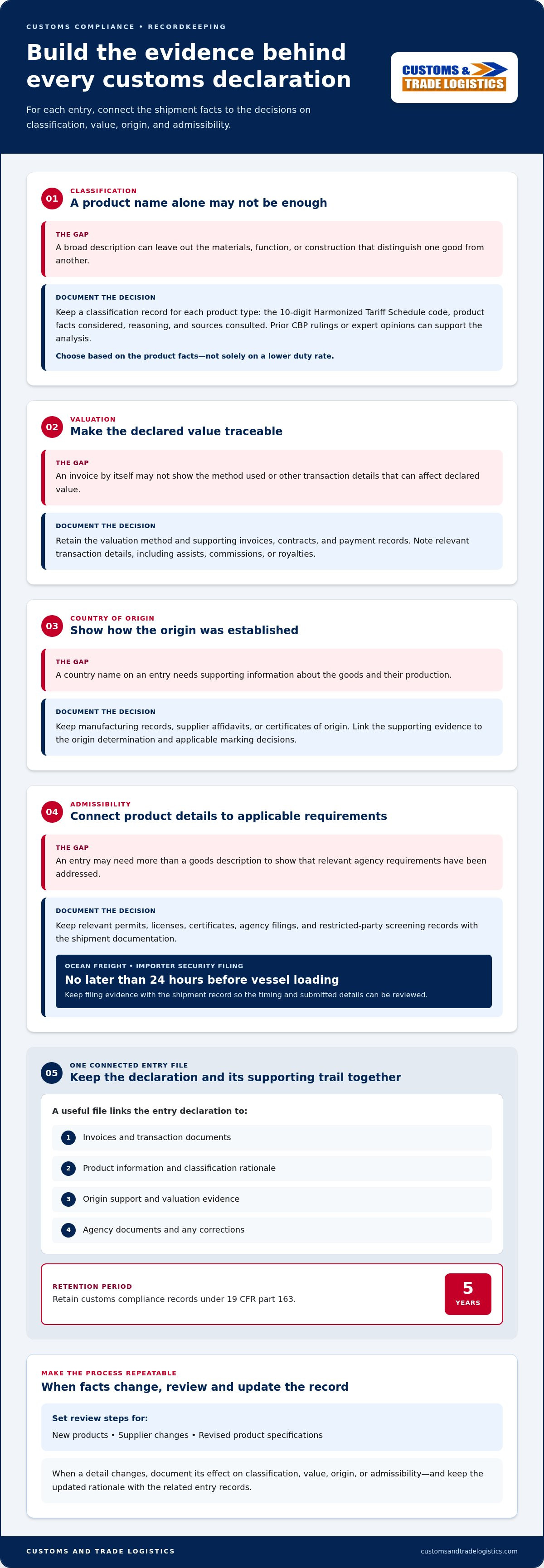
For an entry, importers provide U.S. Customs and Border Protection with accurate merchandise descriptions, quantities, values, country of origin, and tariff classifications. They also submit applicable entry details and information needed to determine admissibility, including relevant permits or agency filings. Product names alone may not describe materials, function, or construction, so include details that distinguish meaningful differences between goods.
Keep a classification record for each product type. The U.S. Harmonized Tariff Schedule uses a 10-digit code that determines duty rates and can trigger regulatory requirements. Record the code, the product facts considered, the reasoning, and sources consulted. Prior CBP rulings or expert opinions can support the analysis. Similar goods may differ in material or use, so don’t select a code solely because it produces a lower duty rate.
For valuation, retain the method used and supporting invoices, contracts, and payment records. Note transaction details that can affect declared value, including assists, commissions, or royalties. For origin decisions, keep manufacturing records, supplier affidavits, or certificates of origin. These records help show how you established the country of origin and support applicable marking decisions.
Admissibility records should connect product details to relevant government agency requirements, permits, licenses, certificates, or restricted-party screening. For ocean freight, U.S. Customs and Border Protection requires an Importer Security Filing no later than 24 hours before goods are loaded onto the vessel. Keep filing evidence with the shipment record so timing and submitted details can be reviewed.
What records must U.S. importers keep, and for how long? Retain customs compliance records for five years under 19 CFR part 163, according to the U.S. Government Publishing Office. A useful file links the entry declaration to invoices, classification rationale, origin support, valuation evidence, agency documents, and corrections.
Written procedures help staff apply the same informed compliance approach across shipments. Set review steps for new products, supplier changes, and revised product specifications. When a detail changes, document its effect on classification, value, origin, or admissibility, then keep the updated rationale with the related entry records.
What Is Reasonable Care?
For U.S. imports, reasonable care means taking informed steps to meet customs responsibilities and support accurate declarations. The importer of record remains responsible, even when a broker or forwarder handles the entry work.
Meaning of Reasonable Care
What does reasonable care mean under U.S. customs law? It means making a diligent, informed effort to comply with import requirements, not achieving perfect compliance. Importers should understand the transaction, provide complete information, and keep records that explain key decisions. The standard matters because a shipment’s facts can affect classification, value, origin, admissibility, and duty treatment at the border.
Importer Responsibilities and CBP Expectations
The importer of record remains responsible for exercising reasonable care under 19 U.S.C. § 1484, even when a broker prepares entry documents. Importers should provide accurate transaction details, review declarations, and use consistent procedures for similar shipments. That oversight helps identify errors before they recur and shows that the company took an informed approach. A broker’s expertise supports compliance, but it doesn’t transfer the importer’s legal responsibilities.
During a U.S. Customs and Border Protection review or audit, organized records help explain how the importer reached its decisions. Be ready to connect entries with invoices, product information, supplier communications, and internal review notes. If a review reveals an error, investigate its scope, correct affected records, and document the corrective action. CBP reviews may include a quick response audit or a focused assessment.
Intellectual property also needs attention. Before importing trademark- or copyright-protected merchandise, ensure you have the legal right to bring those goods into the United States. For example, a purchase invoice alone may not establish permission to import branded products. Keep authorization records with the relevant transaction documents.
What are the penalties for failing to exercise reasonable care in customs compliance? Under 19 U.S.C. § 1592, negligence penalties can reach twice the lawful duties or 20% of the dutiable value. For fraud, penalties can reach the goods’ domestic value. Documentation and timely correction help demonstrate the care taken, but they don’t eliminate the need to address an error directly.
Broker, freight forwarder, and supplier expectations
A customs broker, freight forwarder, and supplier each contribute different information to an import transaction. Clear responsibilities and consistent procedures help the importer compare those details before an entry is filed.
A broker uses the importer’s product and transaction information to prepare customs documentation. The importer should provide complete, accurate details, then review the entry for errors in classification, valuation, origin, quantity, and duty treatment. If a broker asks about a product’s material, function, or construction, provide specific facts rather than a broad sales description. Keep the broker’s advice and the importer’s final decision rationale together in the transaction record.
A freight forwarder coordinates shipment information and movement, while the supplier provides details about the goods and their production. Align these partners with your company’s trade compliance standards. For example, ask suppliers to identify manufacturing locations, product composition, and specification changes. Compare invoices and packing details with purchase records. A mismatch in quantity or product description is a signal to resolve the facts before using them for a customs declaration.
When should importers use a customs broker or seek a binding ruling? Importers may manage compliance themselves, work with a customs expert, or combine both approaches. A broker can help with entry work when classification, valuation, or regulatory requirements need focused attention. If uncertainty remains about a product’s classification, origin, or value, an importer can seek a binding ruling from U.S. Customs and Border Protection.
Oversight should be ongoing, not a one-time review. Compare filed entries with supplier documents, record questions and answers, and correct errors found in post-entry reviews. If a supplier repeatedly provides incomplete origin details, document the issue and agree on a more precise information process. Addressing the source of a problem this way can help avoid correcting each entry in isolation.
A written program can define who supplies product facts, who reviews entries, and who approves changes. Set the same expectations for brokers, forwarders, and suppliers, so a change in shipment route or personnel does not quietly alter the compliance process.
Defining reasonable care in U.S. trade compliance
Reasonable care is an importer’s informed, proactive effort to meet U.S. customs obligations and support accurate declarations. It is a due diligence standard, not a demand for perfect compliance. The Customs Modernization Act introduced this standard and placed the due diligence burden on U.S. importers and exporters. That distinction matters: compliance depends on the facts and reasoning behind decisions, not just the submitted entry.
For each product, determine its tariff classification based on its materials, function, construction, and use. Those same facts can affect duty treatment and regulatory requirements. Analyze country of origin separately, using manufacturing information rather than assumptions based only on the supplier’s location. If product details or production processes change, reassess the affected decisions and retain the updated reasoning.
What is reasonable care in customs compliance in practice? It means connecting each declaration to reliable transaction details, recording the rationale, and revisiting decisions when those details change. Procedures should help staff apply the same approach across shipments. For example, if an invoice description differs from a product specification, resolve the discrepancy before relying on either record. Document the information considered, who reviewed it, and any corrections made. This creates a basis for explaining decisions during government audits.
CBP’s informed compliance publication, Reasonable Care (A Checklist for Compliance), outlines areas importers should consider. It guides due diligence but does not replace analysis of a specific shipment. If you’re asking what is reasonable care in customs compliance when classification, origin, or value remains uncertain, a binding ruling from U.S. Customs and Border Protection can address the question presented. Complete product information helps make the request useful.
The practical takeaway is to build a process that flags changes before filing. When a supplier changes a product’s materials or manufacturing process, determine which customs decisions need review and preserve the updated reasoning.
Customs and Trade Logistics: Customs Clearance Services
Customs and Trade Logistics helps importers manage customs clearance when entry details, supplier documents, or shipment coordination need careful attention. Its Customs Clearance Services support the import process, while International Freight Logistics helps coordinate freight movement alongside customs requirements.
Consider support when importing unfamiliar products, sourcing from China, or coordinating several parties who contribute shipment information. Import From China Consulting helps businesses navigate China-related import decisions. Delivery and Redistribution Services can support the next stage after goods clear customs. The right support depends on where your import process needs coordination, from shipment planning through clearance and onward delivery.
Bring product details and transaction documents together so customs decisions can be reviewed in context. To discuss your import needs, contact Customs and Trade Logistics or visit customsandtradelogistics.com.
Make Your Next Import More Deliberate
Understanding what reasonable care in customs compliance requires is a starting point, not a one-time exercise. As products, suppliers, and shipment arrangements change, revisit the information behind your import decisions. Clear handoffs between purchasing, suppliers, and customs support help keep facts current and responsibilities visible. Each shipment is an opportunity to strengthen your team’s process.
If you need help coordinating customs entry or freight as your process develops, Customs and Trade Logistics offers Customs Clearance Services and International Freight Logistics. Businesses importing from China can also use Import From China Consulting. This support can connect operational needs with the customs work involved, while your team remains engaged in its compliance responsibilities.
Take the next step by contacting Customs and Trade Logistics to discuss your import needs. With a clear process and the right support, you can move forward with greater confidence.
Frequently Asked Questions
How can importers make sense of these regulations?
Start by organizing requirements around the decisions each shipment needs: classification, value, origin, admissibility, and any agency controls. CBP’s informed compliance publication, Reasonable Care (A Checklist for Compliance), offers a framework for reviewing importer responsibilities. Revisit it annually, then use relevant 19 CFR provisions to clarify specific entry requirements. A product-level compliance file can help staff find the applicable procedures without treating every import as identical.
What steps can I take?
Create a repeatable review process before filing an entry. Confirm that purchasing, product, and shipping records refer to the same goods, then route discrepancies to someone authorized to resolve them. Record who approved changes to product details or supplier information. After filing, compare entry data with final shipment documents and log corrections. These checkpoints make reasonable care routine, rather than an occasional response to a customs inquiry.
What are an importer's reasonable care responsibilities under 19 U.S.C. § 1484?
Under 19 U.S.C. § 1484, the importer of record is responsible for exercising reasonable care when declaring classification, value, origin, and admissibility. That responsibility includes giving customs experts accurate transaction information and reviewing entries prepared for the importer. For example, if the purchase terms change after an invoice is issued, the importer should assess whether the entry information still reflects the transaction and preserve the supporting explanation.
How should importers classify goods under the Harmonized Tariff Schedule to exercise reasonable care?
Importers should match the product’s objective characteristics to the relevant Harmonized Tariff Schedule provisions, rather than choosing a code based on a supplier’s label alone. The schedule uses a 10-digit classification that determines duty rates and can trigger regulatory requirements. Compare materials, function, and construction when products look similar. Keep the reasoning and sources used, and examine relevant CBP rulings when a close classification question arises.
What due diligence is required to determine customs value, country of origin, and admissibility?
Use transaction records and product facts to review each declaration. For customs value, check invoices and payment terms, including whether assists, commissions, or royalties affect the declaration. For country of origin, trace where and how the goods were made, not just where the supplier operates. For admissibility, identify applicable government agency requirements, such as FDA Prior Notice for food, and retain the permits or filings relevant to the shipment.
What reasonable care steps should importers take when using a customs broker or suppliers?
Give the broker complete product and transaction details, then review the prepared entry against commercial documents before submission. Set clear supplier expectations for accurate descriptions, origin information, and timely notice of product or manufacturing changes. If a new shipment differs from the previous one, flag the change instead of assuming the earlier entry still applies. Keep questions, responses, and decisions together so the record shows how the parties coordinated.