

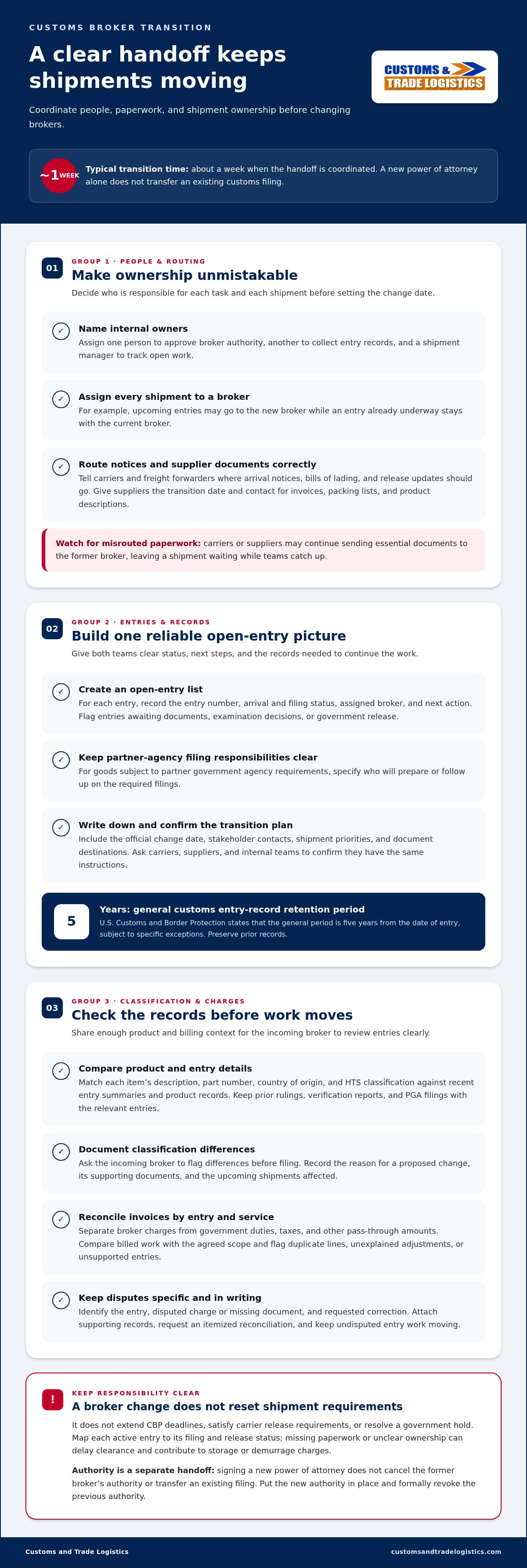
A broker change doesn't have to stop a shipment. Switching customs brokers mid-shipment is possible when the handoff is coordinated, and the transition typically takes about a week. A new power of attorney alone won’t transfer an existing customs filing, so decide clearly which broker will handle each shipment.
It may be time to consider a change when updates are slow, release delays recur, or classifications and bills are difficult to understand. But a rushed switch can create new problems: carriers and suppliers may keep sending essential paperwork to the former broker, leaving the shipment waiting while everyone catches up.
This guide explains how to review classifications and invoices, organize records, and change broker authority without confusing who is responsible for each shipment. You will also learn when it may be simpler to keep an in-transit shipment with the current broker and start the new relationship with upcoming entries. The aim is a clear handoff that maintains continuity and makes the next steps visible.
Key Takeaways
- Map the people, paperwork, and communication channels involved before setting a transition date, so carriers and vendors know where to send shipment documents.
- Compare classification records and itemized broker charges to spot inconsistencies and give the incoming broker the context needed for accurate entries.
- Put the new broker’s authority in place and formally revoke the previous authority; signing a new power of attorney alone does not cancel the old one.
- Assign shipments based on their stage and risk, keeping active examinations or high-value entries from becoming part of a rushed handoff.
Why would someone want to switch customs brokers?
Importers may consider changing brokers after slow responses, limited shipment visibility, recurring clearance delays, or billing and classification errors. A broker change does not extend CBP deadlines, satisfy carrier release requirements, or resolve a government hold.
- Assign internal owners before setting a transition date. Choose one person to approve broker authority, another to collect entry records, and a shipment manager to track open work. Clear ownership gives accounting, purchasing, and operations a reliable point of contact and prevents conflicting instructions.
- Tell each carrier and freight forwarder which broker is responsible for each shipment. For example, assign upcoming entries to the new broker while leaving an entry already underway with the current broker. Confirm where arrival notices, bills of lading, and release updates should go. Paperwork sent to the wrong broker can delay the handoff.
- Coordinate suppliers and freight providers around any document changes. Give vendors the transition date and the correct contact for commercial invoices, packing lists, and product descriptions. For goods subject to partner government agency requirements, clarify who will prepare or follow up on the necessary filings so missing paperwork does not interrupt customs clearance.
- Create an open-entry list with each entry number, arrival and filing status, assigned broker, and next action. Mark entries awaiting documents, examination decisions, or government release. Preserve prior records: U.S. Customs and Border Protection states that the general retention period for customs entry records is five years from the date of entry, subject to specific exceptions.
- Put the transition plan in writing, including the official change date, stakeholder contacts, shipment priorities, and document destinations. Ask carriers, suppliers, and internal teams to confirm they have the same instructions. This is especially important for importers with frequent shipments, where a rushed change can disrupt communication and delay release.
Reviewing classifications and fees during a broker change
- Before transferring work, compare recent entry summaries with your product records. Match each item’s description, part number, country of origin, and HTS classification. Keep prior rulings, verification reports, and PGA filings with the relevant entries. Classifications should reflect the product’s actual materials, use, and construction, not just a familiar vendor description.
- Ask the incoming broker to flag differences before filing new entries. If the same component appears under different tariff classifications, for example, compare its specifications and prior entry history. Record the reason for any proposed change, the supporting documents, and the upcoming shipments affected. This creates a clear record for later review.
- Review each invoice by entry number and service performed. Separate broker charges from government duties, taxes, and other pass-through amounts. Compare billed work with the agreed scope, then flag duplicate lines, unexplained adjustments, or entries without supporting documents. Keep supplier records and related invoices with the import paperwork to maintain a complete transaction file.
- Can switching brokers cause customs holds, examinations, storage charges, or demurrage? The change itself does not satisfy carrier release requirements or resolve a government hold. Missing paperwork or unclear responsibility can delay clearance and contribute to storage or demurrage charges, so map each active entry to its filing and release status.
- Resolve document or fee disputes in writing. Identify the entry, disputed charge, missing document, and requested correction, and attach the relevant invoice or release record. Request an itemized reconciliation, agree on responsibility for each open task, and save the exchange with the shipment file. Keep undisputed entry work moving while you resolve the specific issue.
- Track government tariff notices against affected product descriptions and origin records. Update classification notes only when the change applies to the goods, then tell the broker which entries are affected. If a border clearance review needs coordinated classification and entry handling, customs clearance support can help organize the paperwork and shipment details.
Revoking or replacing a customs broker power of attorney
Treat broker authority as a separate part of the handoff: signing a new power of attorney does not cancel the former broker’s authority or transfer an existing filing. For ocean, air, and in-bond shipments, coordinate responsibility for open filings and release steps. For ocean cargo requiring an ISF, the submitting party must update changed or more accurate information before the goods enter the limits of a U.S. port.
-
Revoke the Existing Broker Authority
Send written notice revoking the former broker’s authority to U.S. Customs and Border Protection at the port of entry or electronically, as described under 19 CFR 141.35. Keep the notice and its delivery record with your compliance files. Identify the effective date and affected entries, so open duties and release tasks don’t become confused between brokers.
-
Assign Authority to Another Broker
Execute a separate power of attorney directly with the incoming broker. Under 19 CFR 111.36(c)(3), the broker and client must execute the authority directly; a freight forwarder may deliver the document or facilitate an electronic introduction, but cannot communicate in place of the importer. Make sure an authorized company officer handles the direct exchange and retain the signed record.
-
Provide the New Broker Authority
The new broker’s power of attorney is an important part of setting up its authority to act for the importer. Notarization is not needed. Confirm that the importer’s identity details match its CBP records, and provide the entry records for the shipments assigned to the new broker. A licensed broker uses this authority to file entries for the importer, but it does not transfer filings already submitted or reassign tasks for existing freight.
Choosing which shipments the new broker will handle
- Create a transfer list before changing who files entries. For each shipment, record its arrival, filing, and examination status, release requirements, and assigned broker. Use the entry number and carrier reference to distinguish similar loads. This register makes responsibilities clear and helps prevent paperwork for an active shipment from going to the wrong contact.
- Consider leaving shipments already in motion with the current broker when an entry is underway, particularly during a CBP examination or for an active high-value entry. Start the new broker with shipments that have not yet reached filing. This gives each broker a clear set of tasks and avoids trying to transfer a filing already in progress.
- For each shipment assigned to the new broker, confirm the broker has a valid power of attorney and the correct documents before filing. Send the commercial invoice, packing list, product description, origin details, and carrier paperwork together. A signed power of attorney authorizes representation, but it does not automatically transfer an existing customs filing to the incoming broker.
- Set a clear cutoff for new entries, then notify suppliers, carriers, and freight forwarders. Identify each shipment reference and the broker responsible for its filing. Ask partners to update their contact records and confirm the new document destination. This helps prevent misdirected paperwork and keeps the old and new workstreams separate.
- Review bond arrangements alongside the transfer list. The importer owns the customs bond, not the broker. A continuous bond typically covers multiple entries, while a single-entry bond applies to a specific shipment. Match each shipment to its bond and filing responsibility before assigning it. For help coordinating transferred shipments and customs clearance, plan your shipment handoff.
Customs and Trade Logistics: Customs Clearance Services
Customs and Trade Logistics helps importers coordinate customs clearance and international freight logistics during a broker transition. Turn to the team when planning which upcoming entries to transfer, organizing import paperwork, or aligning clearance with freight movement. Customs clearance services support importers with U.S. shipments, while international freight logistics can connect shipment planning with the next stage of delivery.
Businesses importing from China can also use Import From China Consulting for import planning. Delivery and Redistribution Services help coordinate the movement of goods after clearance. These services can be useful when a broker change affects more than one entry and you need to keep import steps aligned.
Contact Customs and Trade Logistics to discuss your shipment transition.
Make Your Next Import Handoff More Deliberate
Use the transition to build a clearer operating plan for future imports. Decide who handles broker communication, where entry records are kept, and how your team will manage changes to suppliers, routing, or shipment timing. A shared process can make switching customs brokers mid-shipment less disruptive when business needs change.
Customs and Trade Logistics offers Customs Clearance Services and International Freight Logistics for businesses coordinating imports and freight movement. Importers sourcing from China can also use Import From China Consulting. A free consultation can help you discuss how these services fit your clearance, freight, and import-planning needs.
Choose the next shipment or transition task that needs attention, then take a clear first step. Contact Customs and Trade Logistics to discuss your import needs and move forward with a plan that fits your business.
Frequently Asked Questions
Can you change customs brokers after a shipment has arrived in the United States?
Yes, switching customs brokers mid-shipment is possible after arrival if the handoff accounts for filing and release status. Find out whether an entry has been filed, CBP has requested documents or an examination, and the carrier has released the cargo. A new broker’s authorization does not transfer an existing filing or remove a government hold.
How do you revoke a customs broker's power of attorney and appoint a new broker?
Revoke the former broker’s authority through written notice to U.S. Customs and Border Protection, at the port of entry or electronically, under 19 CFR 141.35. Then execute a separate power of attorney directly between the importer and incoming broker. A company officer signs the new authorization. Keep copies of both notices and the signed authority with your entry records.
What documents and shipment details does a new customs broker need to take over a shipment?
Before switching customs brokers mid-shipment, prepare the commercial invoice, packing list, bill of lading or air waybill, and applicable permits or certificates. Include the entry number, shipment status, importer-of-record details, product descriptions, part numbers, origin, and tariff classification history. For an already-filed shipment, add the CBP Form 7501 entry summary and relevant release or examination records.
Can a new broker use the existing customs entry, or must the entry be amended or refiled?
A new power of attorney does not transfer an entry already filed by another broker. The incoming broker should review the filing and release status and coordinate with the importer and former broker on any correction or remaining action. Whether an amendment or another filing is appropriate depends on the entry’s status and the information that needs correcting, not simply on the broker change.
Who is responsible for duties, taxes, and fees when changing customs brokers mid-shipment?
Changing brokers does not erase duties or taxes associated with an import entry. The importer owns the customs bond, which serves as a financial guarantee to CBP for duties, taxes, and compliance obligations. Broker service charges are separate from government amounts. Review entry statements and invoices to identify payments already made and clearly assign any outstanding payment tasks.
What fees do customs brokers charge to transfer or take over an in-progress shipment?
Transfer charges depend on filing status, document condition, classification review, and the coordination required. Request an itemized quote that separates entry work from additional document review or corrective work. Compare the listed tasks with open shipment responsibilities, and clarify which broker handles each one to avoid duplicate charges or confusion with duties, taxes, or carrier charges.