

What if the lowest Alibaba shipping quote leaves you with unexpected costs and unanswered compliance questions after your goods are already moving? The logistics of shipping from Alibaba to USA involve more than comparing a supplier’s freight price. Quotes can cover different transport stages, customs tasks, and delivery responsibilities, so it helps to know exactly what each one includes.
This guide follows an order from the supplier’s shipping arrangements through U.S. customs and delivery. You’ll learn how to compare freight terms, prepare paperwork, and understand your responsibilities as the U.S. Importer of Record, even when your supplier arranges shipping.
Coordinating freight and customs can help keep related tasks connected instead of leaving you to manage a chain of separate handoffs. Customs and Trade Logistics is a family-owned firm with over 35 years of experience, providing international freight logistics and customs clearance at U.S. ports nationwide. As a Licensed U.S. Customs Broker, the team helps businesses understand and manage the process from supplier to delivery.
Key Takeaways
- Trace an Alibaba shipment from supplier readiness through freight, U.S. customs, and final delivery to see where each handoff fits.
- Compare smaller consignments and bulk freight using shipment size, packaging dimensions, weight, quantities, and destination.
- Understand why the logistics of shipping from Alibaba to USA may involve costs and import tasks beyond the supplier’s freight quote.
- Use a pre-shipment checklist to distinguish confirmed shipment details from estimates, and provide accurate documents and product information.
- Learn how Customs and Trade Logistics coordinates China imports, freight, customs clearance, and delivery redistribution, with nationwide service and free consultations.
How the logistics of shipping from Alibaba to the USA works
An Alibaba purchase involves more than paying the supplier. The order, international freight, U.S. customs clearance, and final transport are distinct tasks, even when one shipping arrangement coordinates several of them. Alibaba shipping logistics means coordinating the movement of goods from supplier to destination alongside the preparation needed for U.S. import. Knowing where one task ends and the next begins helps you identify gaps before the shipment moves.
These steps are part of international trade, where buyers and sellers coordinate goods across borders. For an importer, the practical journey starts with accurate order and shipment details, then continues through transport, customs processing, and delivery.
What happens after you place an Alibaba order?
After you place an order, the supplier confirms which goods will ship and provides key details such as packaging, quantities, and readiness for pickup. Those details shape the freight plan. A change to the final quantity or packed dimensions, for example, may affect the information used to arrange transport. Treat early estimates as provisional until the goods are packed and the details are confirmed.
Shipping arrangements vary by seller, order, and agreed terms. A supplier may arrange freight, or you may arrange it independently and coordinate pickup with the supplier. In either case, identify what the quote covers: transportation only, customs-related coordination, or delivery beyond the U.S. arrival point. A supplier’s freight offer doesn’t automatically include every import task.
Which parties handle each part of the shipment?
Responsibilities depend on the shipping terms and service arrangement. Use this handoff map to understand the usual roles, then compare it with the terms agreed for your order.
- Supplier: Prepares the ordered goods and shares product and shipment details with the parties arranging transport.
- Freight provider: Coordinates the agreed transportation from the supplier toward the U.S. destination. The route may involve multiple transport stages.
- Importer: Provides accurate product and shipment information and coordinates the overall purchase. The U.S. buyer is generally responsible for ensuring the goods are correctly declared and applicable duties and fees are paid, even if the supplier arranged shipping.
- Customs broker: Supports the customs-entry and clearance process using the information and documents provided for the shipment. A broker’s role doesn’t remove the importer’s responsibility to provide accurate information.
- Final-delivery provider: Moves the released shipment from its arrival or transfer point to the agreed destination. This leg may require separate coordination from international freight.
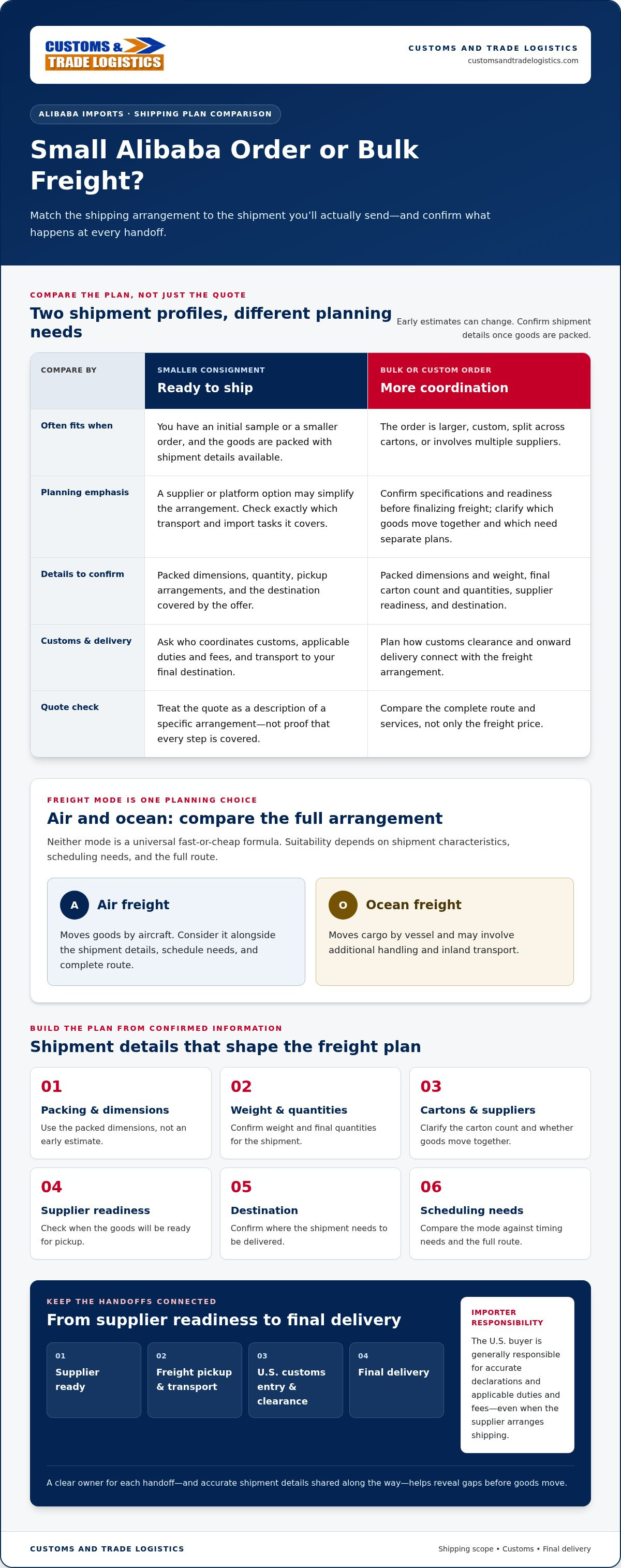
Think of the journey as a sequence of handoffs: supplier readiness → freight pickup and transportation → U.S. customs entry and clearance → final delivery. The logistics of shipping from Alibaba to USA works best when each handoff has a clear owner and shipment details travel with the goods. Coordinating freight and customs as connected tasks makes the process easier to follow and clarifies who handles the next step.
Small Alibaba orders or bulk freight: choose a shipping plan that fits
The right shipping plan depends on more than the number of products in your order. A small, ready-to-ship consignment may need a straightforward arrangement, while a wholesale, custom, or multi-carton order often needs more planning across pickup, customs, and final delivery. Choose a plan for the shipment you’ll actually send, not an early estimate based on incomplete details.
When does supplier-arranged shipping suit a smaller order?
A supplier or platform shipping option can simplify an initial sample or smaller ready-to-ship order, particularly when the goods are packed and shipment details are available. Treat the quote as a description of a specific arrangement, not proof that every step is covered. Before accepting it, identify what happens at U.S. customs, who coordinates applicable duties and fees, and whether transport to your final destination is included.
When should a business coordinate freight for a bulk order?
For a larger or custom order, confirm shipment specifications before finalizing freight. Gather the packed dimensions and weight, final carton count and quantities, supplier readiness, and destination. If an order is split across cartons or suppliers, clarify which goods will move together and which need separate plans. Freight coordination can connect supplier readiness with transportation, customs clearance, and onward delivery.
Air and ocean freight are different planning choices, not a universal fast-or-cheap formula. Air freight moves goods by aircraft; ocean freight moves cargo by vessel and may involve additional handling and inland transport. The suitable mode depends on shipment characteristics, scheduling needs, and the full route. Compare the complete arrangements, not just the freight quote.
- Order size and packing: A few ready-to-ship pieces and a large set of cartons create different handling and planning needs.
- Shipment specifications: Dimensions, weight, final quantities, and destination all shape the freight quotation and route plan.
- Service scope: Identify which tasks the offer covers, including transport, customs coordination, and delivery to the destination.
For a bulk shipment, keep one clear record of confirmed specifications and update it if the supplier changes the quantity or packing. This gives the freight and customs teams consistent information to work from. The guide Import From China Logistics: The Comprehensive Guide for US Businesses in 2026 offers a deeper look at coordinating the broader journey.
Import requirements belong in the plan from the start. The U.S. Customs and Border Protection's basic importing and exporting guide explains core import processes. Accurate product and shipment details support customs preparation, whether the order is small or large.
Customs and Trade Logistics provides freight coordination and customs clearance, with free consultations for prospective clients. Explore import logistics support to discuss how the handoffs can be coordinated around your shipment.
Does an Alibaba shipping quote cover U.S. customs and import paperwork?
Don’t assume a freight quote covers every import task. A quote may cover transportation without including customs clearance, preparation or filing of entry information, applicable duties and fees, or delivery from the U.S. arrival point to your destination. The scope depends on the agreed shipping arrangement. Before authorizing shipment, separate what’s included from what remains your responsibility.
The U.S. buyer is responsible for providing accurate product and shipment information and ensuring the goods are declared correctly and applicable duties and fees are paid, even if the supplier arranges shipping. An “all-in” shipping offer doesn’t remove the need to understand who handles customs, which documents are being used, and how duty payment is addressed. Keep the quote and its scope with your order records.
Customs clearance depends on accurate documentation and compliance with requirements that apply to the imported goods. Errors or missing details can create problems during clearance, so keep information consistent across documents and share it with the parties handling the entry.
Which documents should you prepare for customs clearance?
Start by gathering the core shipment records and checking that product descriptions, quantities, and shipment details agree. Documents commonly involved include:
- Commercial invoice: Describes the transaction and goods, including their quantities and values.
- Packing list: Shows how the goods are packed and identifies the packages and their contents.
- Bill of lading or air waybill: Ocean freight uses a bill of lading; air freight uses an air waybill.
- Applicable permits or certificates: Requirements depend on the type of goods being imported.
For ocean shipments, the Importer Security Filing (ISF) must be filed 72 hours prior to vessel departure. Same-day ISF filing is offered, but plan around the required filing timing rather than treating the option as a reason to delay preparation. Provide accurate information promptly so the filing can be prepared using the correct shipment details.
What should importers know about duties and tariff classification?
Classification identifies how goods are categorized for customs purposes and informs duty calculation. Don’t assume that a supplier’s product name or shipping quote establishes the correct classification or tells you what duties will apply. Product details matter, and the outcome depends on applicable requirements.
Before goods leave, clarify who will coordinate customs entry and how duties and other applicable charges will be paid under the arrangement. Keep responsibility clear even when freight is supplier-arranged. For a broader explanation of the clearance process, consult the article Customs Clearance Services: A Guide for Modern Importers. A customs broker can coordinate the entry process using the accurate product information and documents you provide.
A practical Alibaba-to-USA shipping checklist before goods leave
Before authorizing shipment, turn supplier messages and freight offers into a clear record of what’s confirmed. Estimates can change as packing is completed, and assumptions about customs or final delivery can leave important tasks unassigned. Use this checklist to review the shipment from product details through arrival.
Confirm the shipment details and responsibilities
Work through these checks in order. Keep confirmed facts separate from estimates, and update the records if the final shipment differs from the plan.
- Verify the product description. Make sure it accurately identifies the goods and matches the information intended for customs paperwork.
- Confirm final quantities and packaging. Compare the quantity ordered with the quantity packed. Record the number of cartons, packaging details, and any changes from the original order.
- Record shipment dimensions and weight. Use the final packed figures where available. Label estimates clearly so they aren’t mistaken for confirmed measurements in a freight quotation.
- Write down the route and transport mode. Note the planned origin, U.S. arrival point, transport method, and destination. Mark any details that are still estimates.
- Assign each handoff. Record who coordinates freight, customs entry, duty payment, and final delivery. A supplier-arranged shipping option doesn’t automatically establish who is responsible for every task.
- List documents and timing. Confirm who will provide the commercial invoice, packing list, and bill of lading or air waybill, and when each is needed. Applicable permits or certificates depend on the goods. For ocean freight, plan for ISF filing 72 hours prior to vessel departure. Same-day filing is offered, but accurate information still needs to be ready.
This written record gives the supplier, freight provider, importer, and customs broker a shared reference. It also helps you spot mismatches early, such as an invoice showing a different quantity from the packed shipment.
Prepare for arrival and onward delivery
Before the goods leave, confirm that the receiving location can accept the shipment and that delivery instructions are complete and accurate. Include the destination address, receiving contact, and relevant instructions for the delivery handoff. If the shipment needs to move onward after arrival, include that leg in the logistics plan instead of assuming it is part of international freight.
Delivery redistribution can be part of a broader plan when goods need to move from an arrival point to another destination. Customs and Trade Logistics coordinates freight, customs clearance, and delivery redistribution for imports from China. Its Importing From China: Your Comprehensive Logistics Roadmap discusses the wider import journey, while this checklist focuses on your pre-shipment review.
For help aligning freight, customs, and onward delivery before your goods leave, coordinate your Alibaba import logistics with Customs and Trade Logistics.
Get professional help coordinating Alibaba imports to the USA
Freight, customs entry, paperwork, and delivery can involve different parties working from the same shipment information. Customs and Trade Logistics helps connect these tasks for businesses importing from China. The family-owned customs brokerage and logistics consulting firm serves importers nationwide, is a Licensed U.S. Customs Broker, and brings over 35 years of experience to the process.
For importers managing the logistics of shipping from Alibaba to USA, professional coordination can make responsibilities and handoffs easier to manage. It doesn’t replace the importer’s role: you still need to provide accurate product information and documentation. A compliance-first approach keeps attention on clear records and applicable requirements without promising a particular customs outcome.
What can a customs broker and logistics team coordinate?
Customs and Trade Logistics supports customs entry filing and documentation handling for ocean, air, truck, and rail shipments. Its customs clearance services cover all U.S. ports. Freight coordination connects transportation planning with customs preparation and delivery after clearance, reducing the burden of managing each handoff separately.
Coordinating these tasks can help align the supplier’s shipment information with customs-entry documents and the plan for onward transport. Your records remain essential. Share accurate descriptions, quantities, and shipment details so the team can work from consistent information. Missing or conflicting details can complicate the process, so clear communication with the supplier and logistics team matters.
Customs clearance remains subject to the shipment’s documents and applicable requirements. Many shipments are cleared within 24 hours, but this does not mean every shipment will clear in that timeframe. The team supports the customs process and coordinates logistics with care, while importers provide the accurate information needed to help avoid delays or penalties.
Support can also extend beyond customs. International freight logistics connects transportation planning with the import process, while delivery and redistribution services help coordinate movement to the intended destination. Bringing these pieces together can be especially useful for small and medium-sized importers without a dedicated logistics team to manage each party and document.
Take the next step with a free consultation
You don’t need every shipment detail finalized to begin a useful conversation. Be ready to share the type of goods, whether the supplier is ready to ship, what you know about the order’s packaging and quantity, and any shipping information already provided. Mark estimates as estimates. This gives the discussion a practical starting point and helps identify which details or handoffs need attention.
A free consultation is an opportunity to discuss how freight coordination, customs clearance, and delivery planning can fit your import. To talk through your shipment, schedule a free consultation with Customs and Trade Logistics.
Turn your first import into a stronger plan for the next
Turn what you’ve learned about the logistics of shipping from Alibaba to USA into a clear shipment brief. Capture the decisions that matter for this order, including confirmed product details, who owns each handoff, and what remains an estimate. After delivery, note what worked and what you’d clarify earlier next time. That record can make future orders easier to plan and supplier conversations more precise.
You don’t have to manage every moving part alone. Customs and Trade Logistics can help you consider how freight coordination and customs support fit your import. A free consultation is a straightforward place to discuss your shipment and the details you already have.
Schedule a free consultation about your Alibaba import and take the next step with a clearer plan.
Frequently Asked Questions
Is shipping from Alibaba included in the product price?
Not necessarily. A product price and a shipping charge may be quoted separately. Review the order terms and supplier quote to see whether freight is included, which destination the quote covers, and whether customs-related tasks or final delivery are part of the arrangement. For example, a quote covering transport to a U.S. port may not include delivery to your business. The logistics of shipping from Alibaba to USA depends on the full scope of the agreed arrangement.
How much does it cost to ship from Alibaba to the USA?
There isn’t one reliable shipping price for every Alibaba order. The quote depends on details such as the shipment’s packed dimensions and weight, final quantity, transport mode, route, and destination. Customs-related charges and final delivery may also be separate from freight. To compare offers fairly, provide the same confirmed shipment details to each party and request a clear breakdown of which services and handoffs the quote covers.
Can I use my own freight forwarder for an Alibaba order?
Yes, you can arrange freight independently and coordinate with your supplier about when and where the goods will be ready for pickup. Share the forwarder’s shipping instructions with the supplier, and keep the importer, customs broker, and delivery arrangements aligned. Using your own freight forwarder doesn’t automatically include customs clearance or settle duty-payment responsibilities. Make sure the parties have consistent product, packaging, and shipment details before the goods move.
What does DDP mean for a shipment from Alibaba to the USA?
DDP, or Delivered Duty Paid, describes an arrangement where the seller takes responsibility for arranging delivery and paying applicable import duties under the agreed terms. Still, a DDP label alone doesn’t show exactly how customs entry is handled or what documentation you’ll receive. The U.S. buyer remains responsible for ensuring goods are declared correctly. Clarify who is named as importer and how the shipment will be documented before relying on the quote.
Do I need a customs broker for goods purchased on Alibaba?
A customs broker isn’t legally required for every shipment, but a broker can assist with customs entry and help you understand the paperwork involved. This can be useful if you’re importing for the first time, have unfamiliar goods, or need help coordinating customs with freight arrangements. You’ll still need to provide accurate product and shipment information. Customs and Trade Logistics offers customs clearance services and free consultations for prospective clients.
What happens if my Alibaba shipment arrives before the customs paperwork is ready?
The shipment may not be ready for customs processing or release until the required information and documents are available and reviewed. Contact the party coordinating the entry promptly, gather the missing records, and provide accurate corrections rather than guessing. The next steps depend on the shipment and its status. Keep the supplier, freight provider, and customs broker informed so each is working from the same updated details.
How does ISF filing work for an Alibaba ocean shipment?
For an ocean shipment, the Importer Security Filing (ISF) must be filed 72 hours prior to vessel departure. The filing uses shipment information, so coordinate early with the party preparing it and provide complete, accurate details from your order and transport documents. Customs and Trade Logistics offers same-day filing, but that doesn’t change the stated filing timing. Don’t wait for the shipment to arrive in the United States to organize the filing.