

Importing furniture from China gives businesses access to a large manufacturing base and a wide range of suppliers. The opportunity is real, but successful sourcing takes more than finding an attractive product. Assess suppliers, verify quality, and plan freight and customs clearance from the outset.
It’s natural to focus first on product choice and purchase terms. Both matter, but clear specifications and quality checks before a large order can reduce the risk of receiving furniture that does not match expectations.
This guide explains why businesses source furniture from China, where to find suppliers, and how to assess product quality before placing an order. It also covers the practical steps for shipping goods to the United States, helping you build a clear sourcing plan.
Key Takeaways
- Compare online marketplaces with furniture markets and trade fairs to find suppliers that suit your product range and sourcing needs.
- Assess suppliers by their experience, capacity, quality-control practices, communication, pricing, and ability to meet your specifications.
- Request samples and set clear quality requirements before ordering; pre-shipment inspections can help identify issues before goods leave the factory.
- Plan freight and customs clearance alongside product sourcing so you can understand the full import process before committing to an order.
Alibaba, furniture markets, and trade fairs
For businesses importing furniture from China, Alibaba can help identify potential suppliers and compare listed products. Begin with a written brief that specifies furniture type, materials, dimensions, finish, order quantity, and destination. Compare supplier responses against the same requirements rather than relying on photos alone. Request product details in writing and organize quotations so you can compare them consistently.
Sea freight is often suitable for bulky furniture shipments. Air freight may be an option when speed is important and the shipment size allows it, while courier services can work for small parcels such as fabric swatches or hardware samples. Compare shipment size, urgency, and handling needs when choosing a method.
Lecong International Furniture City spans over three million square meters, giving buyers space to explore furniture and meet suppliers in one destination. Plan visits by product category, such as office seating or bedroom furniture. Record supplier names, product details, and terms as you go so you can make useful comparisons afterward.
The China International Furniture Fair in Guangzhou spans 850,000 square meters and has over 4,700 exhibitors. It runs in two phases annually, with home furniture in March and office furniture later in the month. Choose the phase that matches your buying category. Prepare questions about product specifications, production, and order terms before meeting exhibitors.
Each channel can serve a different sourcing step: Alibaba for initial discovery, Lecong for in-person market exploration, and Guangzhou’s fair for focused industry meetings. For example, shortlist dining-table suppliers online, compare options in Lecong, then discuss product details with relevant exhibitors at the fair. This creates a practical sequence for your search.
When importing furniture from China, keep product requirements consistent across supplier conversations and written records. Document agreed materials, dimensions, finishes, and packaging expectations. This makes it easier to compare options and carry clear decisions into the next stages of your order.
Why Import Furniture from China?
China offers a broad choice of furniture and manufacturing options, but the right supplier still needs to match your product, order size, and quality requirements. Start with a written brief covering intended use, dimensions, materials, finish, quantity, and delivery destination. Compare suppliers against the same requirements, not just the lowest quote.
Assess each supplier’s experience, production capacity, quality-control process, pricing, payment terms, shipping support, and communication. Request examples of comparable work and written product specifications. For a dining chair, clarify the frame material, finish, dimensions, and packaging, then record the answers in one comparison sheet. Short, direct questions and labeled drawings can reduce misunderstandings across language barriers. Confirm that both sides understand the product terms before placing an order.
Which HTS code applies? Classification depends on the furniture’s type, materials, construction, and intended use. Gather those product details before determining the code, since a chair and a wooden cabinet may fall under different headings.
What U.S. safety, labeling, and compliance requirements apply? They depend on the furniture and its intended use. Include applicable safety testing, material details, and labeling needs in the product brief before production.
How much does shipping furniture from China to the United States cost? The total depends on shipment volume, transport method, route, handling, and delivery arrangements. Compare quotes using the same shipment details and service scope.
What are the import steps? Select and vet a supplier, agree on specifications and payment terms, arrange freight, prepare import information, then manage customs clearance and delivery. Include quality checks in the plan before production is complete.
How do EXW, FOB, and DDP affect cost and responsibility? Each term assigns different tasks and costs to the buyer and seller, from pickup arrangements through delivery and import handling. Compare the named place and included services before accepting a quote.
A clear plan helps connect supplier selection with transport and entry requirements. For help organizing those decisions, explore import planning support.
How do I ensure the quality of the furniture products?
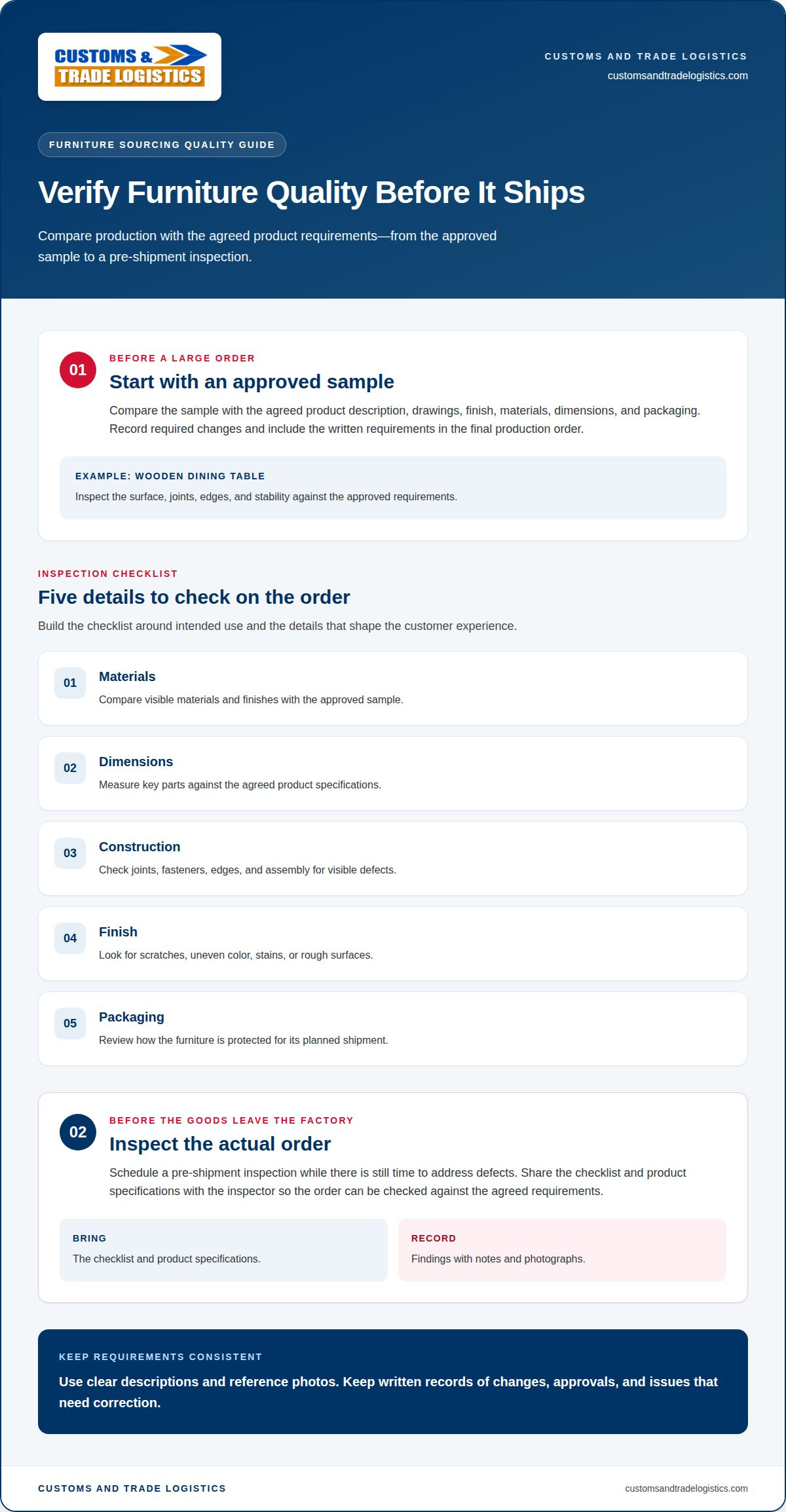
Request a sample before placing a large order. Compare it with the agreed product description, drawings, finish, materials, dimensions, and packaging. For a wooden dining table, inspect the surface, joints, edges, and stability. Record any required changes and make sure the final production order includes those written requirements.
Build a quality checklist around the furniture’s intended use and the details that affect the customer experience. A chair, for example, needs attention to frame assembly, upholstery, finish, and consistent dimensions. Use clear descriptions and reference photos so factory staff can compare production pieces with the approved sample. Keep written records of changes, approvals, and issues that need correction.
- Materials: Compare visible materials and finishes with the approved sample.
- Dimensions: Measure key parts against the agreed product specifications.
- Construction: Check joints, fasteners, edges, and assembly for visible defects.
- Finish: Look for scratches, uneven color, stains, or rough surfaces.
- Packaging: Review how the furniture is protected for its planned shipment.
Schedule an inspection before shipment, while there is still time to address defects. Share the checklist and product specifications with the inspector, and request findings supported by notes and photographs. The inspection checks the actual order against the agreed requirements before the goods leave the factory.
Keep inspection results tied to the specific order and product version. If a report identifies a problem, document the affected pieces and the corrective action agreed with the supplier. Then review the correction before authorizing shipment. This step-by-step record helps prevent a verbal approval or sample change from being mistaken for the final production standard.
Benefits of sourcing furniture from China
China’s furniture sector offers scale, choice, and room to develop products for different customer needs. The country accounts for 30% of worldwide furniture exports and produces $160 billion worth of furniture annually. That manufacturing base gives buyers access to a broad supply network, from household furnishings to office products.
Market size also signals the sector’s depth. The Chinese furniture market is projected to reach $169.23 billion in 2026 and more than $220 billion by 2031. Its projected compound annual growth rate is 5.42%. These figures describe the market, not a guarantee of savings or a fit for every order. Buyers still need to match a product and supplier to their business requirements.
A broad product choice can be a practical advantage. A retailer developing a coordinated dining range, for example, can explore related tables, chairs, finishes, and materials through one sourcing plan. A commercial buyer may instead focus on office furniture suited to a particular workspace. Clear specifications turn those possibilities into a focused request rather than an unfocused search.
Manufacturing scale can also support a business as its needs change. Define a product range, compare production options, and plan quantities around expected demand. Before committing, weigh product fit against the complete landed cost, including freight, customs, and delivery. A low factory quote alone does not show whether an order fits your budget or timeline.
The strongest benefit comes from treating sourcing as a business decision, not simply a search for a low unit price. Define your customer, required product features, order size, and delivery plan first. Then assess whether the Chinese market offers the right combination of choice, production capacity, and value for that specific need.
Plan your furniture sourcing approach around product requirements, freight, and delivery needs.
Customs and Trade Logistics: Customs Clearance Services
Customs and Trade Logistics can help coordinate the import plan when supplier decisions turn into a shipment bound for the United States. Its Customs Clearance Services support the customs stage, while International Freight Logistics helps manage freight arrangements. Import From China Consulting can support businesses with import planning before the goods move.
Turn to these services when you need help coordinating freight, customs clearance, and final delivery. Delivery and Redistribution Services can also help move imported furniture onward after it reaches its destination. Clear product and shipment information helps keep each handoff aligned with the order plan.
Contact Customs and Trade Logistics to discuss support for your furniture import.
Build a Clear Plan for Your Next Order
A successful first purchase can become a repeatable sourcing process when each decision is recorded. Keep supplier details, product specifications, inspection findings, and shipping arrangements organized together. These records give your team a practical reference when adjusting a product or planning another order.
For businesses importing furniture from China, the next step is connecting sourcing decisions with the shipment and customs entry. Customs and Trade Logistics supports import planning, international freight logistics, and customs clearance, helping businesses coordinate key stages of the shipment.
Choose a next step that matches your order’s status. If you are still shaping the sourcing plan, focus on the product and shipment requirements. If the order is ready to move, bring those details into the logistics and customs clearance process.
Contact Customs and Trade Logistics to discuss your furniture import plans. With a clear process in place, you can move forward with greater confidence.
Frequently Asked Questions
What import duties and tariffs apply to furniture from China in 2026?
Furniture imports may face a base tariff and additional duties, depending on classification. As of late 2025, these combined duties could total approximately 30% for many furniture categories. The applicable amount depends on the product’s tariff classification and category. Identify the furniture’s materials, construction, and use so its classification can be assessed for the shipment.
How do I find and vet a reliable Chinese furniture supplier or manufacturer?
Compare suppliers using the same product brief, then assess how consistently they answer and document details. Match the supplier’s business name across its quotation, purchase agreement, and payment instructions. Request written production details, order milestones, and a clear process for handling changes. Precise responses to questions about your specifications make it easier to document what both sides agreed to deliver.
What documents are required to clear U.S. customs for furniture imports?
Common shipment documents include a commercial invoice, packing list, and bill of lading or air waybill. The goods may also require applicable government permits or certificates. Keep descriptions, quantities, and shipment details consistent across all paperwork. For example, the invoice and packing list should clearly identify the furniture in the shipment.
How long does it take to manufacture, ship, and clear furniture from China?
Furniture production and shipping to the United States typically take around 4-6 weeks, followed by an additional 1-2 weeks for customs clearance and delivery. The full schedule depends on production readiness, transport arrangements, and the destination. Include time for order specifications and approvals before production, and coordinate delivery planning so the goods can move onward after clearance.
What are the risks of importing furniture from China, and how can I avoid scams or defects?
Risks include receiving products that differ from the agreed specifications, damaged goods, unclear payment expectations, or a supplier failing to meet the order terms. Reduce these risks by recording specifications and changes in writing, reviewing samples, and documenting inspection findings. Use a transparent payment agreement, and compare the invoice and payment instructions with the supplier details in your signed order documents.
Should I use a customs broker or freight forwarder to import furniture from China?
A customs broker supports customs clearance, while a freight forwarder coordinates international shipping. Businesses may use both when they need support with transportation and customs. Customs and Trade Logistics offers Customs Clearance Services, International Freight Logistics, and Import From China Consulting to help importers plan and coordinate shipments. The right support depends on which parts of the process your business needs help managing.