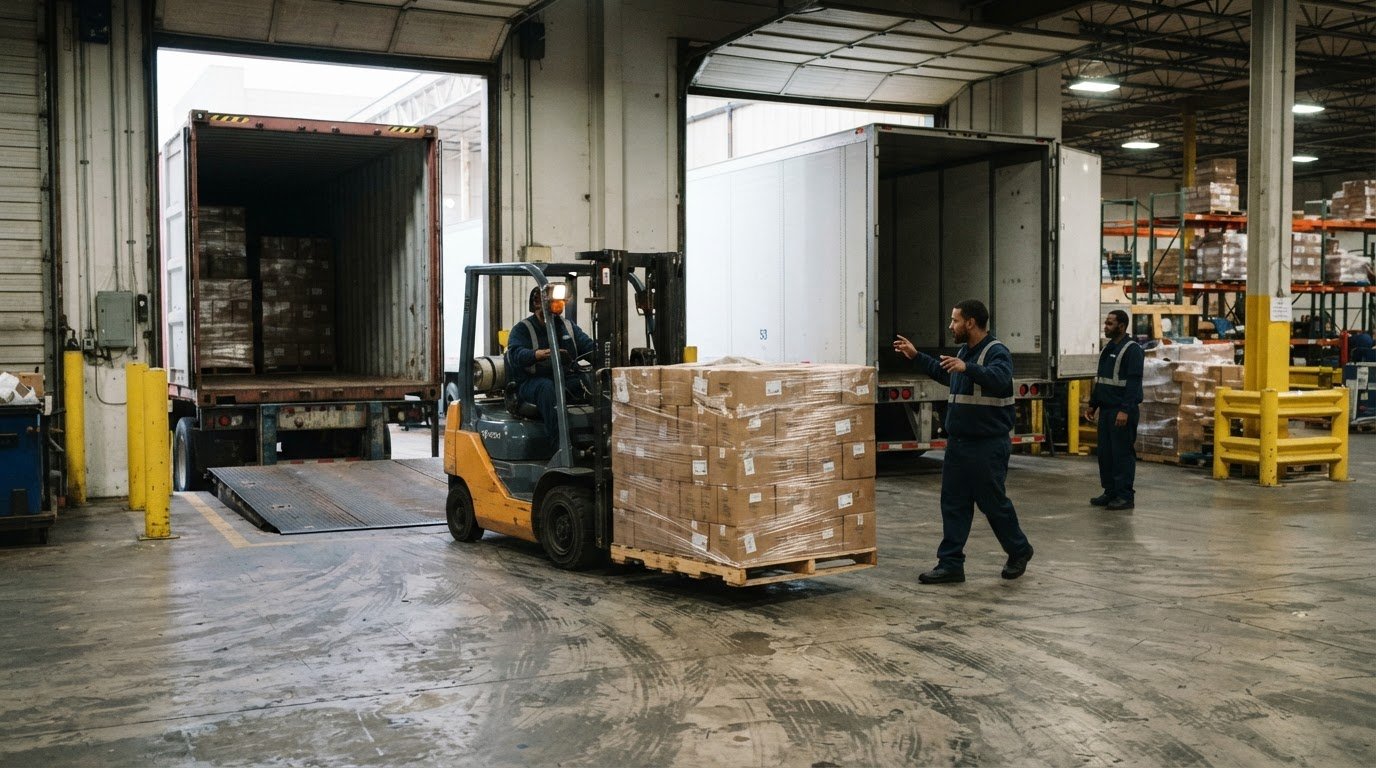
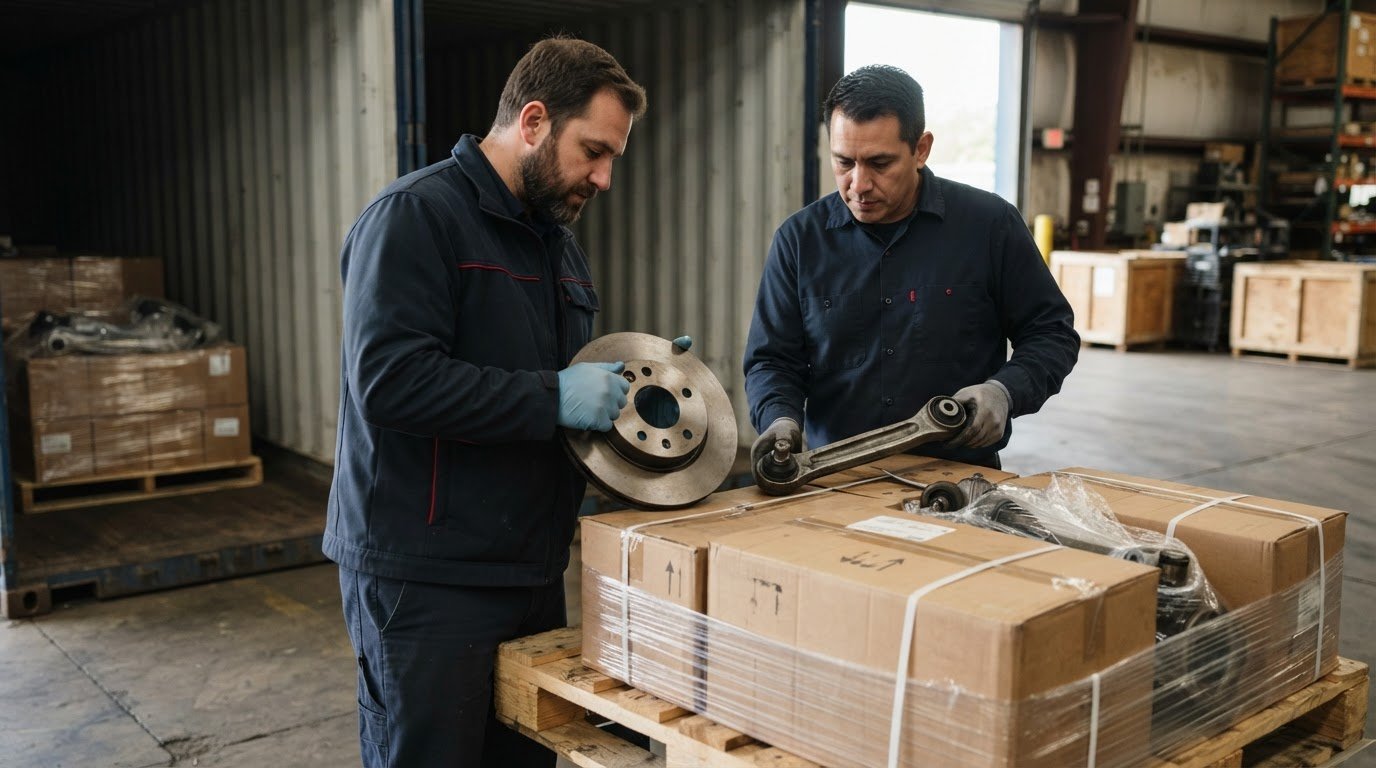
A low supplier quote can still lead to a higher landed cost. The United States has imposed tariffs on many Chinese-made goods, including auto parts, so importing automotive parts from China means accounting for potentially additional duties. The importer’s costs may rise, but who ultimately absorbs that expense depends on the purchase price and delivery terms.
It’s also useful to look beyond the duty rate. China’s auto parts exports reached $95.11 billion in 2025, while imports fell 21.7% to $21.12 billion. Those trends offer context, but they don’t tell you whether a specific part is a good buy for your business.
This guide explains how duties affect import costs, how buyers and sellers can allocate the duty burden, and what to include when estimating an order’s total cost. It also covers the steps involved in importing parts into the United States and the trade-offs of sourcing from China, helping you plan with a clearer view of the costs and decisions ahead.
Key Takeaways
- Build a landed-cost estimate that accounts for duties and freight, not just the supplier’s quoted price.
- Understand how purchase terms affect who bears an additional duty and how it can change the deal’s economics.
- Weigh potential sourcing advantages against tariff exposure, product suitability, and the demands of importing into the United States.
- Follow a clear import sequence, from supplier and part checks through customs clearance and delivery planning.
Advantages and drawbacks of importing auto parts from China
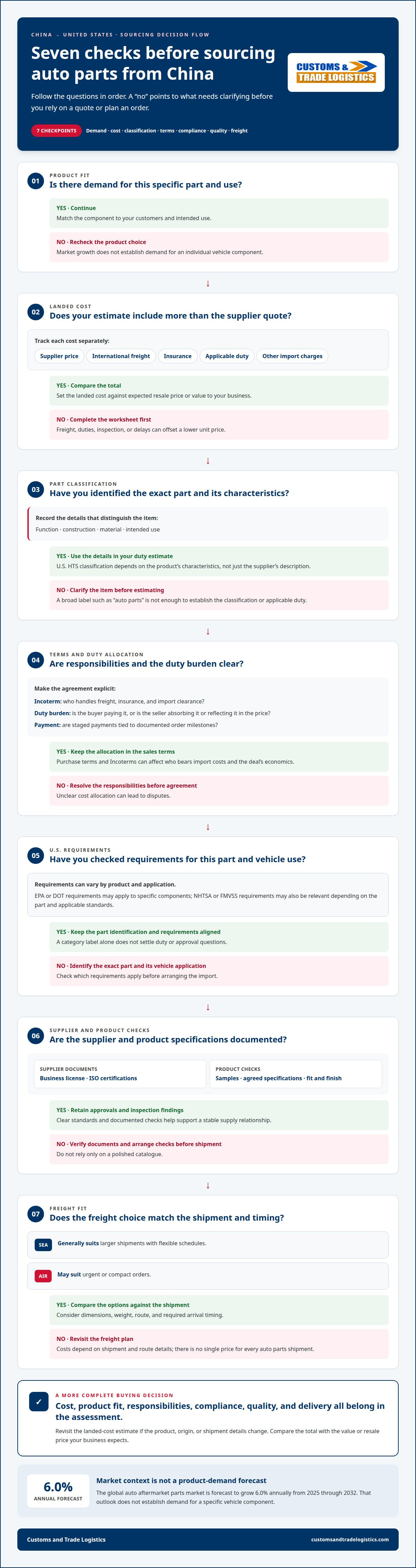
- Assess demand before selecting a part or supplier. The global auto aftermarket parts market is forecast to grow 6.0% annually from 2025 through 2032. That outlook suggests opportunity, but it doesn’t establish demand for a specific vehicle component. Match the product to your customers and intended use.
- Compare the full landed cost, not just the factory quote. A lower unit price may be offset by freight, duties, inspection, or delays. The United States has imposed tariffs on many Chinese-made goods, including auto parts. Include applicable charges when deciding whether a supplier’s offer lowers your overall cost.
- Choose an Incoterm and payment arrangement that clearly assign responsibilities. No single term is best for every order, so specify who handles freight, insurance, and import clearance. Staged payments tied to documented order milestones can connect payment to production and shipment progress.
- Separate parts by category and intended use before assessing U.S. requirements. Replacement parts, aftermarket components, and goods for resale can involve different documentation and compliance considerations. A category label alone does not settle duty or approval questions. EPA or DOT requirements may apply to specific components, so identify the exact part and its vehicle use.
- Request the supplier’s business license and ISO certifications before purchasing, then arrange product checks before shipment. Compare samples with the agreed specifications, including fit and finish. A stable supply relationship depends on clear standards, documented approvals, and inspection findings, not just a polished catalogue.
- Compare sea and air freight based on the shipment’s dimensions, weight, route, and required arrival timing. Sea freight generally suits larger shipments with flexible schedules; air freight may suit urgent or compact orders. Costs depend on these factors, so there is no single price for every auto parts shipment.
China's automotive parts import and export trends
- Use China’s trade direction as context, not a forecast for your order. Auto parts exports reached $95.11 billion in 2025, up 2.4%. Imports fell 21.7% to $21.12 billion that year. These figures show China’s strong export position, but they don’t establish supplier capacity, product quality, or demand for a specific component.
- Compare annual totals with newer quarterly movement. In the first quarter of 2026, Chinese auto parts exports totaled $23.83 billion, up 3.7% year over year. Imports reached $4.83 billion, up 4.5%. Rising imports were linked to demand for high-performance chips, advanced sensors, and precision transmission components for new models.
- Track changes across months before interpreting the trend. Exports reached $9.1 billion in January 2026, then $7.31 billion in March, down 12.2% year over year. April exports were $8.6 billion. A monthly shift can reflect changing trade flows; it doesn’t by itself prove a lasting change in availability or price.
- Classify each product by its actual characteristics before estimating duties. The U.S. HTS classification depends on the part’s function, construction, and material, not simply its supplier’s description. Trade data groups motor vehicle parts under HS codes 8706, 8707, and 8708. Those broad headings aren’t a substitute for the precise U.S. HTS code for an individual item.
- Determine whether the specific part and vehicle application bring NHTSA or FMVSS requirements into play. Compliance and certification depend on the product and applicable standards, so identify the part accurately before arranging import. For the logistics side, international freight planning can help connect shipment details with the import process.
Costs and effects of import duties
- Start with the part’s exact description and intended use. An engine component and a vehicle body part may have different tariff classifications. Classification affects duty calculations, so do not estimate based on a broad label such as “auto parts.” Record each item’s material, function, and other identifying details.
- Build a landed-cost worksheet for each purchase. Track the supplier price, international freight, insurance, applicable duty, and other import charges separately. Then compare the total with the expected resale price or value to your business. A low unit price can lose its advantage if freight or duties increase the final cost.
- Account for the tariff that applies to the product and import circumstances. The United States has imposed tariffs on many Chinese-made goods, including auto parts, but no single rate applies to every component. The part’s classification and current measures shape the estimate. Revisit the calculation if the product, origin, or shipment details change.
- Clarify who bears the additional duty’s economic cost before agreeing to the purchase. Contract terms and Incoterms can allocate import costs between buyer and seller. The seller may absorb a charge or reflect it in the quoted price; the buyer may also pay it directly. Put the agreed allocation in the sales terms to avoid disputes.
- Keep historical examples separate from today’s U.S. import calculation. Under challenged Chinese measures, a 25% charge on imported auto parts was characterized as an internal charge subject to GATT Article III. China’s Decree 125 entered into force on 1 April 2005. Those China-related measures do not establish the U.S. duty for a current shipment.
- Stress-test your margin before placing an order. Compare the base estimate with a scenario in which duty, freight, or the supplier price changes. For example, a high-volume purchase of engine components can magnify a small per-unit increase. Set a maximum landed cost that still supports your intended resale price or operating budget.
Replacement, aftermarket, and resale parts do not have a single duty rate based on those labels alone. The estimate depends on classification, origin, and import circumstances. Document each part’s function and intended use, then calculate the applicable duty.
Importing Auto Parts from China to the US: Step-by-Step
- Define the part and its intended use. Record the product name, materials, function, vehicle application, and whether it is for resale or internal use. A brake component and an engine sensor need distinct descriptions. Clear product details support supplier discussions, classification, and cost estimates.
- Assess the supplier before placing an order. Request and verify its business license and ISO certifications. Compare the proposed part with written specifications, samples, and agreed quality criteria. Keep product descriptions and supplier documents together so shipment information can be prepared consistently.
- Identify the U.S. HTS classification for each part. Use its function, materials, and construction rather than relying only on a supplier’s broad label. Classification affects the duty estimate. Record the reasoning and product details used, especially when an order includes different components.
- Review requirements tied to the part and its vehicle use. Consider whether EPA, DOT, NHTSA, or FMVSS rules may apply to the specific item. Requirements can vary by component, so connect the product description with its intended application before finalizing the purchase.
- Estimate the shipment’s landed cost. Include the purchase price, freight, insurance, applicable duties, and other import charges. The United States has imposed tariffs on many Chinese-made goods, including auto parts. Compare the resulting total with your budget and expected resale value.
- Agree on shipping responsibilities and prepare shipment information. Confirm the Incoterm, freight arrangement, shipment quantities, and who handles import charges. Keep supplier and order details consistent across shipping documents. Choose sea or air freight based on cargo dimensions, urgency, and delivery needs.
- Coordinate customs clearance and final delivery around the shipment plan. Accurate product descriptions and organized documents help keep the import process aligned from departure through release and onward distribution. For help coordinating these steps, explore Import From China Consulting for your automotive parts shipment.
Customs and Trade Logistics: Import From China Consulting
Customs and Trade Logistics helps businesses coordinate the practical steps involved in importing automotive parts from China. Turn to Import from China Consulting when you need support aligning supplier information, freight plans, and import preparation before an order moves.
Customs Clearance Services can manage the customs clearance stage, while International Freight Logistics coordinates the movement of goods. After parts are released, Delivery and Redistribution Services can support their onward movement to your business or distribution points.
This support is useful when product details, shipment arrangements, and import documents need to work together. Share your shipment plans and the parts you intend to import with Customs and Trade Logistics for guidance through the relevant services.
Contact Customs and Trade Logistics to discuss your automotive parts import.
Turn Your Sourcing Plan Into a Repeatable Process
A durable sourcing decision should support more than a single order. Build a process your team can reuse: record why a part suits your customers, how its landed cost affects your margin, and which shipment details matter before ordering. This gives future purchasing decisions a practical foundation as suppliers, products, and trade conditions change.
Bring part information and purchasing goals together early for your next shipment. Customs and Trade Logistics can support the process through Import from China Consulting, Customs Clearance Services, and International Freight Logistics. The right support can help keep sourcing, customs, and transportation connected as your plans move forward.
Contact Customs and Trade Logistics to discuss your import plans. With a clear process and the right support, you can move ahead with greater confidence.
Frequently Asked Questions
Who bears the cost of the additional import duty?
The buyer and seller determine who absorbs the duty’s economic cost through their sales agreement and delivery terms. If the seller agrees to cover import charges, that cost may be reflected in the quoted price. If the buyer is responsible, the duty adds to the buyer’s landed cost. Make the allocation clear before confirming the order, especially when comparing supplier quotes.
What U.S. customs duties and tariffs apply to auto parts imported from China in 2026?
There isn’t one duty rate for every Chinese auto part. The applicable amount depends on the item’s U.S. tariff classification and any tariffs that apply to that product and shipment. A brake component and an engine part may be classified differently. For a 2026 order, base the estimate on the specific product and its classification rather than assuming one rate covers all parts.
What documents are required to import auto parts from China into the U.S.?
Core shipment documents include a commercial invoice, packing list, and bill of lading for ocean freight or air waybill for air freight. Some products also require applicable government permits or certificates. The invoice should identify the parts clearly, while the packing list describes the shipment contents. Complete, consistent details help support customs entry and reduce document-related hold-ups.
Should I use a customs broker or freight forwarder to import auto parts into the U.S.?
A customs broker prepares customs entries and supports clearance, while a freight forwarder coordinates transportation. These roles cover different parts of a shipment, so some importers use both. A broker is not legally required for every shipment, but businesses often use one to help manage paperwork and compliance. Customs and Trade Logistics offers Customs Clearance Services and International Freight Logistics.
What are the best Incoterms and payment methods for sourcing auto parts from China?
There is no single best Incoterm. Specify who handles freight, insurance, and import clearance, and document how import charges are allocated. Staged payments tied to documented order milestones can link payment to production and shipment progress.
How do U.S. import rules differ for replacement parts, aftermarket parts, and parts for resale?
Replacement, aftermarket, and resale parts can involve different documentation and compliance considerations, but those labels alone do not determine duties or approvals. Identify each part’s function and intended vehicle use, then assess its classification and applicable requirements.