

What if the safest way to fire your customs broker is to plan the handoff before you send a termination notice? If you’re researching how to fire your customs broker, slow replies and recurring paperwork problems may have made the decision feel urgent. A careful transition can help you keep track of shipments already moving and entries still in progress.
Ending the relationship doesn’t end your responsibilities as an importer. A rushed switch can leave open tasks, records, or authorizations unclear. With a practical plan, you can document the change, assign responsibility for each active shipment, and give your replacement the information needed to take over.
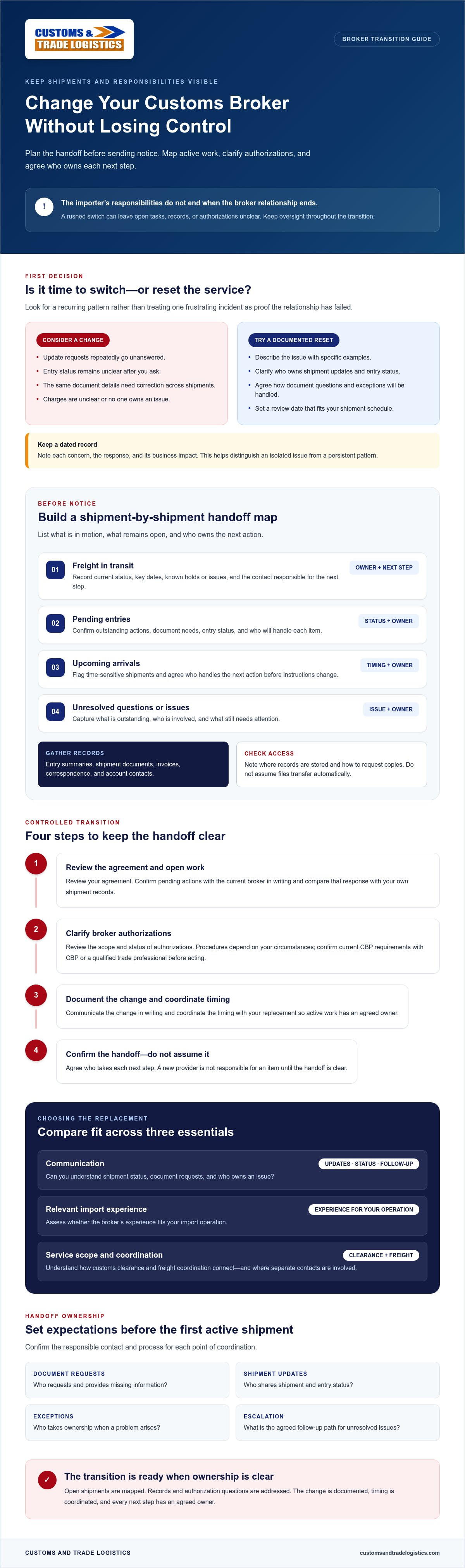
This guide walks you through reviewing pending work, communicating the change, addressing broker authorizations, and assessing a new partner’s experience, communication, and service scope. It also explains how to compare customs clearance and freight coordination, so you can choose a better fit and maintain oversight throughout the transition.
Key Takeaways
- Look for a recurring pattern of missed updates, errors, or unresolved problems before deciding whether to switch brokers.
- Map in-transit freight, pending entries, upcoming arrivals, and outstanding issues so each item has a clear owner.
- To understand how to fire your customs broker, review your agreement, document the change in writing, and coordinate timing with your replacement.
- Compare potential brokers on communication, relevant import experience, and how they coordinate customs clearance with freight logistics.
- Before the handoff, confirm who handles document requests, shipment updates, exceptions, and escalation.
When should you fire your customs broker, and when should you resolve the issue first?
Missed updates, recurring entry corrections, unclear fees, or problems that no one seems to own can make you question the relationship. Customs brokers help importers manage important steps in international trade, so communication gaps can make it harder to understand shipment status and decide what needs attention.
Look for a pattern, not just one frustrating incident. A delay or document correction doesn’t automatically mean your broker has failed. Incomplete information or an issue elsewhere in the shipment process may be involved. The concern is whether problems recur, explanations remain unclear, or you can’t get a reliable picture of what is happening and who is responsible.
Which warning signs justify changing customs brokers?
Take a closer look if update requests repeatedly go unanswered, entry status remains unclear after you ask, or the same document details need correction on multiple shipments. Unclear charges or a lack of ownership when an issue arises can also erode confidence. Keep a dated record of each concern, the response you received, and its business impact, such as extra follow-up or difficulty planning around an arrival.
A record helps distinguish an isolated service issue from a persistent problem. It also gives you specific examples to raise with the broker instead of relying on a general impression that communication “isn’t working.”
Could a service reset solve the problem?
If the relationship has potential, try a direct, documented conversation before making a final decision. Describe the issue and agree on what better service would look like. For example, clarify who owns shipment updates, how entry status will be communicated, how document questions should be handled, and what follow-up you expect after an exception. Set a review date that fits your shipment schedule and gives you a chance to see whether the process has changed.
A reset is useful only if responsibilities become clearer and communication improves. If the same problems continue, you’ll have a stronger basis for considering how to fire your customs broker and planning a controlled transition.
Don’t end coordination before you map open work. Before giving notice or changing who handles an entry, identify shipments in transit, pending entries, upcoming arrivals, and unresolved questions. Note who is currently responsible for each item and what still needs attention. This helps prevent an unclear handoff, whether you resolve the service issue or move to a new provider.
Before firing your customs broker, prepare your shipment and account handoff
A safe transition starts with a clear view of what is in motion and who is responsible for each next step. Before changing instructions, make a current list of your freight, entries, and unresolved issues. This gives you a practical handoff plan and helps prevent open tasks from being overlooked.
What should you check for open entries and shipments?
Create a shipment-by-shipment list. Include each item’s current status, key dates, outstanding documents, known holds or issues, and the contact responsible for the next action. Add pending entries, upcoming arrivals, and freight already in transit. Ask your current broker to confirm pending actions and known issues in writing, then compare the response with your own records.
Flag time-sensitive shipments and confirm who will handle each next step before changing instructions. Don’t assume a new provider has taken responsibility until you’ve agreed on the handoff. A clear list makes gaps easier to spot, especially when customs clearance and freight coordination involve different contacts.
Which records and authorizations need attention?
Gather the information available to you, such as entry summaries, shipment documents, invoices, correspondence, and account contacts. Note where each item is stored and how to request a copy if you don’t have it. Ask about access to any other records you’ll need, and confirm the process rather than assuming files will transfer automatically.
Review the scope and status of your broker authorizations as well. The U.S. International Trade Administration explains that customs brokers are licensed, regulated and empowered by U.S. Customs and Border Protection. Authorization procedures can depend on your circumstances, so confirm current CBP requirements for ending or replacing an authorization with CBP or a qualified trade professional before acting.
Use this preparation checklist before sending notice:
- List each shipment, entry, arrival, hold, and open question.
- Record the next action, relevant date, and responsible contact for each item.
- Collect available shipment records and confirm how to obtain missing account information.
- Check authorization details and ask what steps apply to your transition.
These details are the groundwork for how to fire your customs broker without losing sight of active work. If you’re also reviewing your broader import process, see this customs clearance services guide. To assess how customs clearance and international freight logistics fit your operation, review the services offered by a customs and logistics team.
How to fire your customs broker without losing control of the transition
End the relationship in a planned order, not with a cancellation message sent before anyone is ready to take over. First, confirm that your replacement understands the work and has agreed on when it can begin. Then review your current agreement, send written notice, and coordinate responsibility for open entries and shipments. This sequence helps prevent uncertainty about who is handling the next action.
Before giving notice, check your contract for termination terms, any notice period, outstanding service fees, and provisions about access to records. Keep the agreement and related correspondence together. Timing depends on those terms, your open work, and applicable requirements, so don’t assume every importer follows the same notice period or process.
How should you give termination notice?
Send a clear written notice that identifies the brokerage relationship, states your requested effective date, and names the person coordinating the transition. Ask the broker to confirm receipt and respond in writing about open matters, final invoices, and how to request relevant records. Keep the notice and reply with your account files. If you’re unsure how contract terms apply, consult qualified legal counsel before setting or relying on an effective date.
Ending a service agreement and revoking a power of attorney are related but distinct steps. Federal regulation 19 CFR 141.35 addresses revocation at any time by written notice. Check the current rule and confirm the appropriate notice process with CBP or a qualified customs professional. Don’t treat a broker termination email as confirmation that every authorization has been addressed.
How do you protect in-progress customs work?
Coordinate a written handoff for pending entries, shipment milestones, and outstanding requests. For each open item, confirm who is responsible for the next action and when responsibility changes. If the brokers’ work overlaps, define the division of responsibility so neither assumes the other is handling a filing, document request, or status update.
Keep confirmation of the termination date, assigned responsibilities, record-access arrangements, and authorization changes. If a deadline, hold, or compliance concern remains unresolved, contact a qualified customs or legal professional promptly. A careful process is the practical answer to how to fire your customs broker while keeping oversight of active imports. You can also review how a provider handles customs clearance and freight coordination when assessing a replacement.
How to choose a replacement customs broker that fits your import operation
The right replacement should fit the way your imports move, not just offer a low headline fee. Compare how each provider communicates, explains its entry process, coordinates shipments, and handles the types of goods and import arrangements relevant to your business. A clear service scope and named point of contact can make responsibilities easier to understand from the start.
What questions should you ask a prospective broker?
Ask who will manage your account and how routine questions, urgent issues, document requests, and shipment exceptions are handled. Find out how you’ll receive status updates, who can explain an unclear entry step, and where an unresolved concern gets escalated. Request a written description of the provider’s responsibilities, your responsibilities, and any services that aren’t included.
Consider the full movement of your goods. If you need freight coordination as well as customs clearance, ask how those activities are managed together and who communicates with the relevant parties. For China-origin shipments, this China import logistics guide offers additional context for evaluating your needs.
How can you compare service scope and fees fairly?
Compare written proposals side by side. Check what each provider includes and excludes, which documents you must supply, and how additional requests or exceptions are handled. Providers may describe similar services while assigning different tasks to the importer, broker, or freight provider. Clarify those differences before choosing.
Separate broker service fees from freight charges, government charges, duties, and other shipment expenses. Ask what each quoted amount covers, and compare the same scope across providers rather than relying on a single total. For more background on budgeting questions, see the customs brokerage service fees guide.
Use a short scorecard to keep the decision grounded in your needs:
- Communication: Is the account contact and update process clear?
- Process: Can the provider explain its entry workflow and document requirements?
- Coordination: Does the service scope match your customs clearance and freight needs?
- Fit: Does the provider have relevant experience with your type of imports?
Choosing a provider is a key part of how to fire your customs broker without making the next handoff harder. Customs and Trade Logistics is a family-owned firm with more than 35 years of industry experience in customs clearance and international freight logistics. Compare its service scope with your needs and expectations.
Make the broker switch: complete the handoff and set clear expectations
A provider change isn’t complete just because the new broker has received an email or shipment file. Confirm that they have the information needed to understand your imports, know which work is still open, and agree on who owns each responsibility. A clear handoff gives your team and the provider a shared starting point.
What belongs in a broker onboarding checklist?
Bring the key details into one working checklist. Include importer contacts, shipment priorities, document sources, current shipment status, and open questions. For each active shipment or entry, record the next action, its owner, and any relevant date. Make sure the new provider has the documents and contact details needed for its work, and confirm receipt rather than assuming a file transfer was complete.
Write down the agreed division of work, including responsibilities for customs entries, freight coordination, delivery arrangements, and issue escalation. Agree on how the provider will request missing documents, share status updates, flag exceptions, and route questions that need attention. Keep a shared list of open items and owners until the handoff is complete. It can reveal gaps while there’s still time to clarify them.
How can a logistics partner support the change?
If your import operation needs both customs clearance and freight coordination, consider how the provider will connect those activities. Coordinated services may make it easier to understand who to contact at different shipment stages, but confirm the provider’s scope and communication process in writing. Decide what updates your team needs and how exceptions should be raised. Don’t assume a particular tracking tool or update schedule is included.
Once shipments begin moving under the new arrangement, compare actual communication with the expectations you set. Did the provider make clear requests for documents? Could you identify the person responsible for an open question? Were exceptions explained and directed to the right contact? Record any gaps and address them promptly, before small misunderstandings become recurring frustrations.
A thoughtful handoff is the final step in how to fire your customs broker while keeping your import operation organized. Customs and Trade Logistics is a family-owned provider with more than 35 years of industry experience, offering customs clearance and international freight logistics. Compare these services with your operation’s needs as you plan the transition.
Make your next broker relationship a stronger fit
A broker change is safest when you treat it as a managed handoff, not just a cancellation. First, decide whether recurring service problems can be resolved. If you move on, map open shipments and entries, review your agreement and authorization steps, and confirm in writing who owns each task. Then choose a replacement based on clear communication, relevant import experience, and a service scope that matches your customs clearance and freight coordination needs.
Knowing how to fire your customs broker means protecting oversight of your imports while setting clearer expectations for the next partnership. Review the first shipments under the new arrangement and address gaps early, so responsibilities and communication stay clear.
Customs and Trade Logistics is family-owned and operated, with more than 35 years of industry experience supporting customs clearance and international freight logistics across U.S. ports. Discuss your customs clearance and logistics needs with Customs and Trade Logistics to determine whether its services fit your operation.
Frequently Asked Questions
Can I fire my customs broker while a shipment is in transit?
Yes, but coordinate the change carefully before redirecting work on an active shipment. Identify its status, pending entry actions, key dates, and the person responsible for the next step. Confirm in writing whether the current broker will finish specific work or the replacement will take over, and make sure the new provider is ready before changing instructions. If you’re deciding how to fire your customs broker, prioritize a clear handoff over an abrupt cutoff.
How do I revoke a customs broker’s power of attorney?
Revocation generally requires written notice, but confirm the applicable process and who must receive notice before acting. Federal regulation 19 CFR 141.35 addresses revoking a customs power of attorney by written notice. Check the current rule and your authorization documents, then retain a copy of the notice and confirmation of receipt. If you’re uncertain about the scope or effect of an authorization, ask CBP or a qualified customs or legal professional for guidance.
What happens to open customs entries when I change brokers?
Changing brokers doesn’t by itself clarify who will handle each open entry. Make a list of pending entries and ask the current broker to identify remaining actions, known issues, and relevant records. Then agree with the replacement on which entries it will handle and when responsibility changes. Confirm the arrangement in writing, including any work the outgoing broker will complete, rather than assuming an entry or its records transfer automatically.
Do I need to give my customs broker written notice before ending the relationship?
Check your brokerage agreement and authorization documents, then provide clear written notice so the request, proposed effective date, and transition contact are documented. Contract terms may specify a notice period or other steps, so don’t assume a universal timeline. Ask the broker to confirm receipt, open work, final invoices, and how to request available records. If the terms or consequences are unclear, seek qualified legal advice before setting the termination date.
Can I use two customs brokers during a transition?
You may be able to coordinate with an outgoing and replacement broker during a transition, but define each broker’s responsibilities for every shipment or entry. Confirm which provider will handle filings, document requests, and status communication, and check that the relevant authorizations are in place. Avoid assigning the same task to both or leaving it unassigned. Ask the brokers and, where needed, a qualified customs professional to clarify the arrangement before work proceeds.
What records should I request from my customs broker?
Request available entry summaries, shipment documents, correspondence, invoices, and account contact information relevant to your imports. Ask how to obtain records you don’t already hold, and confirm the process in writing. You can also request a current list of open entries, pending actions, and known issues to support the handoff. Keep copies in an organized location and confirm with the replacement which documents it needs to begin its agreed work.
How do I choose a new customs broker for my business?
Compare providers on relevant import experience, communication practices, entry-process clarity, and written service scope. Ask who will manage your account, how document requests and exceptions are handled, and how concerns are escalated. If you also need freight coordination, clarify how customs clearance and international freight logistics fit together and who owns each step. Review proposed fees and exclusions side by side, then choose a provider whose responsibilities and communication expectations are clear.