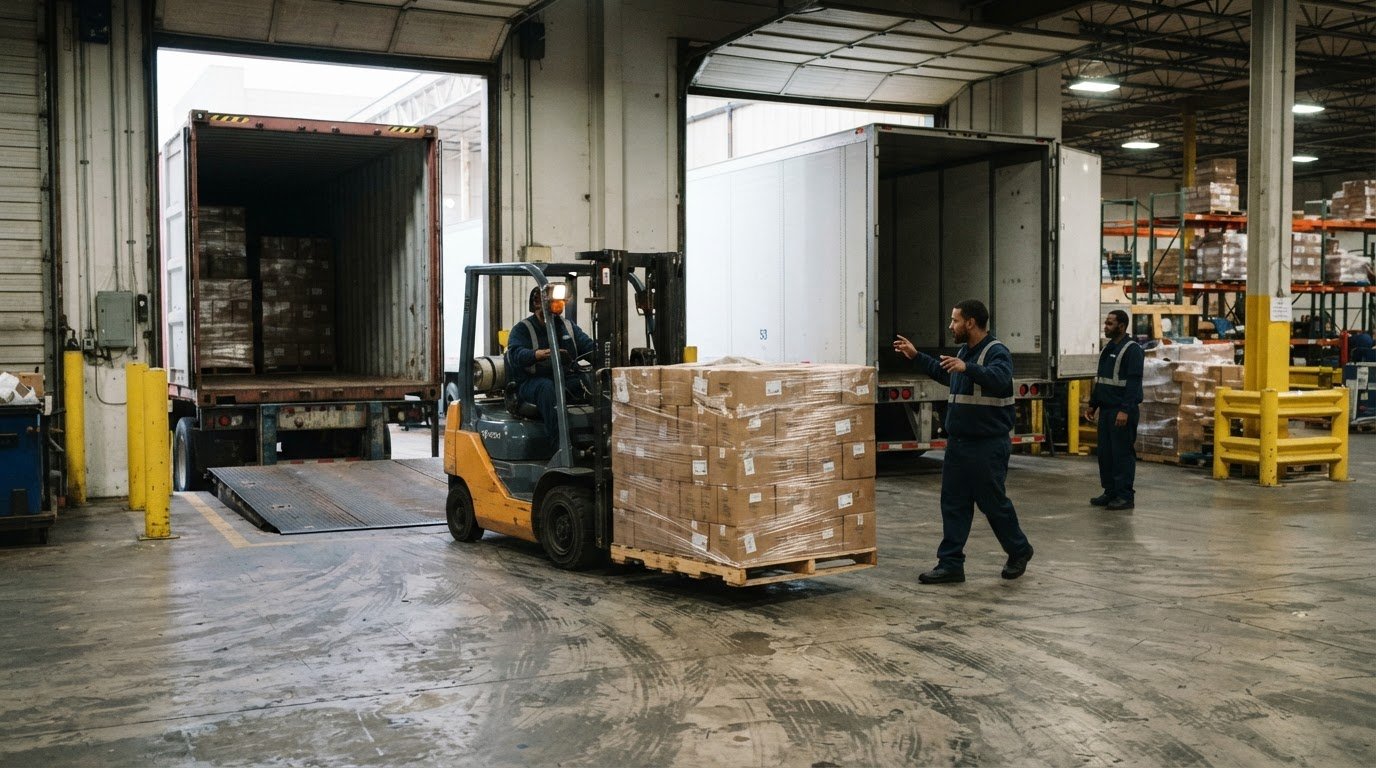

A damaged delivery doesn’t automatically mean you’ll be paid, but a clear, well-documented claim gives the carrier the information needed to assess the loss. To learn how to file a claim for damaged freight, submit a written claim to the carrier that identifies the shipment, describes the damage, states the amount requested, and demands payment. Include supporting records such as the bill of lading, merchandise invoice, and photographs.
Finding damaged or missing goods after delivery is stressful, especially when you’re also trying to keep your business moving. The process is easier to manage when you know what to record, which documents to gather, and who can submit the claim. This guide explains how to document and file a claim, how the carrier may decide it, who can act on your behalf, and what to do if the carrier rejects or reduces your claim.
Key Takeaways
- Compare the shipment with its bill of lading and packing list to identify missing or damaged items and build a clear record.
- File with the carrier within the deadline that applies to your shipment type, and make sure the claim identifies the loss and amount requested.
- Keep damaged goods and packaging available for inspection, and preserve photos and related records to support your claim.
- Track the carrier’s response: according to the Office of the Federal Register, National Archives and Records Administration, a carrier must pay, offer to compromise, or disallow a claim within 120 days, or provide status reports every 60 days thereafter.
How will I receive payment for my cargo claim?
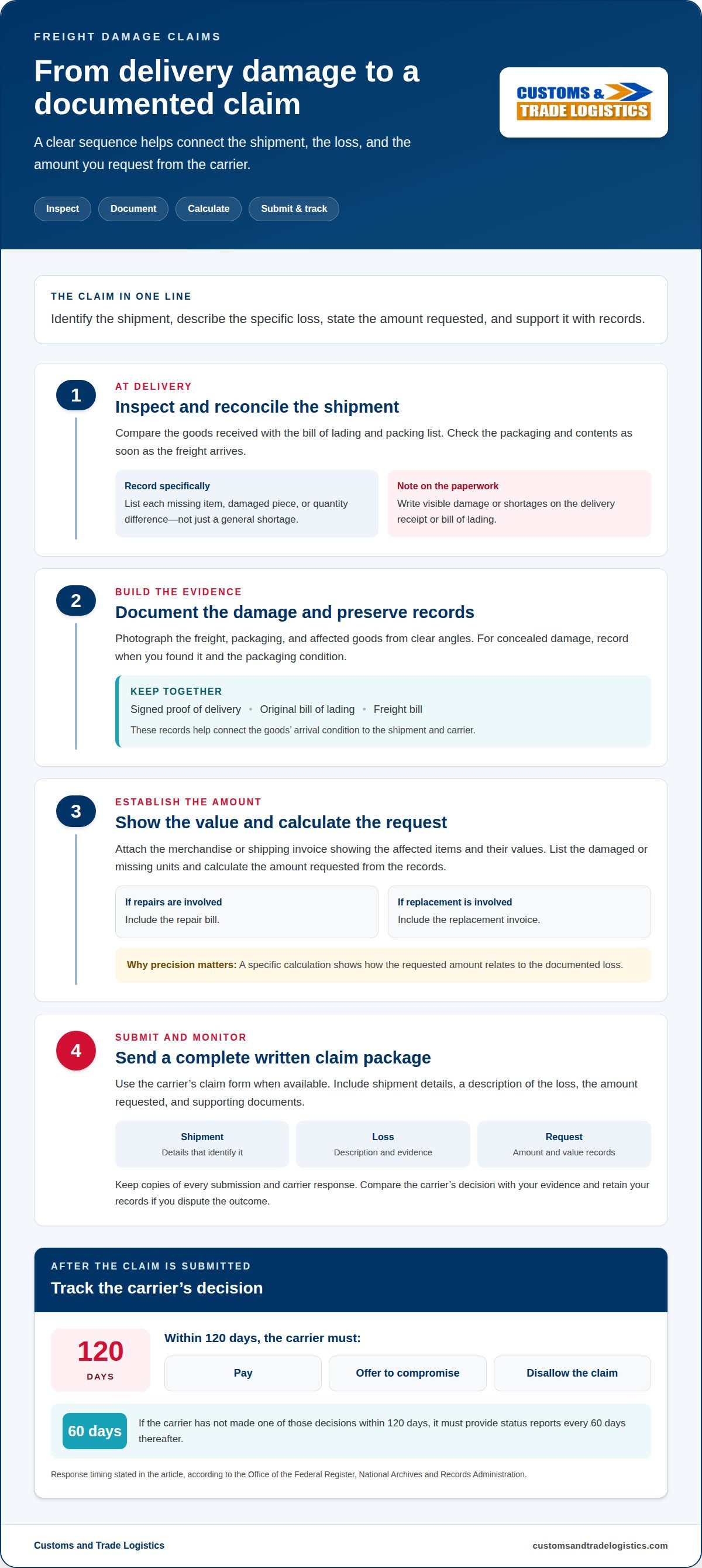
Payment follows the carrier’s review and decision on your written claim. According to the Office of the Federal Register, National Archives and Records Administration, a carrier must pay, offer to compromise, or disallow a claim within 120 days, or provide status reports every 60 days thereafter.
- Inspect the delivery and reconcile the contents. Compare the goods received with the bill of lading and packing list. Record each missing item, damaged piece, or quantity difference instead of describing the shortage generally. For example, identify the product and the number of units missing. Check the packaging and contents as soon as the freight arrives, and note visible damage or shortages on the delivery receipt or bill of lading.
- Document damage with specific evidence. Photograph the freight, packaging, and affected goods from clear angles. If you discover concealed damage after delivery, record when you found it and the condition of the packaging. Keep the signed proof of delivery, original bill of lading, and freight bill together. These records help connect the goods’ arrival condition to the shipment and carrier.
- Show the value and calculate the claim amount. Attach the merchandise or shipping invoice showing the affected items and their values. If repairs or replacement are involved, include the repair bill or replacement invoice. List the damaged or missing units and calculate the amount requested from these records. A precise calculation makes it clear how the claim amount relates to the documented loss.
- Submit a complete claim package and track the decision. Use the carrier’s claim form when available. Include shipment details, a description of the loss, the amount requested, and supporting documents. Keep copies of every submission and carrier response. The carrier may pay the claim, make a compromise offer, or disallow it. Compare the decision with your evidence and retain your records if you dispute the outcome.
Can someone file a claim on my behalf?
Yes, but the claimant’s relationship to the goods matters. A claimant who isn’t the beneficial owner must provide proof of payment to that owner or obtain the owner’s written assignment of claim settlement rights.
Deadlines depend on the shipment type and applicable terms. For most interstate motor shipments, a loss or damage claim must be filed within at least 9 months of delivery, or within 9 months of a reasonable delivery time if it never arrived. International air damage claims have a 14-day deadline following delivery; delay claims have 21 days, and non-delivery claims have 120 days.
- Confirm who has the right to claim. If you own the affected goods, gather records connecting you to the shipment. If you’re filing for another beneficial owner, provide proof that you paid that owner or obtain a written assignment of settlement rights. This documentation clarifies who may receive a settlement.
- Identify the transport mode and deadline. LTL and truckload shipments generally fall under domestic motor-carrier rules, while air and ocean shipments may have different terms. For most interstate motor-carrier claims, the filing period is at least 9 months. Check the shipment’s agreed terms for any shorter notice requirements.
- Act promptly on air or ocean freight. For international air cargo, file damage claims within 14 days following delivery, delay claims within 21 days, and non-delivery claims within 120 days. For ocean shipments, provide notice of loss or damage within 3 days following delivery. Keep the shipment record and delivery date with your filing.
- Notify the carrier, then submit the written claim. Contact the carrier promptly, but don’t rely on a phone call as the formal claim. File with the carrier, not merely the broker that arranged transport. The carrier’s receipt date determines timeliness, so use a method that confirms receipt. For shipment coordination, international freight logistics support can help keep the process organized while the claim is resolved.
Can I dispute a cargo claim decision?
Yes. Ask the carrier to explain its decision, then respond with evidence addressing its stated reasons, such as missing records or disputed damage.
- Preserve the freight and packaging. Keep damaged goods, cartons, pallets, and protective materials available for carrier inspection until the claim is settled. If you discover concealed damage after delivery, stop unpacking and retain the packaging. Note which items were affected and where the damage appeared, such as a crushed carton corner beside a broken product.
- Review the delivery record. Compare the receipt or bill of lading with the shipment’s condition on arrival. When possible, record visible damage, shortages, or missing parts on the delivery paperwork before signing. If damage becomes apparent later, report it promptly and keep the original packaging. A clear timeline helps explain when you discovered the loss.
- Build evidence for the disputed point. Take photos or videos showing the goods, packaging, labels, and the wider shipment. Keep the original files and organize them by affected item. Include inspection reports, repair estimates, invoices, and carrier correspondence when they support the claim amount. For example, photos of an intact outer carton and damaged contents can help document concealed damage.
- Answer the carrier’s stated reason directly. Common reasons for denial include late filing, insufficient supporting documents, or evidence that doesn’t establish the goods’ condition and the specific loss. Under the Carmack Amendment, a claimant must establish that the goods were picked up in good condition, delivered damaged, and suffered a specific amount of damage. Match each response with records that address the carrier’s stated reason.
- Keep a written dispute record. Send a concise response identifying the shipment, challenging the reasoning behind the decision, and listing any new or overlooked evidence. Save the submission and proof of receipt, then track each carrier response. If the carrier cites an exception or liability limit, compare that explanation with the shipment terms and supporting records before replying.
Freight damage claims
To file, send the carrier a written claim that identifies the shipment, describes the loss, states its amount, and demands payment. The law doesn’t prescribe a specific form, but a phone call alone doesn’t constitute a legal claim. Knowing how to file a claim for damaged freight means making each part of the written demand clear.
- Define the loss clearly. Identify whether the claim concerns visible damage, concealed damage, shortage, or total loss. Specify the affected pieces or units, their weight, and the reason for the claim. For example, distinguish damaged cartons from a shipment that never arrived. This detail clarifies what compensation you’re requesting.
- Build a written statement around the shipment. Include identifying details, a description of the damage or missing contents, and the amount claimed. State or estimate the loss and demand payment. Support your calculation with the merchandise invoice, repair bill, or replacement invoice. The bill of lading connects these records to the shipment and its agreed terms. These practical steps explain how to file a claim for damaged freight.
- Send the claim to the carrier and keep proof. File with the carrier responsible for transportation, not just the broker that arranged it. You can submit the claim electronically if both parties agree. Keep a copy of the claim, attachments, and delivery confirmation. The date the carrier receives the claim determines whether it was filed on time.
- Track the carrier’s review and preserve the record. Keep the delivery receipt, invoice, photos, and correspondence together. According to the Office of the Federal Register, National Archives and Records Administration, a carrier must pay, offer to compromise, or disallow a claim within 120 days. Otherwise, it must provide status reports every 60 days thereafter. Record each update and compare any settlement offer with the documented loss.
Customs and Trade Logistics: International Freight Logistics
Customs and Trade Logistics provides International Freight Logistics for businesses coordinating international shipments. A freight claim must still go to the responsible carrier, but well-organized transport planning can help keep shipment records and logistics details aligned. Turn to Customs and Trade Logistics when coordinating international freight alongside customs clearance or delivery and redistribution. For imports from China, Import From China Consulting can support import planning. These services support freight movement and import processes, not the carrier’s compensation decision. If a damaged shipment has disrupted your wider logistics plans, contact Customs and Trade Logistics to discuss the support your freight operation needs.
Keep your next shipment moving
A freight claim is one part of protecting your business after a delivery problem. Keep the claim process moving while planning how affected goods and future shipments fit into your operations. Coordinating freight logistics, customs clearance, and import planning can help you manage these connected responsibilities while keeping the claim in view.
Customs and Trade Logistics supports businesses with International Freight Logistics, Customs Clearance Services, and Import From China Consulting. If you’re using what you’ve learned about how to file a claim for damaged freight while coordinating an import or delivery plan, these services offer a practical next step. Contact the team to discuss your freight and import logistics needs.
Contact Customs and Trade Logistics to discuss the logistics support that fits your business. A careful next step can help you move forward with greater clarity and keep attention on what comes next.
Frequently Asked Questions
What is Damaged Freight?
Damaged freight is cargo that arrives physically harmed, incomplete, or unusable compared with its expected condition. The issue may involve a crushed carton, broken contents, missing units, or a shipment that never arrives. For example, if a packing list shows ten units but only eight arrive, the two missing units may be included in a freight claim.
How will I know my claim status?
Ask the carrier for a written status update using your claim number and shipment details. Keep each reply with your claim records, noting the date and any requested action. If the carrier asks for a repair bill or clearer photographs, send the material promptly and retain a copy. This creates a traceable record of the carrier’s review.
Is there a time limit for filing a cargo claim?
Yes, the deadline depends on the transport mode and shipment terms. For most interstate motor-carrier loss or damage claims, the filing period must be at least 9 months from delivery, or from a reasonable delivery time if goods weren’t delivered. International air damage claims have a 14-day deadline following delivery, while ocean shipments have a separate notice period.
What information do I need to file a cargo claim?
Identify the shipment, explain the loss or damage, state the amount requested, and demand payment in writing. Include the affected pieces or units, their weight, and how you calculated the loss. For instance, a shortage claim should specify which listed items didn’t arrive. Send the claim to the carrier and keep confirmation of receipt.
What documents are needed to file a freight damage claim?
Useful records include the bill of lading, proof of delivery, freight bill, packing list, and merchandise invoice. Add photographs of the affected cargo and packaging, plus a repair bill or replacement invoice when relevant. Together, these documents connect the shipment, its contents, their observed condition, and the amount requested. Keep copies of carrier correspondence with your claim file.
What is the deadline to report freight damage and submit a claim?
Report damage to the carrier promptly, then file the written claim within the deadline that applies to the shipment. For most interstate motor claims, the filing period is at least 9 months from delivery; ocean shipments require notice of loss or damage within 3 days following delivery. Concealed damage may have an earlier reporting deadline, so separate prompt notice from the formal claim filing.