
A carrier’s liability is not the same as cargo insurance, and that difference matters when a shipment is lost or damaged. Cargo insurance for international shipping may suit businesses seeking protection for the value of their goods, rather than relying only on a carrier’s limited liability. Carrier payouts may be based on shipment weight, and the shipper usually has to prove negligence to receive payment.
It’s understandable to assume a carrier will cover a loss while goods are in transit. In practice, liability and cargo insurance work differently. Understanding what each may cover can help you decide how to manage the risks of an international shipment.
This guide explains who ocean cargo insurance may suit, why businesses insure shipments, and what to document if a claim arises. It also compares carrier liability with cargo insurance, helping you understand the protection involved before shipping.
Key Takeaways
- Consider the cargo type, route, and shipment journey when deciding whether ocean cargo insurance may fit your business.
- Understand how shipment risks and policy terms shape the protection available for your goods.
- Keep shipment and damage records organized so you can support a claim and report an incident promptly.
- Separate cargo insurance from carrier liability before relying on a carrier to cover the value of lost or damaged goods.
Who is ocean cargo insurance right for?
Ocean cargo insurance may suit U.S. importers whose goods face the risk of loss or damage during a sea voyage. General merchandise, such as packaged clothing or household goods, may need different terms from specialized cargo, such as machinery or temperature-sensitive products. Coverage depends on the cargo description, route, handling, and policy wording. Because marine cargo underwriting considers these details, unusual goods or complex routes may require closer review.
Two common policy types work differently. All-risk coverage protects against nearly all external causes of loss or damage, subject to exclusions. Named-perils coverage responds only to risks listed in the agreement. Theft, pilferage, rough handling during loading, collisions, and severe weather may be covered when included in the policy. Review exclusions for your cargo and route. The U.S. Environmental Protection Agency has noted insurer concerns about hazardous-material spills, particularly environmental cleanup.
For cargo insurance for international shipping, premiums typically range from 0.1% to 1% of cargo value. Cargo type, coverage limits, and past claims or losses affect the premium. A shipment's sales contract and Incoterms determine primary responsibility for arranging coverage. Read the agreed term alongside the insurance clause, then establish which party arranges protection for that shipment.
Coverage can apply to international ocean and air freight and may extend from the seller’s warehouse to the buyer’s door. Online coverage limits and underwriting timelines depend on factors such as cargo, route, and requested limits. Specialized goods may need additional assessment. For project cargo, check whether the policy covers the equipment through transit and delivery. Delay-in-start-up coverage is a separate question: confirm whether the policy expressly addresses financial losses from a project delay.
To arrange coverage for a U.S.-origin shipment, gather the cargo description, value, destination, route, transport mode, and shipment dates. Provide these details for underwriting, review the proposed limits and exclusions, and arrange the policy before transit begins. This helps match coverage to the shipment instead of assuming one standard policy fits every load.
Reasons businesses insure international shipments
Marine cargo insurance helps businesses manage financial exposure when goods cross borders. A damaged shipment can leave an importer without saleable stock, while replacement goods may require new production and transport. For a small business relying on one delivery, that disruption can affect planned sales. Larger businesses may insure recurring shipments to manage exposure across multiple consignments.
Ocean cargo insurance may suit manufacturers, wholesalers, retailers, and importers moving goods by vessel. A business importing machinery, for example, may face a substantial replacement burden if equipment arrives damaged. Businesses with recurring shipments may use annual or open policies that apply during the policy period. A single-shipment policy applies to an individual consignment.
General Average is another reason to consider marine coverage. If cargo is sacrificed to save a vessel and its remaining goods, owners of the saved cargo may need to contribute proportionally toward the losses. Undamaged goods can still be held until cargo interests provide a bond or cash deposit. This possible contribution is separate from physical damage to the shipment itself.
Compare policies by matching the insured value, covered transport stages, limits, exclusions, and claims requirements to your shipments. Check whether the wording addresses your cargo type and route, then compare the policy’s protection rather than relying on its label. Cargo type, coverage limits, and past claims or losses can affect premiums. Piracy-zone route risks can increase premiums by 30%, so route details matter too.
Businesses should also consider whether a policy covers their actual commercial interest and shipment pattern. Review how valuation works, when coverage begins and ends, and which losses exclusions remove. Ask how the policy treats different legs if a shipment combines ocean and inland freight. For importers coordinating transport as well as insurance planning, international freight logistics can help bring shipment arrangements into focus.
Claims notification and documentation
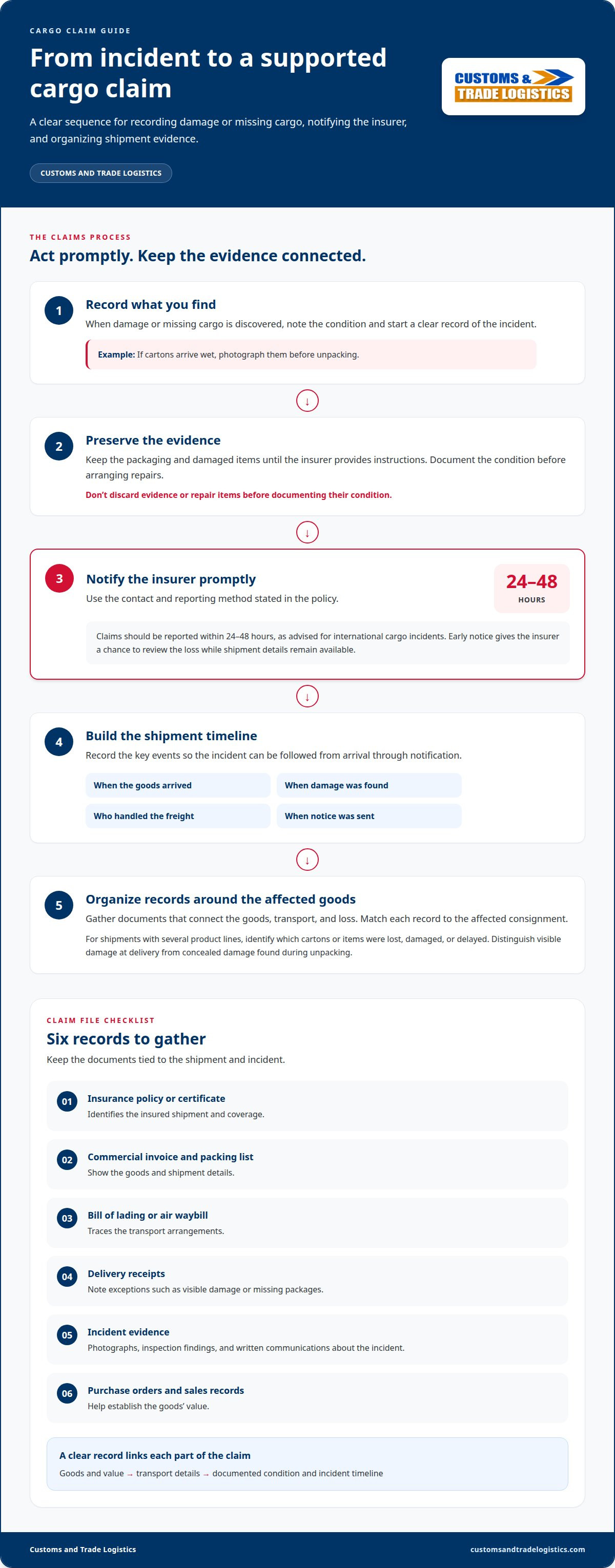
After discovering damage or missing cargo, record the condition and notify the insurer promptly. Claims should be reported within 24-48 hours, as advised for international cargo incidents. Use the contact and reporting method stated in the policy. Early notice gives the insurer a chance to review the loss while shipment details remain available.
Build a clear timeline for the global shipment. Note when the goods arrived, when damage was found, who handled the freight, and when notice was sent. For example, if cartons arrive wet, photograph them before unpacking. Keep the packaging and damaged items until the insurer provides instructions. Don’t discard evidence or arrange repairs before documenting the condition.
Gather records that connect the goods, transport, and loss. Useful documents include:
- The insurance policy or certificate, identifying the insured shipment and coverage.
- The commercial invoice and packing list, showing the goods and shipment details.
- The bill of lading or air waybill, tracing the transport arrangements.
- Delivery receipts, noting exceptions such as visible damage or missing packages.
- Photographs, inspection findings, and written communications about the incident.
- Purchase orders and sales records that help establish the goods’ value.
Match each document to the affected consignment. If a shipment contains several product lines, identify which cartons or items were lost, damaged, or delayed. Distinguish visible damage at delivery from concealed damage found during unpacking. A dated inventory and clear photographs help connect the reported loss to specific goods and handling stages.
Submit the claim using the policy’s process, with a concise description of the event and supporting records. Keep copies of every submission and insurer response. If a carrier or warehouse also receives notice, retain that correspondence in the same claim file. Organized evidence makes exposures easier to assess and helps prevent gaps in the account of what happened.
Carrier liability compared with cargo insurance
Carrier liability is not the same as first-party cargo insurance. A carrier’s responsibility for loss or damage depends on negligence while goods are in its care, custody, and control. A claimant may need to establish the carrier’s responsibility for the loss. Even then, a liability payout may be based on shipment weight rather than the goods’ commercial value.
Consider a shipment of lightweight electronics damaged before reaching its destination. The goods’ sale value may exceed a weight-based liability payment. Shipper’s Interest Cargo Insurance is designed to protect the actual value of goods, subject to the policy’s limits, terms, and exclusions. It gives the insured party a separate route to seek payment for covered losses.
The distinction matters for managing risks across borders. Carrier liability focuses on the carrier’s responsibility for an incident; cargo insurance responds according to its own coverage terms. A tailored policy can address the shipper’s financial interest, while the carrier’s liability provisions may not match the shipment’s full commercial value. Understanding one does not remove the need to consider the other.
Review the carrier’s policy endorsements, exclusions, and declarations to assess whether your interests are covered, as advised by the U.S. Government Publishing Office. Then compare those terms with your cargo policy. If an endorsement excludes a particular handling stage, for example, identify whether another policy covers that stage before relying on it.
For each shipment, identify who bears the financial interest, which transport stages the cargo policy covers, and what evidence a liability claim would require. Keep the sales contract, shipping record, and insurance terms together. This comparison distinguishes a claim against a carrier from one under cargo insurance and clarifies which route may address the loss.
Customs and Trade Logistics: International Freight Logistics
Customs and Trade Logistics helps businesses coordinate international freight logistics alongside shipment planning and customs clearance. Turn to the team when arranging an import and you want the movement of goods and border clearance considered together. Insurance remains a separate decision, but clear shipment details can help you understand the route and parties involved.
For example, an importer bringing goods from China can use Import From China Consulting to plan import logistics. Delivery and Redistribution Services can support the next stage after the goods arrive. These services address practical movement and import needs; they do not replace a cargo insurance policy or determine what an insurer will cover.
Build insurance into your next shipping plan
Make cargo insurance for international shipping part of your purchasing and transport planning, rather than a last-minute decision. Before goods leave the seller, align the shipment details, sales terms, and insurance arrangements among the parties responsible. This gives your team a clearer process to follow as the cargo moves toward its destination.
Logistics planning can connect a shipment’s movement with the import steps that follow. Customs and Trade Logistics offers International Freight Logistics, Customs Clearance Services, and Import From China Consulting for businesses coordinating international imports. These services support logistics and import needs; they do not replace an insurance policy or determine its coverage.
As you prepare your next shipment, identify the support you need and bring those logistics questions into the plan early. Plan your next import with Customs and Trade Logistics, and move forward with a clearer path from shipment planning to arrival.
Frequently Asked Questions
What does international cargo insurance cover, and what is excluded?
Coverage depends on the policy wording and the risks it names. An all-risk policy generally covers nearly all external causes of loss or damage, subject to exclusions; named-perils coverage applies only to listed events. For a shipment of packaged goods, compare the cargo description and insured journey with the policy schedule. Don’t assume a broad policy label includes every loss or expense.
How do cargo insurance and carrier liability differ for ocean, air, and land shipments?
Cargo insurance protects the insured party’s interest under its policy, while carrier liability concerns the carrier’s responsibility for goods in its care, custody, and control. This distinction applies to ocean, air, and land freight, though the relevant carrier terms may differ. For any mode, identify the responsible carrier and review the applicable terms before assuming liability will cover your goods’ commercial value.
What documents are needed to file an international cargo insurance claim?
Prepare the insurance certificate, purchase or sales records, and transport document for the affected consignment. Add delivery records that note any exceptions, along with dated photographs or inspection evidence linking the damage to specific goods. For a mixed shipment, clearly mark the affected product lines and quantities. Ensure the insurer’s claim form and supporting records match the policy and reported loss.
What are the deadlines and steps for filing a cargo insurance claim after loss or damage?
Report an international cargo incident within 24-48 hours, then follow the policy’s claim-submission process. Record when and where the loss was discovered, notify the insurer, and preserve damaged goods and packaging while awaiting instructions. Keep copies of notices and submissions. The initial incident report and the complete claim file are separate steps, so follow the policy’s stated requirements for each.