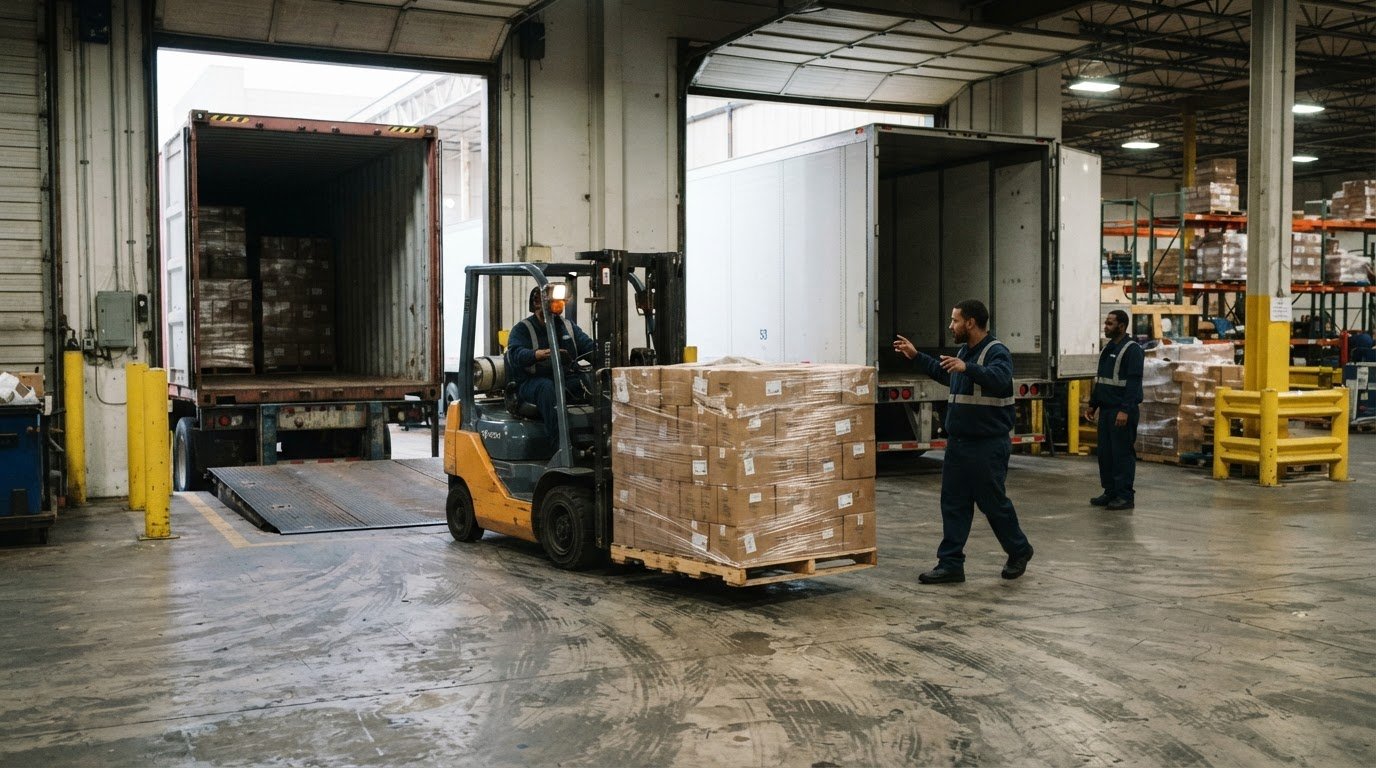
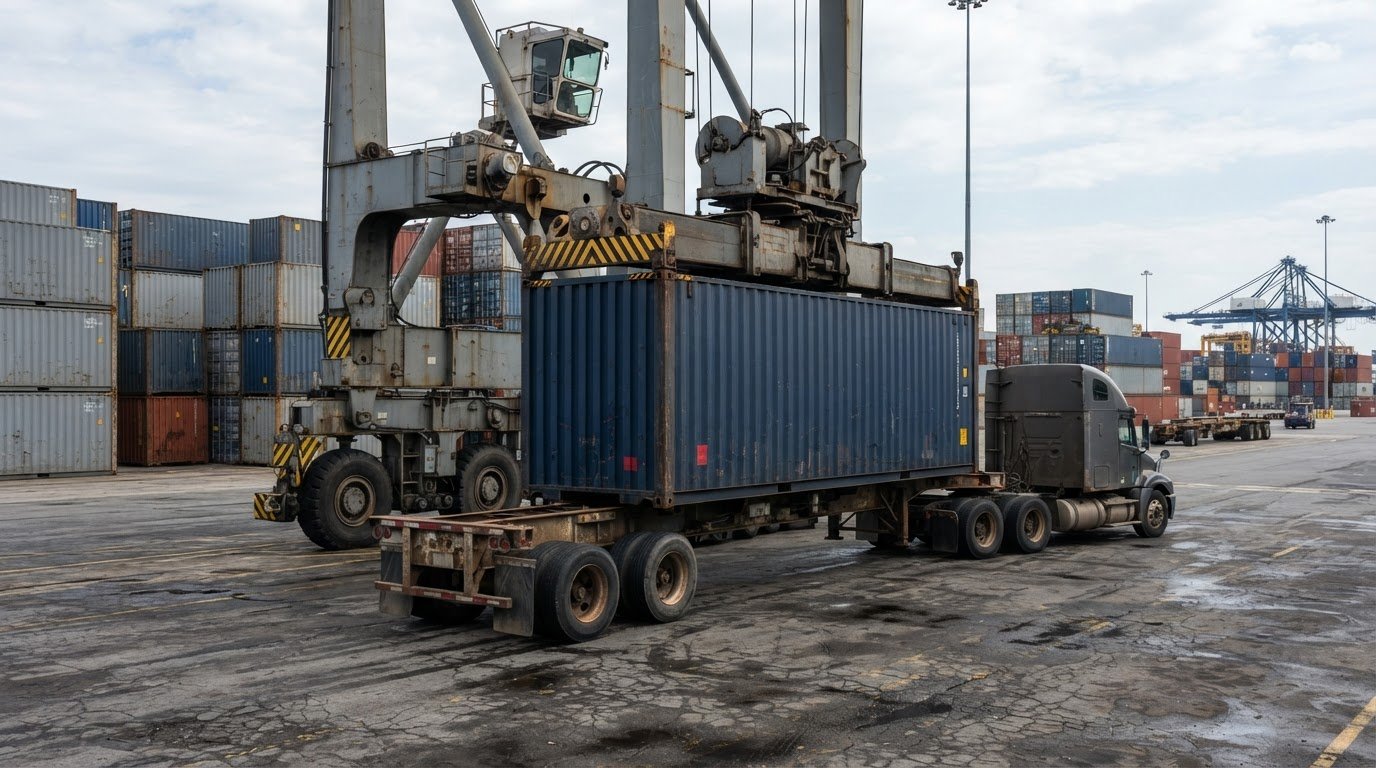
Demurrage starts when an import container remains at the port or terminal beyond its allowed free time. To reduce the risk, prepare accurate customs paperwork before the vessel arrives and coordinate clearance and pickup so the container can leave within that window. Knowing how to avoid demurrage charges on ocean freight also means understanding when free time begins and what rate applies after it expires.
Demurrage is easy to confuse with detention, and daily charges can add up quickly. This guide explains what each fee covers, when port charges may apply, and how to calculate demurrage using chargeable days and the rate per container. It also offers practical ways to prevent avoidable delays, from preparing documents to coordinating transport and delivery before cargo arrives.
Key Takeaways
- Prepare accurate shipping and customs documents ahead of arrival to help prevent clearance delays that can keep a container at the terminal.
- Tell port demurrage apart from detention by tracking whether the container is still at the terminal or has already left.
- Map out the pickup and delivery plan around the applicable free-time window, and account for possible transport delays.
- Estimate charges by identifying the billable days and the rate that applies to each container, then review the terms for any rate changes over time.
1. What are demurrage charges in shipping?
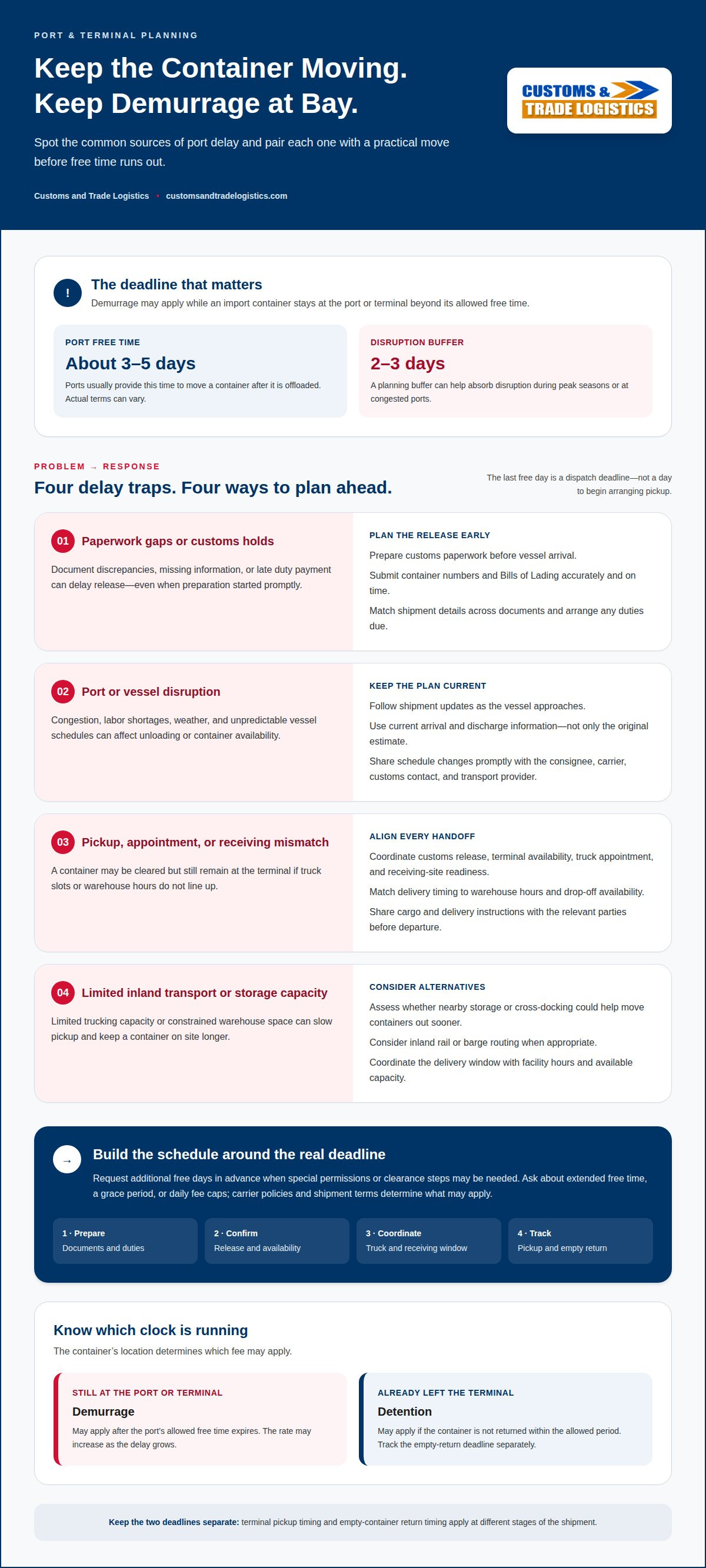
Demurrage is a charge that can apply when an import container remains at a port or terminal beyond its allowed free time. The clock relates to the container’s time at the terminal before it is moved out for unloading. The consignee or another party named in the shipping contract typically bears responsibility. Check the applicable free-time terms early, since the charge and timing depend on the shipment’s arrangements.
Accurate documentation helps keep customs clearance moving before the vessel arrives. Prepare customs paperwork in advance, and submit container numbers and Bills of Lading accurately and on time. Match shipment details across documents to avoid discrepancies that could delay release. If duties are due, arrange payment as part of import preparation. Early paperwork can help customs review the shipment sooner, but it cannot prevent every port or inspection delay.
What can cause demurrage even when the shipper acts promptly? Port congestion, labor shortages, weather disruptions, and unpredictable vessel schedules can slow cargo movement. Customs holds or documentation issues may also prevent release, despite timely paperwork. Late duty payment and limited trucking capacity can further delay pickup. These disruptions can leave a container at the terminal after its free time expires.
Plan clearance and pickup as connected steps, not separate tasks. Before loading and departure, organize import documents and share cargo and delivery instructions with the relevant parties. As the vessel approaches, follow shipment updates and coordinate release status with the transport plan. If customs requests more information or places a hold, the delay may affect pickup timing. Knowing how to avoid demurrage charges on ocean freight starts with preparing documents early and coordinating each step from arrival through container removal.
2. Differences between demurrage and detention
The difference is where the container is when its free-time allowance runs out. Demurrage applies while an import container remains at the port or terminal beyond free time. Detention applies after the container leaves the terminal, if it is not returned within the allowed period. Both charges can accrue daily, but they apply at different stages of the same shipment.
For example, imagine the shipping line allows 10 days to return an empty container. If the importer keeps it for 14 days, detention applies to the 4 days beyond that allowance. By contrast, if the container is still at the terminal after its port free time expires, demurrage may accrue before pickup. Ports usually provide about three to five free days to move a container after it is offloaded, but the applicable terms can vary.
Other costs may appear alongside these fees. Port or terminal storage can apply when a container remains on site, while standby costs may arise when transport or loading resources are waiting. These charges are not interchangeable: identify where the container was, which deadline passed, and what service the invoice covers. A delay after vessel discharge can lead to demurrage; a late empty return can lead to detention charges.
What U.S. rules govern demurrage and detention fees, including FMC requirements? The Ocean Shipping Reform Act (OSRA) introduced changes intended to help level the playing field between shippers and ocean carriers. The Federal Maritime Commission (FMC) has billing regulations for detention and demurrage. The specific requirements are not detailed here.
To limit avoidable penalties, record the terminal pickup deadline and empty-return deadline separately, then coordinate transport and unloading around both. Clear timing also helps distinguish demurrage and detention when reviewing a charge. For shipments that need coordinated import planning, import freight coordination can help align clearance, pickup, and delivery arrangements.
3. Demurrage for containers held at a port or terminal
At a port or terminal, demurrage applies when an import container remains beyond its agreed free time. The applicable rate may increase as the delay grows. Treat the last free day as a dispatch deadline: align customs release, terminal availability, truck appointment, and receiving-site readiness before arrival. A container can be cleared on paper yet remain at the terminal if pickup slots or warehouse hours do not align. Coordinate each handoff with the carrier’s terms and the container’s expected availability.
Local operating conditions can disrupt the schedule. Port congestion, labor shortages, weather, and unpredictable vessel schedules may delay unloading or affect container availability. If a vessel arrives later than expected, update the pickup plan using current arrival and discharge information, not just the original estimate. Share changes promptly with the consignee, carrier, customs contact, and transport provider. This gives everyone time to adjust dispatch, documentation, and receiving plans as conditions change.
If inland transport or warehouse capacity is constrained, consider whether nearby storage or cross-docking could help move containers out of the terminal sooner. Coordinate the delivery window with warehouse hours, including whether the facility can accept drop-offs outside its usual schedule. Inland rail or barge routing may also reduce time spent at a congested port. After pickup, track the empty container’s return deadline: terminal demurrage and equipment detention apply at different stages.
Carrier policies shape free time and possible relief. For cargo requiring special permissions, request additional free days in advance and explain the expected clearance steps. A 2-3 day planning buffer can help absorb disruption during peak seasons or at congested ports. Ask about terms such as extended free time, a grace period, or daily fee caps when arranging the shipment. If charges arise from circumstances beyond the shipper’s control, a request to negotiate may be considered based on the carrier’s policy and the situation.
4. How demurrage charges are calculated
Start with the billable days, then apply the shipping line’s daily rate per container. The basic calculation is: chargeable days beyond free time × containers × daily rate. If the shipping line uses stepped rates, calculate each rate period separately and add the amounts. The total depends on when free time ends, when each container leaves the terminal, and the applicable tariff.
How do charges differ by U.S. port, carrier, and container type? Rates and free-time terms vary by port and carrier, and the applicable amount may depend on container type. Congestion can complicate pickup timing, but the charge calculation still depends on the tariff, free-time allowance, and days beyond it.
If containers leave on different days, calculate each container’s chargeable period separately rather than applying one shipment-wide delay. This makes it easier for logistics teams to reconcile the invoice with actual terminal moves.
Treat this as a broad range, not a quote for a specific shipment. The carrier’s tariff determines the applicable rate, which may increase as a container remains delayed. Container size or type, port, free-time terms, and the length of the delay all affect the total.
For a practical review, compare the shipping line’s invoice with the terminal availability and gate-out dates, free-time terms, and daily rate schedule. Confirm the number of containers and chargeable days, then check whether rates changed during the delay. Clear visibility and timely communication among the shipping line, trucking provider, and consignee can help teams spot an approaching deadline and adjust transport plans around congestion.
Need help coordinating shipment timing and transport? Explore international freight logistics support for your import movement.
Customs and Trade Logistics: International Freight Logistics
Customs and Trade Logistics helps importers coordinate international freight logistics when shipment timing, customs clearance, and delivery plans need to work together. This can be especially useful when an arrival schedule changes or pickup arrangements are difficult to align with terminal availability.
Customs clearance and delivery and redistribution services can bring key steps into one coordinated plan, from preparing for release to arranging onward movement. Importing from China? Import From China Consulting can help you plan the import process and understand how freight and clearance fit together. These services support shipment coordination; they do not change carrier free-time terms or guarantee that port delays will not occur.
If demurrage risk is complicating an upcoming import, contact Customs and Trade Logistics to discuss your shipment and logistics needs.
Plan Your Next Import With Confidence
Make demurrage prevention part of shipment planning, not a last-minute response to a delayed container. For your next import, bring the expected arrival, clearance needs, pickup arrangements, and final delivery plan into one early conversation. This gives everyone coordinating the shipment a clearer view of where timing could become tight.
A practical way to understand how to avoid demurrage charges on ocean freight is to connect customs clearance with the wider movement of cargo. Customs and Trade Logistics offers Customs Clearance Services and International Freight Logistics, as well as Import From China Consulting for businesses planning imports from China. These services can help align the steps involved in moving an import through its next stages.
If you’re preparing an import or need support coordinating shipment logistics, contact Customs and Trade Logistics to discuss your needs. A clear plan is a strong place to start.
Frequently Asked Questions
What are demurrage charges in shipping?
Demurrage charges apply when an import container remains at a port or terminal after its allowed free time. They relate to terminal dwell, not simply to a vessel arriving late. For example, if customs release is complete but a container cannot be picked up before the free-time deadline, the remaining terminal time may become chargeable under the applicable terms.
How much are typical demurrage fees?
That is a daily rate, not a flat charge for the whole shipment. Review the tariff for the relevant container and each charge period, since the applicable rate may change as the delay continues.
Demurrage Definition: What is demurrage?
Demurrage is a charge for a container remaining at a port or terminal beyond its permitted free period. A delay alone is not the fee; the charge arises when terminal time passes the applicable deadline. When reviewing an invoice, check the date free time ended, the container’s terminal exit date, and the rate applied.
How is demurrage calculated?
Multiply the number of chargeable days by the applicable daily rate and the number of containers. If a shipping line uses different rates for separate periods, calculate each period separately and add the results.
What are demurrage and detention charges in ocean freight, and how do they differ?
Demurrage concerns a container that remains at the port or terminal past free time; detention concerns a container kept outside the terminal beyond its permitted return period. The stages matter when reviewing charges: compare the terminal exit record with the empty-container return record. Port storage may also appear separately, so identify which service and time period each invoice line covers.
How long is the typical free time for ocean containers at U.S. ports?
Ports usually provide about three to five free days to move a container after it is offloaded. The exact allowance can vary by port and carrier, so use the shipment’s terms and terminal notice to identify the deadline. For planning, align customs release, trucking, and receiving arrangements with that specific free-time window rather than relying on a general estimate.