
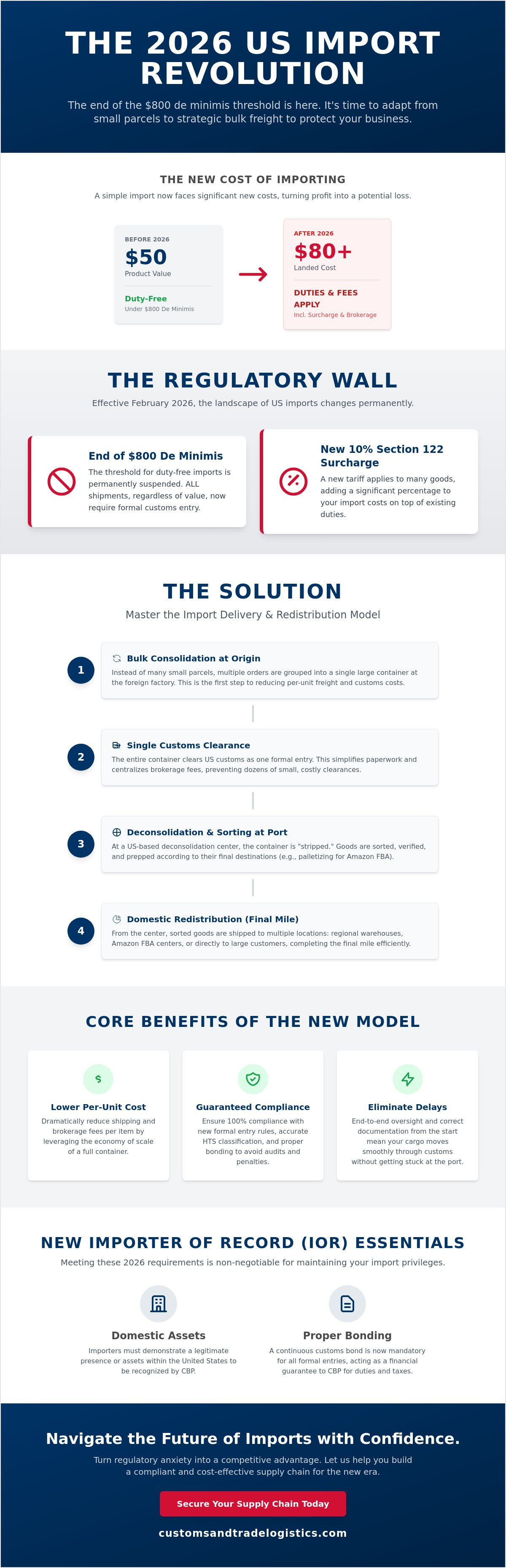
Did you know that a simple $50 import can now cost you as much as $80 just to clear customs? With the permanent suspension of the $800 de minimis threshold in February 2026 and the new 10% Section 122 surcharge, the era of easy duty-free shipping is over. It's natural to feel anxious about the June 2026 executive order or the sudden complexity of new Importer of Record requirements. You've likely spent years building your business, only to feel like the administrative burden is now threatening your growth.
We are here to help you turn that anxiety into a sense of security. This guide will teach you how to master a professional model for import delivery and redistribution that ensures full compliance while reducing your per-unit costs through smart consolidation. You'll learn how to navigate the shift from direct-to-consumer parcels to a scaled logistics cycle that flows smoothly from the port to the final delivery. We'll walk through the new certification rules, the necessity of domestic assets, and how to maintain a seamless supply chain without the fear of customs delays.
Key Takeaways
- Learn how transitioning from individual parcels to bulk freight can significantly lower your per-unit shipping costs and help you avoid the new 10% Section 122 surcharge.
- Discover how a strategic model for import delivery and redistribution allows you to consolidate goods at the port and efficiently break them down for multiple final destinations.
- Master the essential steps for accurate HTS classification to ensure zero-delay customs clearance and total compliance with 2026 regulatory updates.
- Find out why the "delivery" phase begins at the foreign factory and how end-to-end oversight prevents common paperwork errors and customs audits.
- Understand the new Importer of Record requirements for 2026, including the necessity of domestic assets and proper bonding to maintain your standing with CBP.
What is Import Delivery and Redistribution in the Modern Trade Era?
Are you still thinking of importing as just moving a box from point A to point B? In 2026, that mindset is a significant liability. Import delivery and redistribution is a comprehensive cycle that begins at the foreign factory floor and ends at your customer's door. It's the art of managing movement, compliance, and costs as one single heartbeat. In the modern trade era, this process isn't just about transportation; it's about the strategic coordination of legal entry and physical movement to protect your bottom line.
Many importers make the mistake of thinking "delivery" only happens once the goods land on US soil. In reality, the clock starts the moment your Bill of Lading is issued. This document acts as the legal handshake that triggers your responsibility for the cargo. The general process of delivering goods involves a complex chain of custody where every handoff is a potential point of failure. If you wait until the ship docks to think about your final customer, you're already behind. Modern e-commerce and retail demand a more proactive approach, where redistribution plans are set before the ship even leaves the port.
The Integrated Import Lifecycle
We see the journey as four critical stages: sourcing, freight, customs clearance, and the final mile. When these stages are siloed, communication breaks down. You might have a great freight forwarder, but if they aren't talking to your customs broker, your cargo will sit at the port while paperwork is shuffled. These delays aren't just frustrating, they're expensive. A single point of oversight for the entire chain eliminates these gaps, turning a series of disconnected tasks into a predictable flow that gives you peace of mind.
The 2026 Regulatory Shift: Beyond De Minimis
The landscape changed forever in February 2026 when the $800 de minimis threshold was permanently suspended. The old model of shipping individual low-value parcels to avoid duties is gone. Formal entry has become the mandatory standard for small and medium businesses importing goods into the US, requiring a bond and detailed documentation for every shipment regardless of value.
This shift means you can't rely on "invisible" shipping anymore. You need a structured strategy for import delivery and redistribution that uses bulk imports to offset new brokerage fees and the 10% Section 122 surcharge. By consolidating your goods into larger shipments and then redistributing them from a domestic center, you regain control over your landed costs. Stricter CBP enforcement means that precision is your only protection against audits, making a managed, end-to-end approach more vital than ever before.
The Mechanics of Efficient Redistribution and Logistics
How do you actually manage a 40-foot container once it hits the dock? It's a question we hear often from businesses moving away from small parcels. Successful import delivery and redistribution hinges on what happens at the port of entry. When your goods arrive in bulk, they enter a deconsolidation center where the real work of redistribution begins. This is the moment of truth where your inventory is sorted, verified, and prepared for its final journey.
Consolidation vs. Deconsolidation
The process begins long before the ship arrives. By grouping multiple smaller orders into a single bulk container at the origin, you significantly reduce your ocean freight costs and minimize the per-unit impact of customs fees. Once that container reaches a major US port, like Los Angeles or Savannah, it undergoes deconsolidation. This involves "stripping" the container, which is the physical act of unloading and sorting goods based on their final destination. To maintain visibility during this split, you need precise documentation. A Master Bill of Lading covers the entire container, while individual House Bills of Lading track the specific portions of the cargo as they head to different warehouses.
Fulfillment Strategy: FBA and Beyond
Modern import delivery and redistribution requires a balanced approach to inventory. Many of our clients find success by splitting their bulk imports between regional warehouses and Amazon FBA centers. Amazon has very specific requirements for how goods must be received, including pallet heights and labeling standards. Handling these "prep" services during the deconsolidation phase saves you from expensive Amazon non-compliance fees later. This multi-channel strategy ensures you have stock ready for direct Shopify orders while keeping your Prime badges active. If the process feels overwhelming, partnering with a veteran team for delivery and redistribution services can transform this complex hurdle into a competitive advantage.
Managing the "Last Mile" is the final piece of the puzzle. This stage is where brand trust is either won or lost. By using a structured redistribution model, you can position inventory closer to your customers, reducing shipping times and costs. It's about creating a steady, predictable flow that removes the stress of "out of stock" notifications. When you have a safe pair of hands overseeing the transition from the container to the customer's doorstep, you can stop worrying about the logistics and start focusing on your brand's growth. We believe that every importer deserves this level of clarity and control over their supply chain.
Transitioning from DTC Shipping to Structured Importing
Are you still relying on international couriers to handle your small parcels one by one? Transitioning to a structured model for import delivery and redistribution is often the difference between a business that survives and one that thrives in 2026. While individual direct-to-consumer shipping felt easy in the past, the current regulatory environment has turned it into a profit killer. Every low-value order now faces a 10% Section 122 surcharge and individual brokerage fees that can easily exceed the value of the goods themselves. Bulk freight allows you to absorb these costs across thousands of units, drastically lowering your landed cost per item.
A formal Importer of Record (IOR) strategy is no longer just a legal hurdle. It's a growth requirement. By taking ownership of the entry process, you gain compliance protection that "free" courier clearance simply doesn't offer. If a courier makes a mistake on your paperwork, you remain liable for the new minimum penalty floor of 50% mandated by the June 2026 executive order. Moving to a structured model puts you in the driver's seat, ensuring your business is viewed as a "good standing" entity by CBP while protecting your brand from sudden seizures.
When to Make the Switch?
How do you know it's time to change your approach? Watch for these key indicators:
- Your monthly shipping volume is rising, but your net margins are shrinking.
- Customer complaints about "hidden" delivery duties are increasing.
- You feel a lack of control over where your inventory is located at any given time.
The tipping point occurs when the per-unit savings from bulk freight and consolidated entry fees surpass the cumulative cost of individual parcel surcharges and courier brokerage hits. Once you hit this stage, staying with a parcel model isn't just inefficient; it's a strategic risk to your capital.
Overcoming the Complexity Barrier
We understand that the "paperwork mountain" looks intimidating. You might feel that a structured import delivery and redistribution model is only for big corporations. That's where a seasoned logistics mentor comes in to simplify the journey. We demystify the process, acting as your dedicated advocate at every US port to ensure your voice is heard. By building a scalable foundation now, you aren't just solving today's shipping headache. You're creating a system that allows for rapid product line expansion without the fear of customs audits or supply chain bottlenecks. Having a safe pair of hands to manage the details lets you focus on what you do best: growing your business.
A Step-by-Step Roadmap for Import Delivery Success
How do you turn a complex regulatory shift into a repeatable success story? It starts with a methodical roadmap that treats import delivery and redistribution as a single, unified journey. While we've discussed why this model is necessary, executing it requires a blend of technical precision and strategic foresight. We've broken down the process into five actionable steps to help you move your goods with confidence.
The first step is always classification and admissibility. You must get your HTS codes right. In 2026, a "close enough" approach to classification is a recipe for heavy penalties and seized cargo. Once your codes are solid, focus on partner selection. You need a bridge between your foreign supplier and the US market, not just a vendor. Choosing a partner who offers integrated customs clearance services ensures that the person handling your legal entry also understands your redistribution goals.
Choosing Your Entry Strategy
The "closest port" isn't always the best port for your business. If your warehouse is in Nevada, you might naturally look at the Port of Los Angeles. However, you must weigh port congestion and drayage costs against the speed of redistribution. Sometimes, entering through a less crowded port and using long-haul trucking is actually faster and more cost-effective. If you serve a national customer base, consider a multi-port strategy. Splitting your bulk imports between the East and West Coasts can drastically reduce your final-mile delivery times and keep your customers happy.
The Essential Documentation Checklist
Precision in your paperwork is your best defense against customs audits. Your Commercial Invoice and Packing List must be perfect, especially for bulk shipments that will later be broken down. Beyond the basics, you must master the Importer Security Filing (ISF). This must be filed at least 24 hours before your goods are even loaded onto the ship in China. Failing this step leads to immediate "Do Not Load" orders or massive fines upon arrival. We recommend maintaining a digital paper trail for every stage, ensuring you can prove compliance at a moment's notice.
The final steps involve real-time coordination and a commitment to continuous improvement. You need a system that manages the hand-off between ocean freight and road transport without a single day of "dead time" at the dock. Once the redistribution is complete, perform a compliance review. Look at your landed costs and clearance times. Did you hit your targets? Auditing your own process allows you to refine your strategy for the next shipment, turning your supply chain into a lean, efficient engine for growth.
Navigating the Future with Customs and Trade Logistics
How do you choose a partner when the stakes of global trade are this high? In an era where regulations change with a single executive order, the difference between a successful shipment and a costly delay often comes down to who is watching over your cargo. Many digital-only freight platforms promise speed through automation, but they often lack the human intuition needed when a shipment is flagged at the port. We believe that mastering the cycle of import delivery and redistribution requires more than just software; it requires a seasoned mentor who understands the nuances of the law and the reality of the docks.
With over 35 years of family-owned experience, we've guided businesses through decades of trade shifts. We don't just process paperwork. We act as your dedicated advocate across all US Customs ports, ensuring your interests are protected at every turn. Our approach to end-to-end management covers every detail from the factory floor to the final door. This level of oversight replaces the anxiety of the unknown with a sense of total security, knowing that your supply chain is in a safe pair of hands.
Personalized Oversight for Growing Brands
Growing brands often feel overwhelmed by the rigid logistics hurdles set by Amazon and other major e-commerce platforms. We specialize in demystifying these requirements, handling the labeling, kitting, and strict delivery windows that these retailers demand. By implementing smarter redistribution planning, we've helped partners reduce their transit times and avoid the expensive "dead time" that occurs when goods sit idle at a deconsolidation center. This personalized care allows you to focus on your brand's creative growth while we handle the heavy administrative burden of compliance and movement.
Ready to Scale Your Import Operations?
Are you ready to move beyond simple shipping and truly optimize your true landed costs? The path to a more profitable 2026 starts with a clear understanding of your data. We work closely with you to calculate every factor, from the new 10% surcharges to the nuances of drayage and final-mile delivery. This transparency ensures that your import delivery and redistribution strategy is a driver of profit rather than a drain on your resources. When you're ready to build a scalable, compliant foundation for your business, we're here to lead the way.
Speak with a logistics expert at Customs and Trade Logistics today to see how our family-owned expertise can stabilize your supply chain and protect your bottom line.
Securing Your Growth in a New Trade Era
The landscape of US trade has shifted fundamentally, moving from a simple parcel model to a requirement for structured, formal entry. By mastering a scaled model for import delivery and redistribution, you aren't just following the law; you're actively protecting your profit margins from rising surcharges and unpredictable penalties. You now have the roadmap to select the right ports, manage essential documentation like the ISF, and coordinate the complex hand-off from ocean to road with total precision. Are you ready to turn these regulatory challenges into a streamlined engine for growth?
You don't have to carry this administrative burden alone. With 35+ years of industry-leading expertise and comprehensive coverage across all US Customs ports, we act as your dedicated advocate in a highly regulated environment. Whether you need specialized support for Amazon FBA or guidance as a growing SMB, our family-run consultancy is here to ensure every shipment flows seamlessly. Let our family-owned team manage your import delivery and redistribution so you can focus on building your brand with peace of mind. Your business has a bright future in the global marketplace, and we're honored to help you reach it.
Frequently Asked Questions
What is the difference between import delivery and standard shipping?
Import delivery is a comprehensive cycle that integrates customs clearance, port drayage, and final distribution, whereas standard shipping often refers only to the physical movement of a box. When you manage import delivery and redistribution, you're overseeing the legal entry and the logistical hand-off as a single, unified process. This ensures that your goods don't just reach the US but are cleared and ready for immediate sale or transport. It's about total supply chain visibility.
How has the elimination of de minimis affected redistribution costs in 2026?
The permanent suspension of the $800 de minimis threshold in February 2026 has made individual parcel shipping significantly more expensive for everyone. Every shipment now requires a formal entry and faces a 10% Section 122 surcharge. To keep redistribution costs manageable, businesses are shifting to bulk imports. Consolidating goods into larger containers allows you to spread fixed brokerage fees across thousands of units, which helps protect your per-item profit margins from being eroded by new fees.
Can I use a customs broker if I am an Amazon FBA seller?
Yes, you can and should use a customs broker as an Amazon FBA seller to ensure your goods meet strict US Customs and Amazon receiving standards. We help you navigate specific prep requirements, such as labeling and palletizing, before your goods reach the FBA center. This proactive approach prevents your shipments from being rejected by Amazon's warehouses. It also ensures your Importer of Record status remains in good standing with CBP through every shipment.
What are the most common causes of delivery delays during the redistribution phase?
The most frequent causes of delays are paperwork errors on the commercial invoice and late Importer Security Filings (ISF). If your ISF isn't filed at least 24 hours before loading at the origin, your cargo may be held or fined upon arrival. Port congestion can also slow down the deconsolidation process. Using a partner who coordinates the hand-off between ocean freight and road transport helps you bypass these common bottlenecks and keeps your goods moving.
Is it possible to manage import redistribution across multiple US ports with one broker?
It's entirely possible to manage your import delivery and redistribution across multiple US ports using a single, experienced broker. This centralized approach gives you a unified view of your inventory whether it lands in Los Angeles, Savannah, or New York. It simplifies your communication and ensures consistent compliance standards across your entire national supply chain. Having one point of contact means less administrative stress and more predictable outcomes for your growing business.
How do I calculate the total landed cost of my imported goods?
To calculate your true landed cost, you must sum the factory price, international freight, customs duties, the 10% Section 122 surcharge, and final-mile delivery fees. You should also include smaller costs like port maintenance fees and brokerage charges. We help our clients audit these figures to find hidden inefficiencies in their supply chain. Understanding this total number is the only way to set accurate retail prices and ensure your long-term profitability in a competitive market.
What documents are required for a formal customs entry in the USA?
A formal entry requires a Commercial Invoice, a detailed Packing List, and a Bill of Lading. You'll also need to submit an Importer Security Filing (ISF) before the goods leave the foreign port. Since the June 2026 executive order, you may also be required to provide documentation that was originally provided to the exporter's home government. Keeping these digital records organized is vital for passing potential CBP audits and maintaining a seamless flow of goods.
Do I need a separate warehouse for redistribution, or can my broker handle it?
You don't necessarily need to own a separate warehouse to manage redistribution effectively. We coordinate the entire process by using deconsolidation centers at the port to sort and route your goods directly to their final destinations. This could be an Amazon FBA center, a regional 3PL, or your own facility. Our goal is to create a steady flow that removes the need for long-term storage and reduces your overall administrative burden.


